Glucose Parameters, Inflammation Markers, and Gut Microbiota Changes of Gut Microbiome-Targeted Therapies in Type 2 Diabetes Mellitus: A Systematic Review and Meta-Analysis of Randomized Controlled Trials
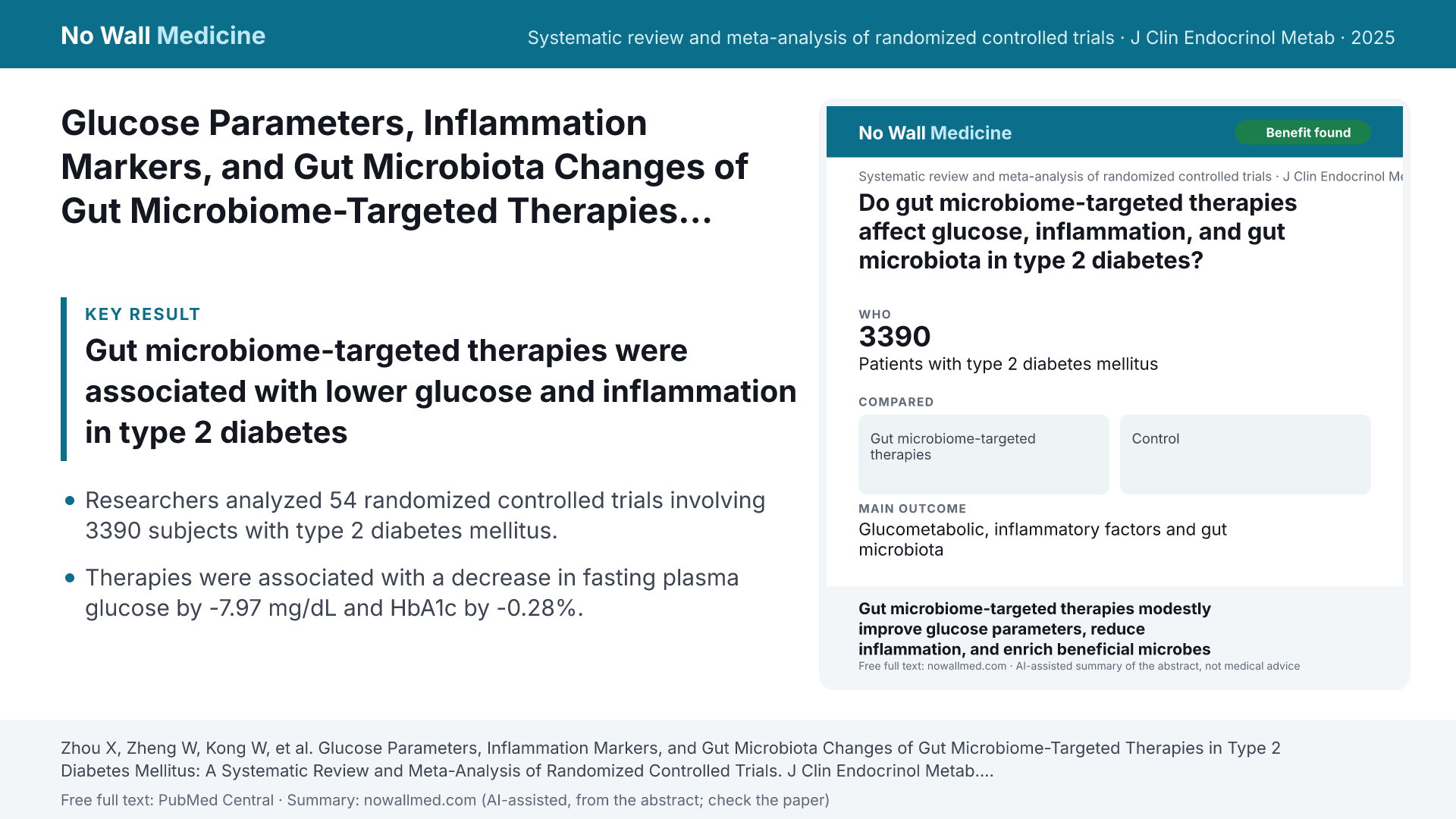
Key result: Gut microbiome-targeted therapies were associated with lower glucose and inflammation in type 2 diabetes

Key points
- Researchers analyzed 54 randomized controlled trials involving 3390 subjects with type 2 diabetes mellitus.
- Therapies were associated with a decrease in fasting plasma glucose by -7.97 mg/dL and HbA1c by -0.28%.
- Interventions were linked to lower levels of inflammation markers and increased levels of beneficial gut bacteria like Lactobacillus.
Why it matters: The effects of gut microbiome-targeted therapies on glucose, inflammation, and gut bacteria in people with type 2 diabetes mellitus needed to be summarized.
Limitation the authors note: The authors noted heterogeneity and limited long-term data in the included studies.
Discussion prompts
- Would these patients look like yours? Who was left out?
- Is the main outcome one that matters to patients?
- Is the difference large enough to change what you do?
Cite: Zhou X, Zheng W, Kong W, et al. Glucose Parameters, Inflammation Markers, and Gut Microbiota Changes of Gut Microbiome-Targeted Therapies in Type 2 Diabetes Mellitus: A Systematic Review and Meta-Analysis of Randomized Controlled Trials. J Clin Endocrinol Metab. 2025;110(10):2980-3008. doi:10.1210/clinem/dgaf340
Free full text: PubMed Central · Summary and visual abstract: nowallmed.com/a/glucose-parameters-inflammation-markers-and-gut-microbiota-changes-of-1fq5pwz/ (AI-assisted from the abstract; check the paper before relying on it).