Postprandial exercise reduces blood glucose levels in adults with type 1 diabetes
Glycemic Management Around Postprandial Exercise in People With Type 1 Diabetes: Challenge Accepted
Randomized, controlled trialMixed results
What are the acute, subacute, and late effects of postprandial exercise on blood glucose?
Who
8
Adults with type 1 diabetes
Compared
Rest (CONTROL)
Walking (WALK): -45 ± 24 mg/dL
Moderate-intensity (MOD): -71 ± 39 mg/dL
Intermittent high-intensity (IHE): -35 ± 21 mg/dL
Main outcome
Blood glucose change during exercise
Bottom line: Postprandial exercise reduces glucose excursion but may cause subacute hyperglycemia and nocturnal hypoglycemia.
J Clin Endocrinol Metab · 2024-02-08Download image
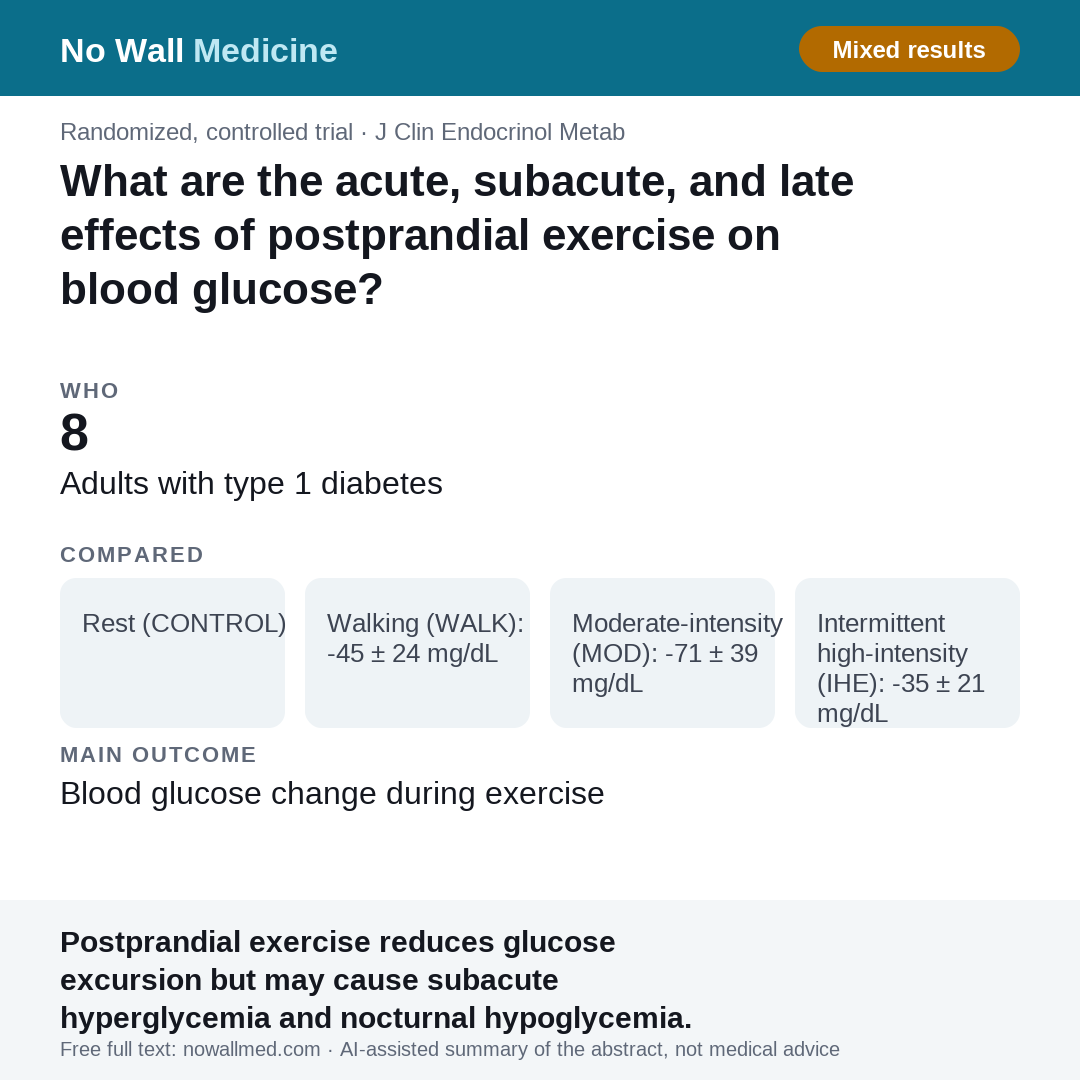
Clinical question: What are the acute, subacute, and late effects of postprandial exercise on blood glucose?
Why it matters: The precise impact and clinical relevance of exercising after eating on blood glucose levels in people with type 1 diabetes has not been clarified.
Key points
- Eight adults with type 1 diabetes were compared across four conditions: rest, walking, moderate-intensity exercise, and intermittent high-intensity exercise performed 60 minutes after a meal.
- All exercise types caused mean blood glucose declines during exercise of -45 ± 24 mg/dL for walking, -71 ± 39 mg/dL for moderate-intensity, and -35 ± 21 mg/dL for intermittent high-intensity.
- While no hypoglycemia occurred during exercise, more than half of participants experienced high blood sugar after exercise and there were more nocturnal hypoglycemia events compared to rest.
Headline and key points written with AI from the paper’s abstract, with every number checked against it. Read the paper before relying on them.
Topics
Cite this article
Helleputte S, Stautemas J, Jansseune L, De Backer T, Marlier J, Lapauw B. Glycemic Management Around Postprandial Exercise in People With Type 1 Diabetes: Challenge Accepted. J Clin Endocrinol Metab. 2024. doi:10.1210/clinem/dgae079
Spotted a mistake? Suggest a correction
Top studies every Monday
The week’s key trials and guidelines in your specialties, plus any topics you follow. By email, free.
Get the weekly digest