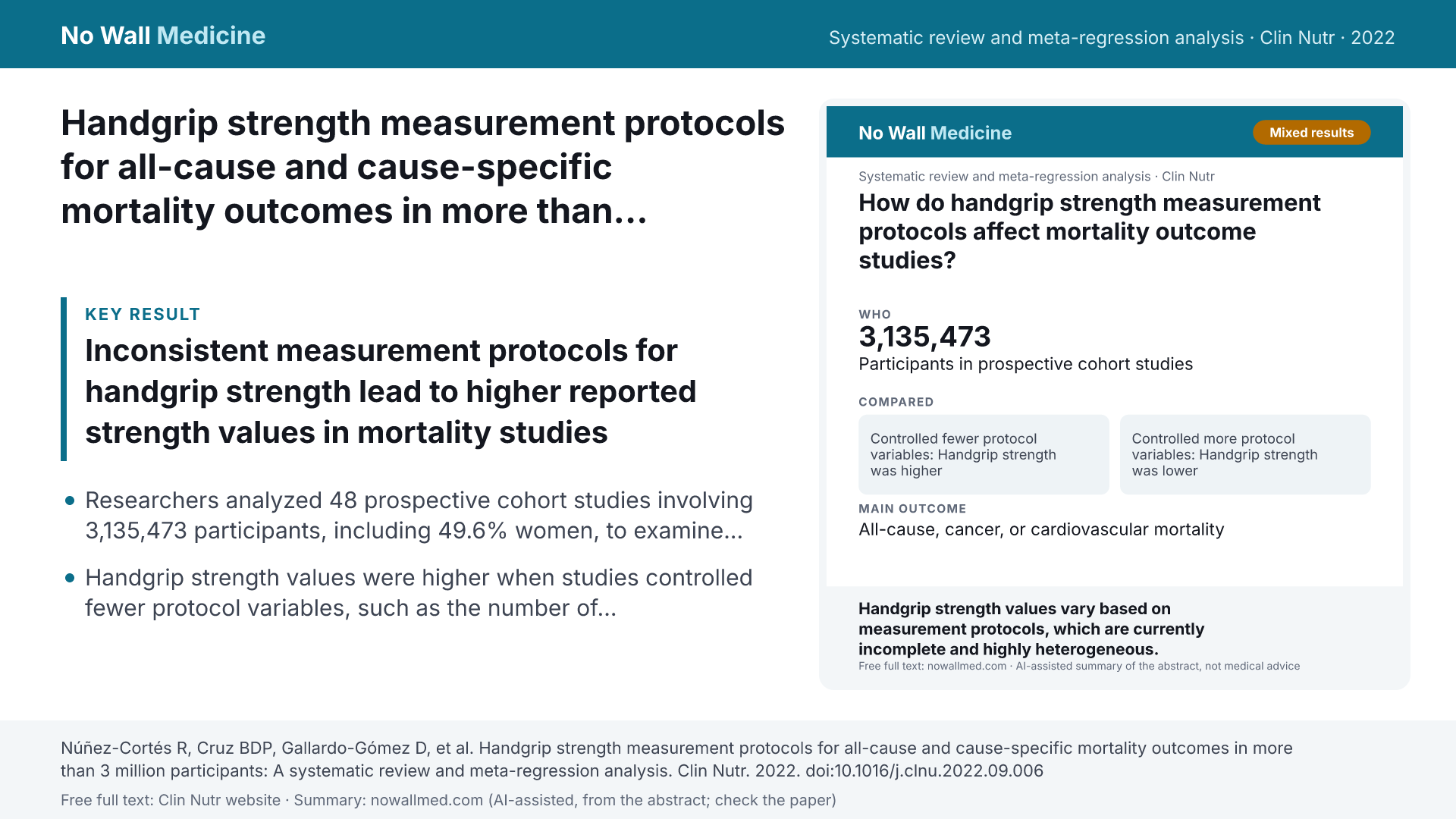
Handgrip strength measurement protocols for all-cause and cause-specific mortality outcomes in more than 3 million participants: A systematic review and meta-regression analysis
Key result: Inconsistent measurement protocols for handgrip strength lead to higher reported strength values in mortality studies
Key points
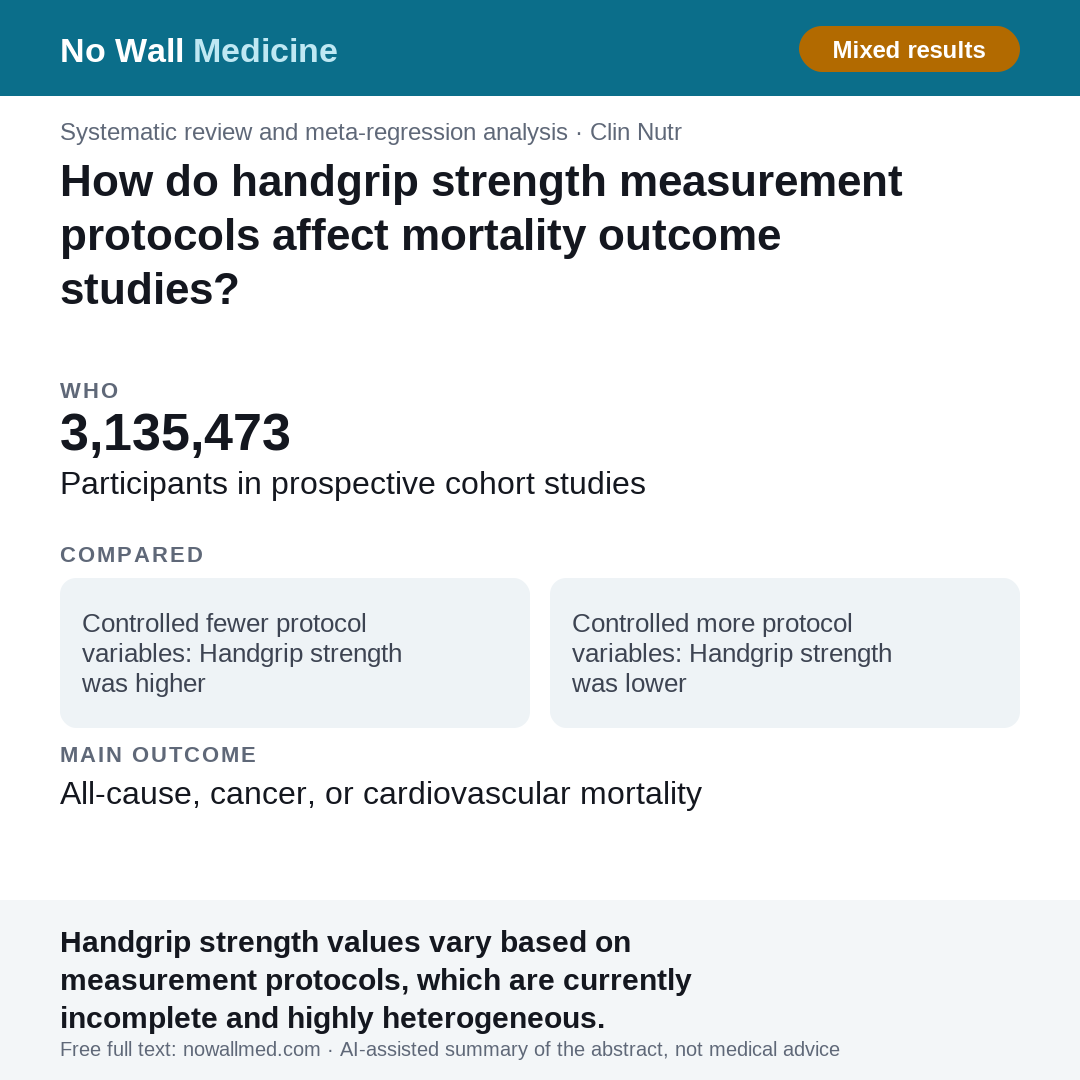
- Researchers analyzed 48 prospective cohort studies involving 3,135,473 participants, including 49.6% women, to examine how different handgrip strength measurement protocols relate to mortality.
- Handgrip strength values were higher when studies controlled fewer protocol variables, such as the number of measurements per hand or the position of the arm.
- Lower handgrip strength values were associated with not controlling elbow position or not providing verbal encouragement during the test.
Why it matters: The specific methods used to measure handgrip strength vary widely, making it unclear how these different protocols affect the accuracy of mortality risk estimates.
Discussion prompts
- Would these patients look like yours? Who was left out?
- Is the main outcome one that matters to patients?
- Is the difference large enough to change what you do?
Cite: Núñez-Cortés R, Cruz BDP, Gallardo-Gómez D, et al. Handgrip strength measurement protocols for all-cause and cause-specific mortality outcomes in more than 3 million participants: A systematic review and meta-regression analysis. Clin Nutr. 2022. doi:10.1016/j.clnu.2022.09.006
Free full text: Clin Nutr website · Summary and visual abstract: nowallmed.com/a/handgrip-strength-measurement-protocols-for-all-cause-and-cause-c44xe/ (AI-assisted from the abstract; check the paper before relying on it).