Heart rate variability biofeedback was associated with lower craving and substance use in adults
Heart Rate Variability Biofeedback for Substance Use Disorder: A Randomized Clinical Trial
Phase 2 randomized clinical trialBenefit found
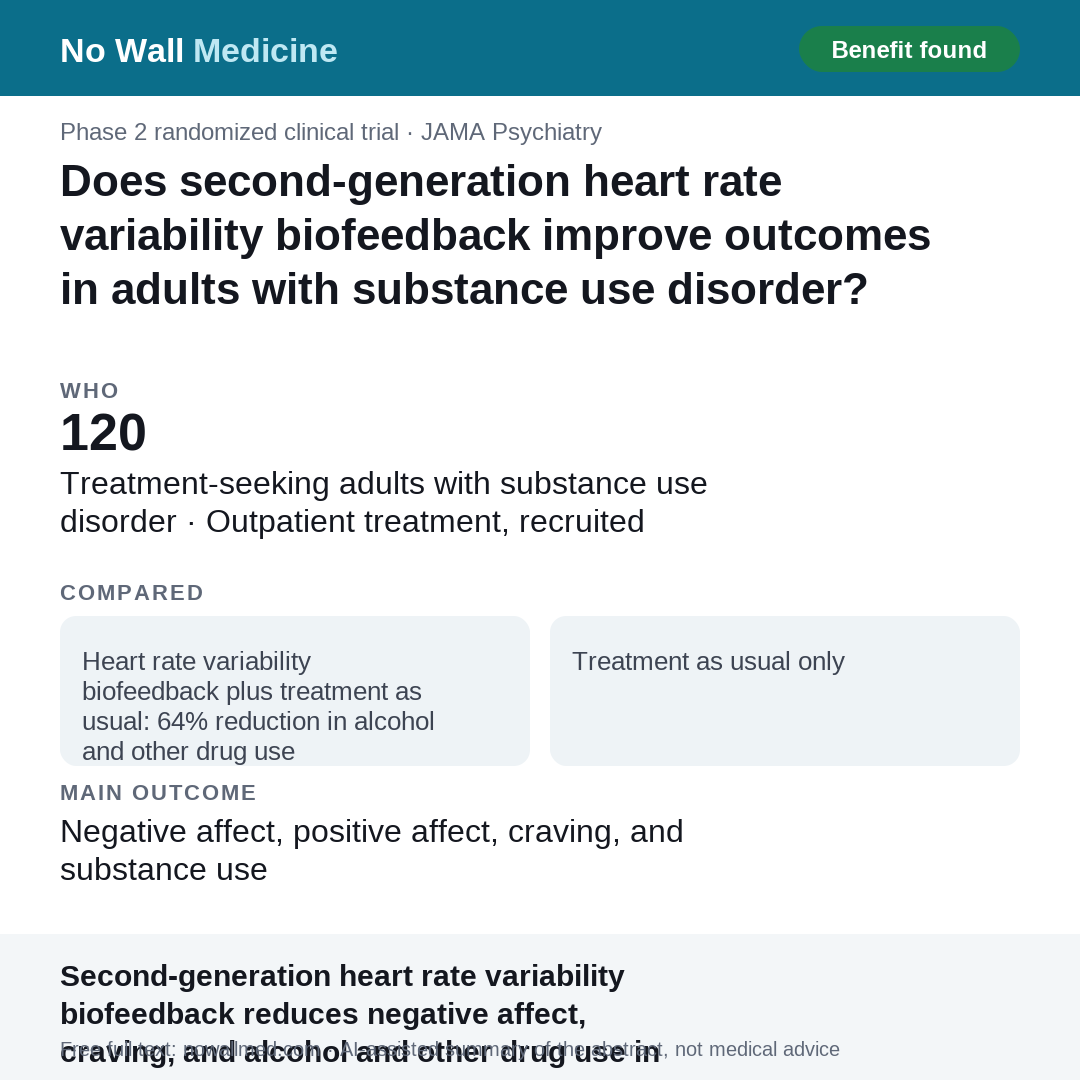
Does second-generation heart rate variability biofeedback improve outcomes in adults with substance use disorder?
Who
120
Treatment-seeking adults with substance use disorder · Outpatient treatment, recruited virtually across the United States
Compared
Heart rate variability biofeedback plus treatment as usual: 64% reduction in alcohol and other drug use
Treatment as usual only
Main outcome
Negative affect, positive affect, craving, and substance use
Result: odds ratio 0.36 (95% credible interval 0.25-0.54)
Bottom line: Second-generation heart rate variability biofeedback reduces negative affect, craving, and alcohol and other drug use in adults with substance use disorder.
JAMA Psychiatry · 2025-10-01Download image
Clinical question: Does second-generation heart rate variability biofeedback improve outcomes in adults with substance use disorder?
Why it matters: It is unknown if heart rate variability biofeedback, which uses wearable technology to regulate heart rhythms, improves actual substance use outcomes for adults with substance use disorder.
Key points
- Researchers conducted a randomized clinical trial with 120 adults with substance use disorder, comparing standard treatment to standard treatment plus heart rate variability biofeedback.
- The biofeedback group showed significant reductions in negative affect and craving, and a 64% reduction in alcohol and other drug use days compared to controls.
- The intervention was associated with a lower likelihood of using alcohol or other drugs following a craving compared to the control group.
Headline and key points written with AI from the paper’s abstract, with every number checked against it. Read the paper before relying on them.
Topics
Cite this article
Eddie D, Nguyen M, Zeng K, Mei S, Emery N. Heart Rate Variability Biofeedback for Substance Use Disorder: A Randomized Clinical Trial. JAMA Psychiatry. 2025. doi:10.1001/jamapsychiatry.2025.2700
Spotted a mistake? Suggest a correction
Top studies every Monday
The week’s key trials and guidelines in your specialties, by email. Free.
Get the weekly digest