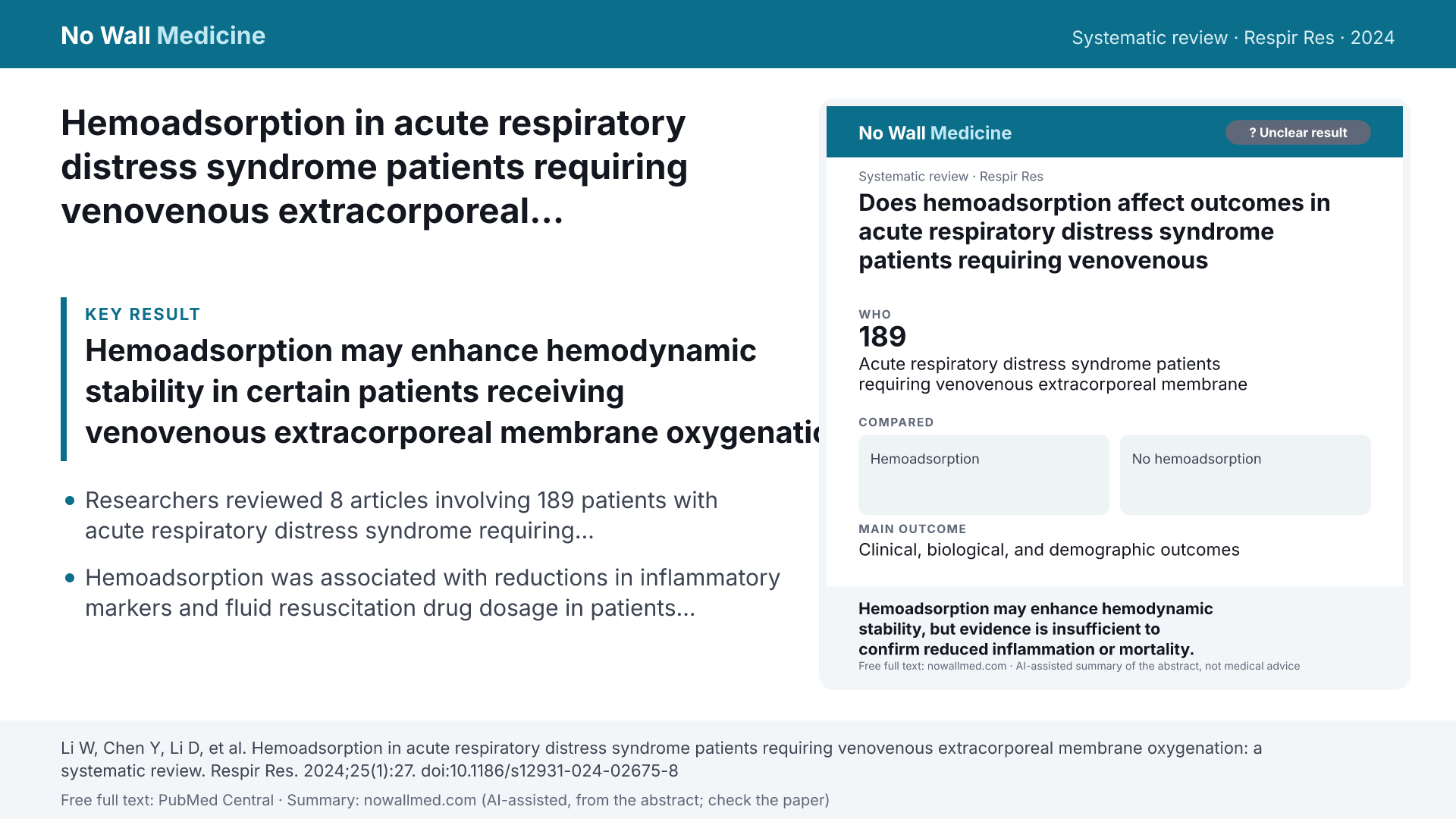
Hemoadsorption in acute respiratory distress syndrome patients requiring venovenous extracorporeal membrane oxygenation: a systematic review
Key result: Hemoadsorption may enhance hemodynamic stability in certain patients receiving venovenous extracorporeal membrane oxygenation
Key points
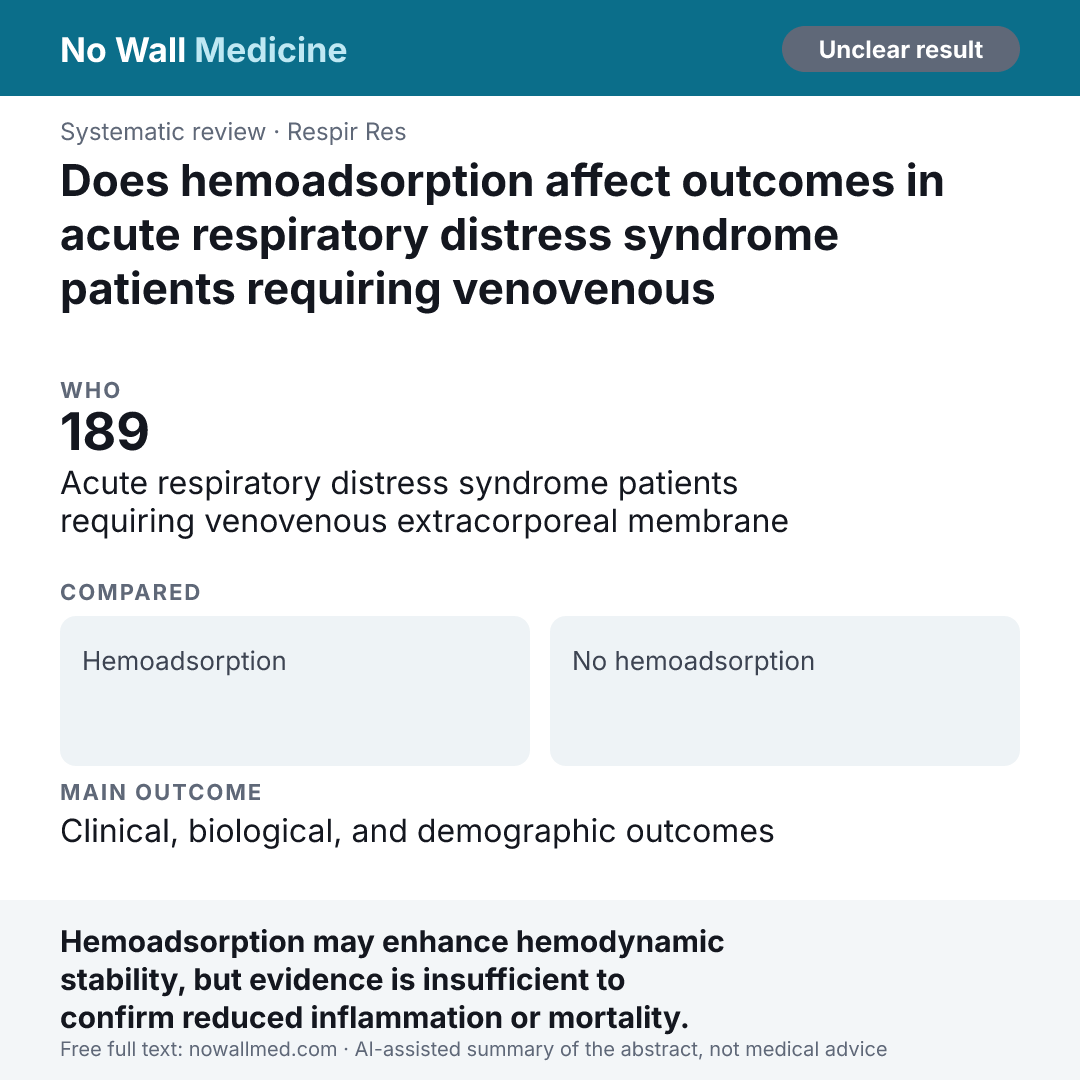
- Researchers reviewed 8 articles involving 189 patients with acute respiratory distress syndrome requiring venovenous extracorporeal membrane oxygenation.
- Hemoadsorption was associated with reductions in inflammatory markers and fluid resuscitation drug dosage in patients with sepsis or Coronavirus disease 2019.
- The review did not allow for conclusions that hemoadsorption could reduce inflammation or mortality.
Why it matters: The role of hemoadsorption, a process used to remove substances from the blood, is unclear for patients with acute respiratory distress syndrome requiring venovenous extracorporeal membrane oxygenation.
Discussion prompts
- Would these patients look like yours? Who was left out?
- Is the main outcome one that matters to patients?
- Is the difference large enough to change what you do?
Cite: Li W, Chen Y, Li D, et al. Hemoadsorption in acute respiratory distress syndrome patients requiring venovenous extracorporeal membrane oxygenation: a systematic review. Respir Res. 2024;25(1):27. doi:10.1186/s12931-024-02675-8
Free full text: PubMed Central · Summary and visual abstract: nowallmed.com/a/hemoadsorption-in-acute-respiratory-distress-syndrome-patients-ob6yn5/ (AI-assisted from the abstract; check the paper before relying on it).