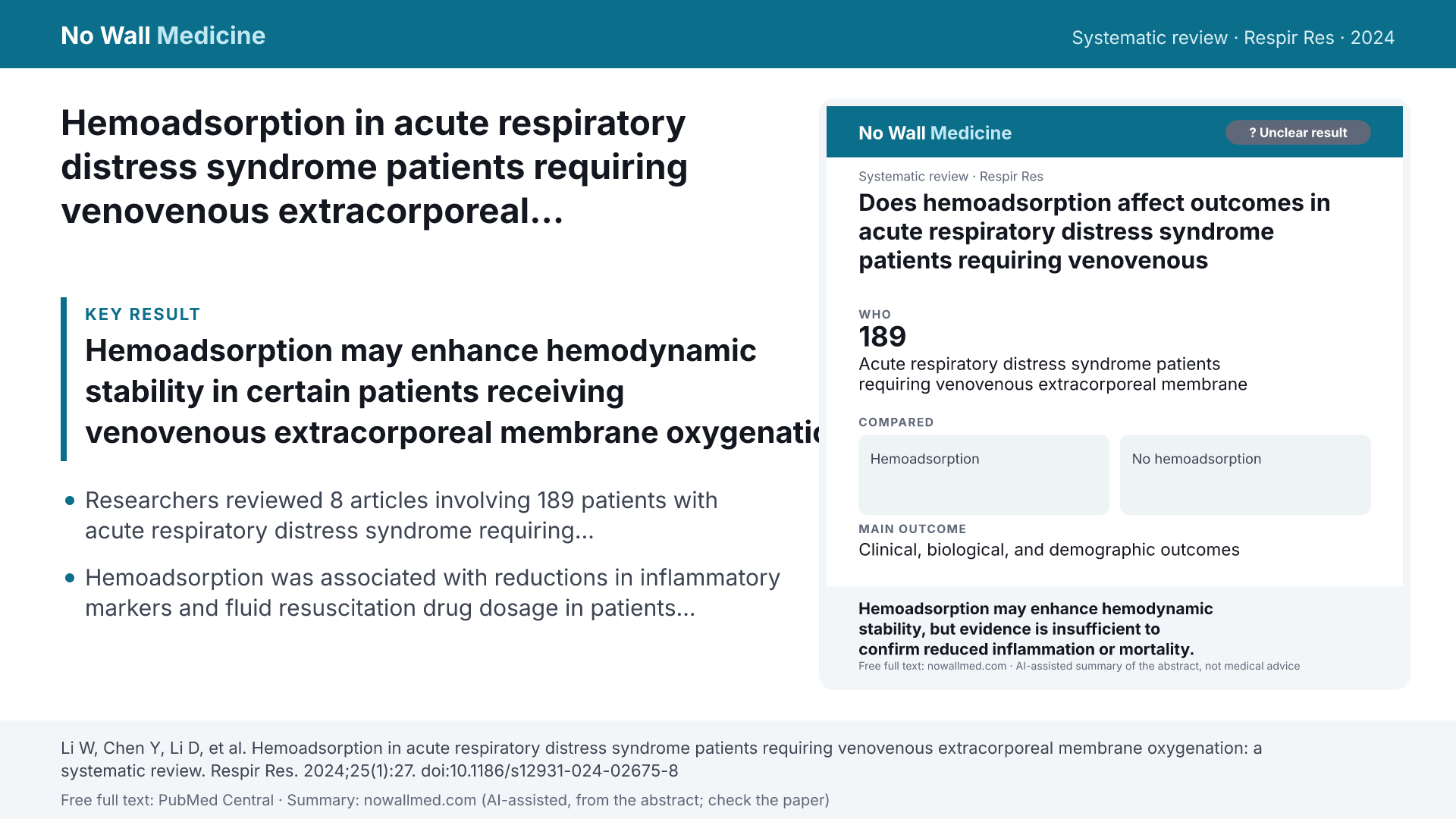
Hemoadsorption may enhance hemodynamic stability in certain patients receiving venovenous extracorporeal membrane oxygenation
Hemoadsorption in acute respiratory distress syndrome patients requiring venovenous extracorporeal membrane oxygenation: a systematic review
Systematic reviewUnclear result
Does hemoadsorption affect outcomes in acute respiratory distress syndrome patients requiring venovenous extracorporeal membrane oxygenation?
Who
189
Acute respiratory distress syndrome patients requiring venovenous extracorporeal membrane oxygenation
Compared
Hemoadsorption
No hemoadsorption
Main outcome
Clinical, biological, and demographic outcomes
Bottom line: Hemoadsorption may enhance hemodynamic stability, but evidence is insufficient to confirm reduced inflammation or mortality.
Limitation: High heterogeneity among the included studies.
Respir Res · 2024-01-12Download image
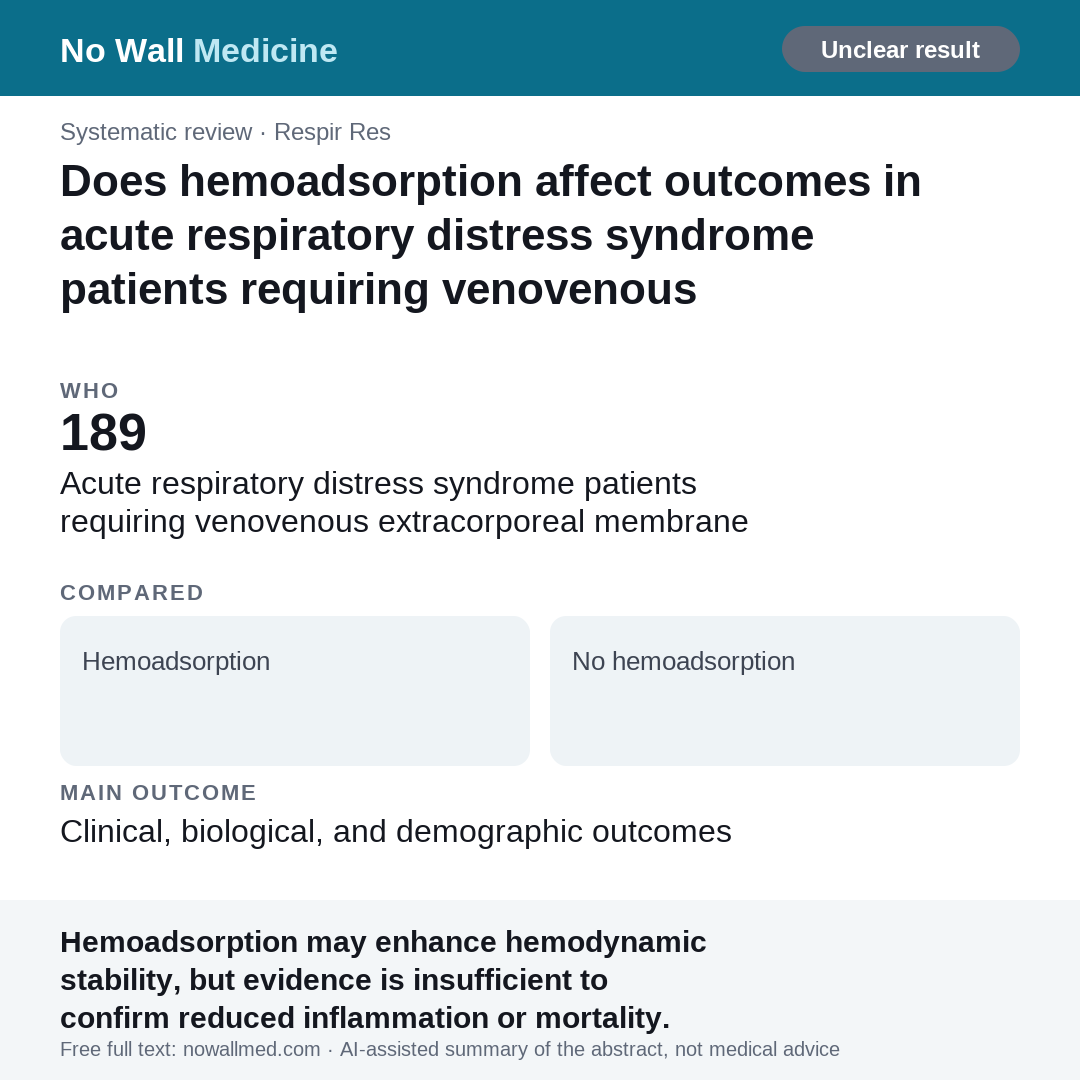
Clinical question: Does hemoadsorption affect outcomes in acute respiratory distress syndrome patients requiring venovenous extracorporeal membrane oxygenation?
Why it matters: The role of hemoadsorption, a process used to remove substances from the blood, is unclear for patients with acute respiratory distress syndrome requiring venovenous extracorporeal membrane oxygenation.
Key points
- Researchers reviewed 8 articles involving 189 patients with acute respiratory distress syndrome requiring venovenous extracorporeal membrane oxygenation.
- Hemoadsorption was associated with reductions in inflammatory markers and fluid resuscitation drug dosage in patients with sepsis or Coronavirus disease 2019.
- The review did not allow for conclusions that hemoadsorption could reduce inflammation or mortality.
Headline and key points written with AI from the paper’s abstract, with every number checked against it. Read the paper before relying on them.
Was this summary helpful?
Subject terms
Cite this article
Li W, Chen Y, Li D, Meng X, Liu Z, Liu Y. Hemoadsorption in acute respiratory distress syndrome patients requiring venovenous extracorporeal membrane oxygenation: a systematic review. Respir Res. 2024. doi:10.1186/s12931-024-02675-8
Spotted a mistake? Suggest a correction
Top studies every Monday
The week’s key trials and guidelines in your specialties, plus any topics you follow. By email, free.
Get the weekly digest