Hemodynamic monitoring was associated with fewer heart failure events and deaths in high-risk patients
Hemodynamic-Guided Heart Failure Management in Patients With Either Prior HF Hospitalization or Elevated Natriuretic Peptides
Randomized trialBenefit found
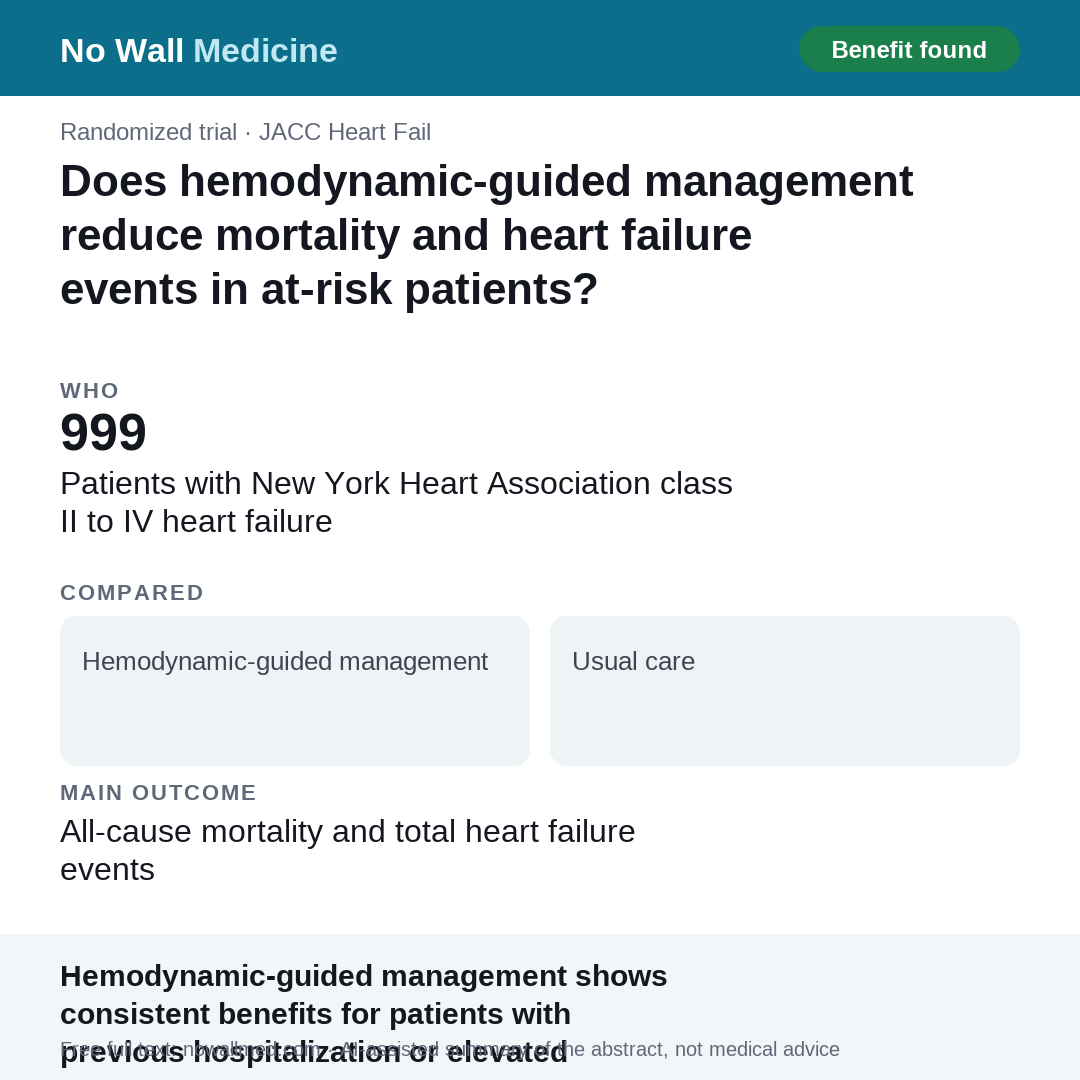
Does hemodynamic-guided management reduce mortality and heart failure events in at-risk patients?
Who
999
Patients with New York Heart Association class II to IV heart failure
Compared
Hemodynamic-guided management
Usual care
Main outcome
All-cause mortality and total heart failure events
Bottom line: Hemodynamic-guided management shows consistent benefits for patients with previous hospitalization or elevated natriuretic peptides.
JACC Heart Fail · 2023-04-12Download image
Clinical question: Does hemodynamic-guided management reduce mortality and heart failure events in at-risk patients?
Why it matters: It was unclear if the benefits of using a wireless pulmonary artery pressure sensor extend to patients with elevated natriuretic peptides who have not been recently hospitalized.
Key points
- The GUIDE-HF trial randomized 999 patients with symptomatic heart failure to either hemodynamic-guided management using a wireless pulmonary artery pressure sensor or usual care.
- In patients with elevated natriuretic peptides, event rates were 40.9 per 100 patient-years for hemodynamic monitoring versus 82.0 per 100 patient-years for usual care.
- The effects of hemodynamic monitoring were consistent across patients with previous hospitalizations and those with only elevated natriuretic peptide levels.
Headline and key points written with AI from the paper’s abstract, with every number checked against it. Read the paper before relying on them.
Topics
Cite this article
Desai AS, Maisel A, Mehra MR, Zile MR, Ducharme A, Paul S. Hemodynamic-Guided Heart Failure Management in Patients With Either Prior HF Hospitalization or Elevated Natriuretic Peptides. JACC Heart Fail. 2023. doi:10.1016/j.jchf.2023.01.007
Spotted a mistake? Suggest a correction
Top studies every Monday
The week’s key trials and guidelines in your specialties, plus any topics you follow. By email, free.
Get the weekly digest