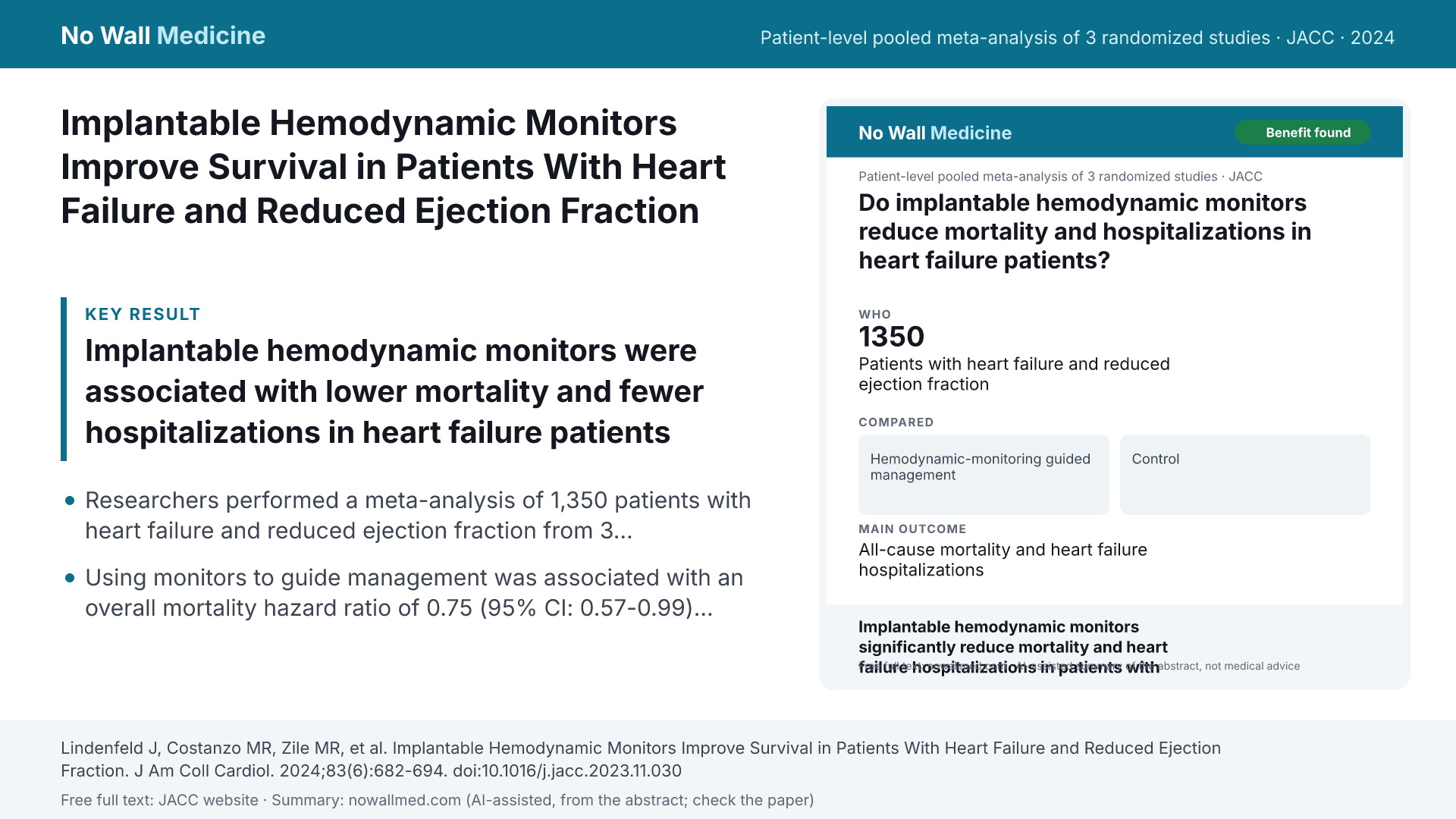
Implantable hemodynamic monitors were associated with lower mortality and fewer hospitalizations in heart failure patients
Implantable Hemodynamic Monitors Improve Survival in Patients With Heart Failure and Reduced Ejection Fraction
Patient-level pooled meta-analysis of 3 randomized studiesBenefit found
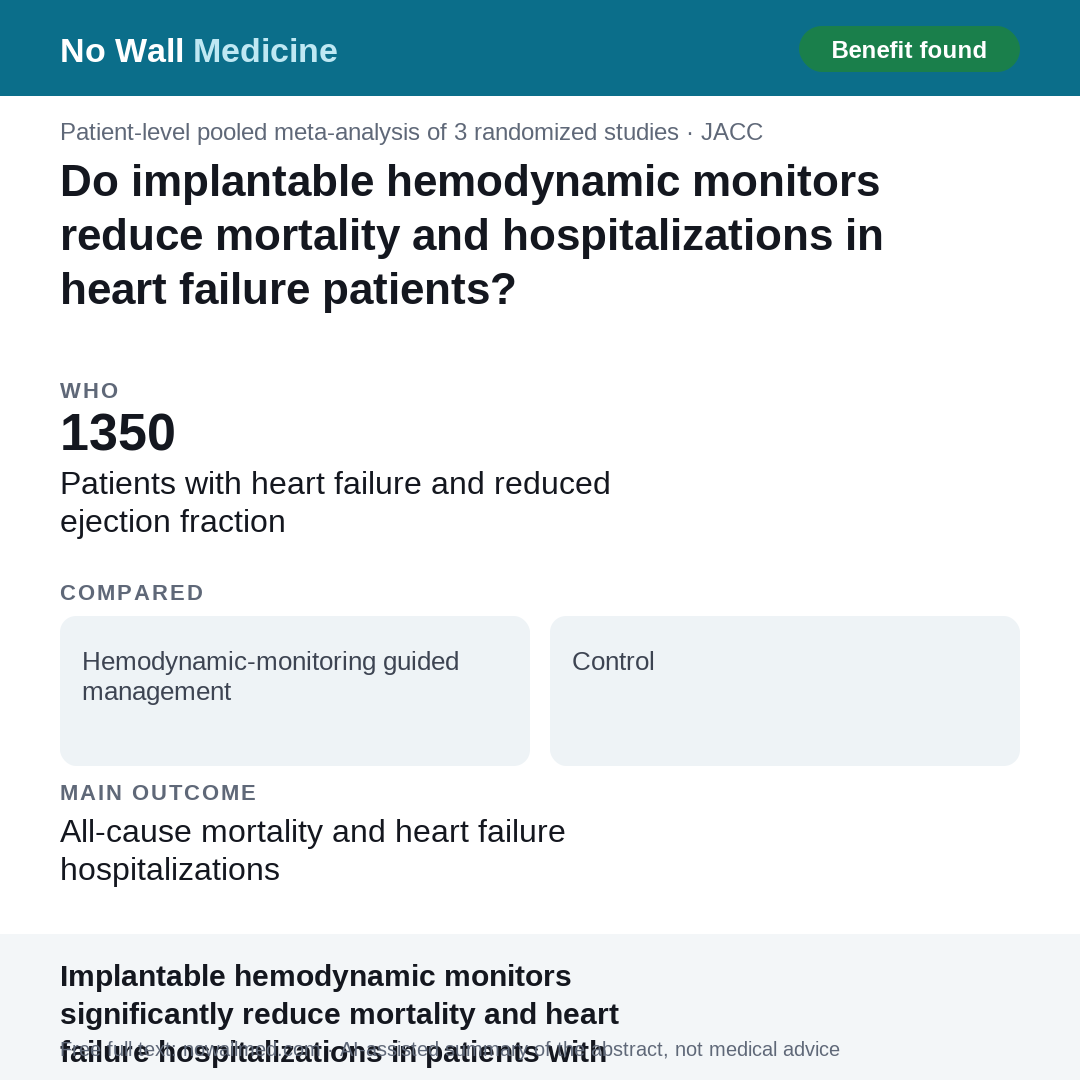
Do implantable hemodynamic monitors reduce mortality and hospitalizations in heart failure patients?
Who
1350
Patients with heart failure and reduced ejection fraction
Compared
Hemodynamic-monitoring guided management
Control
Main outcome
All-cause mortality and heart failure hospitalizations
Result: hazard ratio 0.75 (95% CI: 0.57-0.99) for mortality; hazard ratio 0.64 (95% CI: 0.55-0.76) for hospitalizations
Bottom line: Implantable hemodynamic monitors significantly reduce mortality and heart failure hospitalizations in patients with reduced ejection fraction.
Limitation: Previous meta-analyses were limited by absence of patient-level data and short-term follow-up.
JACC · 2024-02-08Download image
Clinical question: Do implantable hemodynamic monitors reduce mortality and hospitalizations in heart failure patients?
Why it matters: Previous meta-analyses lacked patient-level data, had short follow-up durations, and did not evaluate the combined spectrum of ejection fractions regarding mortality.
Key points
- Researchers performed a meta-analysis of 1,350 patients with heart failure and reduced ejection fraction from 3 randomized studies.
- Using monitors to guide management was associated with an overall mortality hazard ratio of 0.75 (95% CI: 0.57-0.99) and a heart failure hospitalization hazard ratio of 0.64 (95% CI: 0.55-0.76).
- Reductions in hospitalizations were seen within the first year, while mortality benefits occurred after the first year.
Headline and key points written with AI from the paper’s abstract, with every number checked against it. Read the paper before relying on them.
Was this summary helpful?
Subject terms
Cite this article
Lindenfeld J, Costanzo MR, Zile MR, et al. Implantable Hemodynamic Monitors Improve Survival in Patients With Heart Failure and Reduced Ejection Fraction. JACC. 2024. doi:10.1016/j.jacc.2023.11.030
Spotted a mistake? Suggest a correction