Hemodynamics and vasopressor support during targeted temperature management after cardiac arrest with non-shockable rhythm: A post hoc analysis of a randomized controlled trial
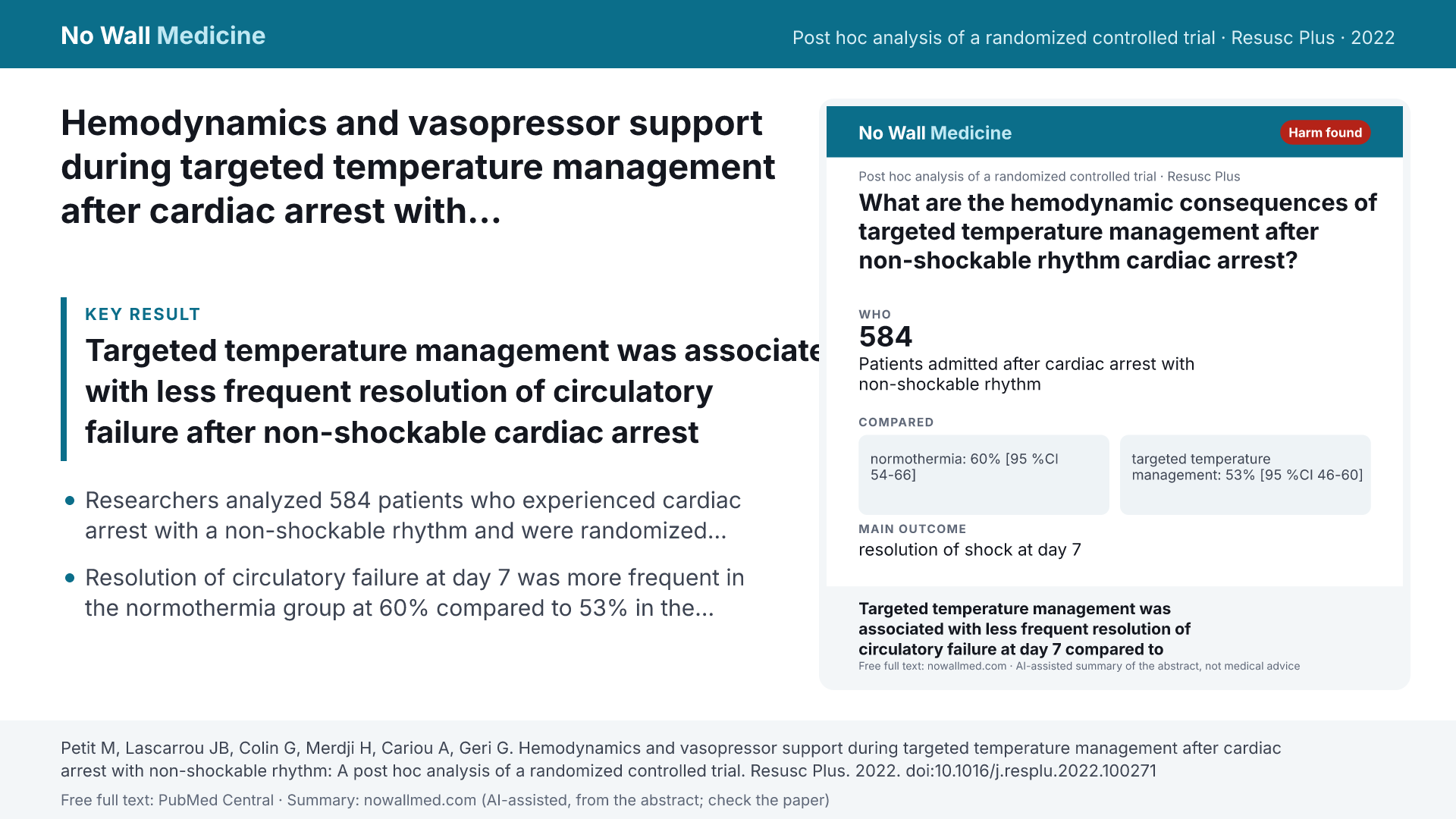
Key result: Targeted temperature management was associated with less frequent resolution of circulatory failure after non-shockable cardiac arrest
Key points
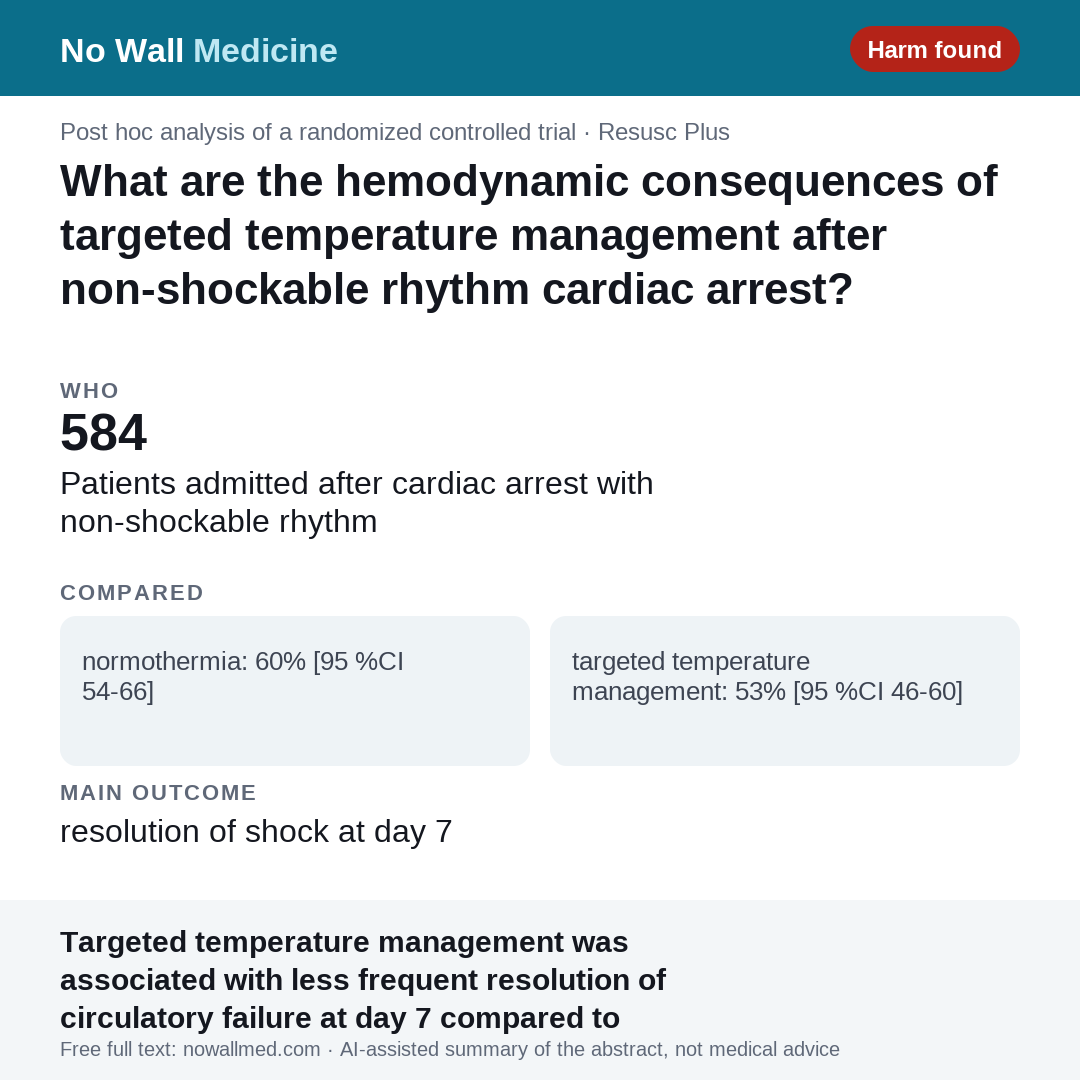
- Researchers analyzed 584 patients who experienced cardiac arrest with a non-shockable rhythm and were randomized to either hypothermia or normothermia, which is maintaining normal body temperature.
- Resolution of circulatory failure at day 7 was more frequent in the normothermia group at 60% compared to 53% in the targeted temperature management group.
- Patients with severe circulatory failure at randomization had a lower rate of resolution at day 7 compared to those with moderate failure, at 54% versus 76%.
Why it matters: It was unknown how targeted temperature management affects blood pressure and circulatory stability in patients who experience cardiac arrest with a non-shockable rhythm.
Discussion prompts
- Would these patients look like yours? Who was left out?
- Is the main outcome one that matters to patients?
- Is the difference large enough to change what you do?
Cite: Petit M, Lascarrou JB, Colin G, Merdji H, Cariou A, Geri G. Hemodynamics and vasopressor support during targeted temperature management after cardiac arrest with non-shockable rhythm: A post hoc analysis of a randomized controlled trial. Resusc Plus. 2022. doi:10.1016/j.resplu.2022.100271
Free full text: PubMed Central · Summary and visual abstract: nowallmed.com/a/hemodynamics-and-vasopressor-support-during-targeted-temperature-84eutx/ (AI-assisted from the abstract; check the paper before relying on it).