High-definition Cathodal Direct Current Stimulation for Treatment of Acute Ischemic Stroke: A Randomized Clinical Trial
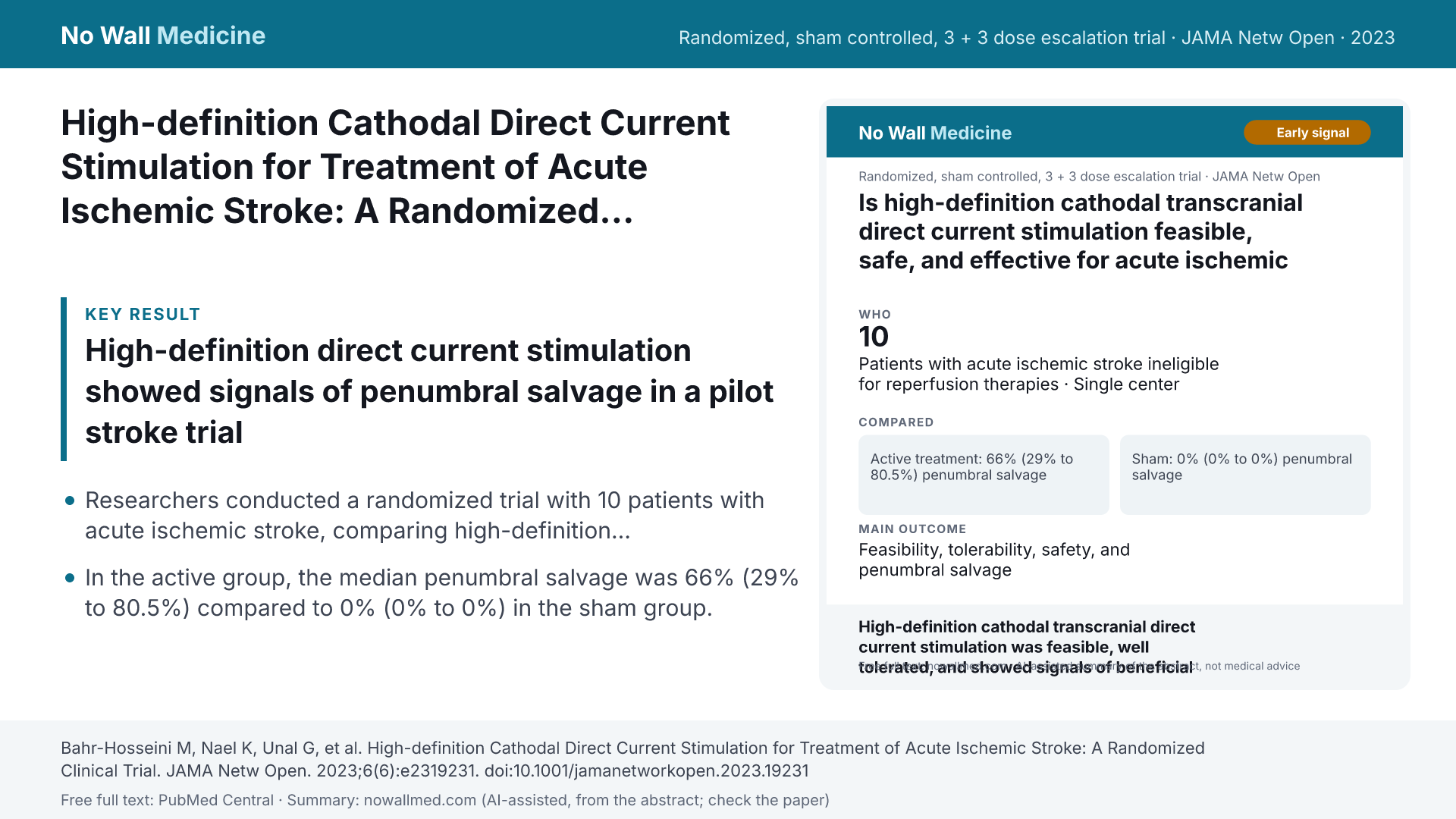
Key result: High-definition direct current stimulation showed signals of penumbral salvage in a pilot stroke trial
Randomized, sham controlled, 3 + 3 dose escalation trialEarly signal
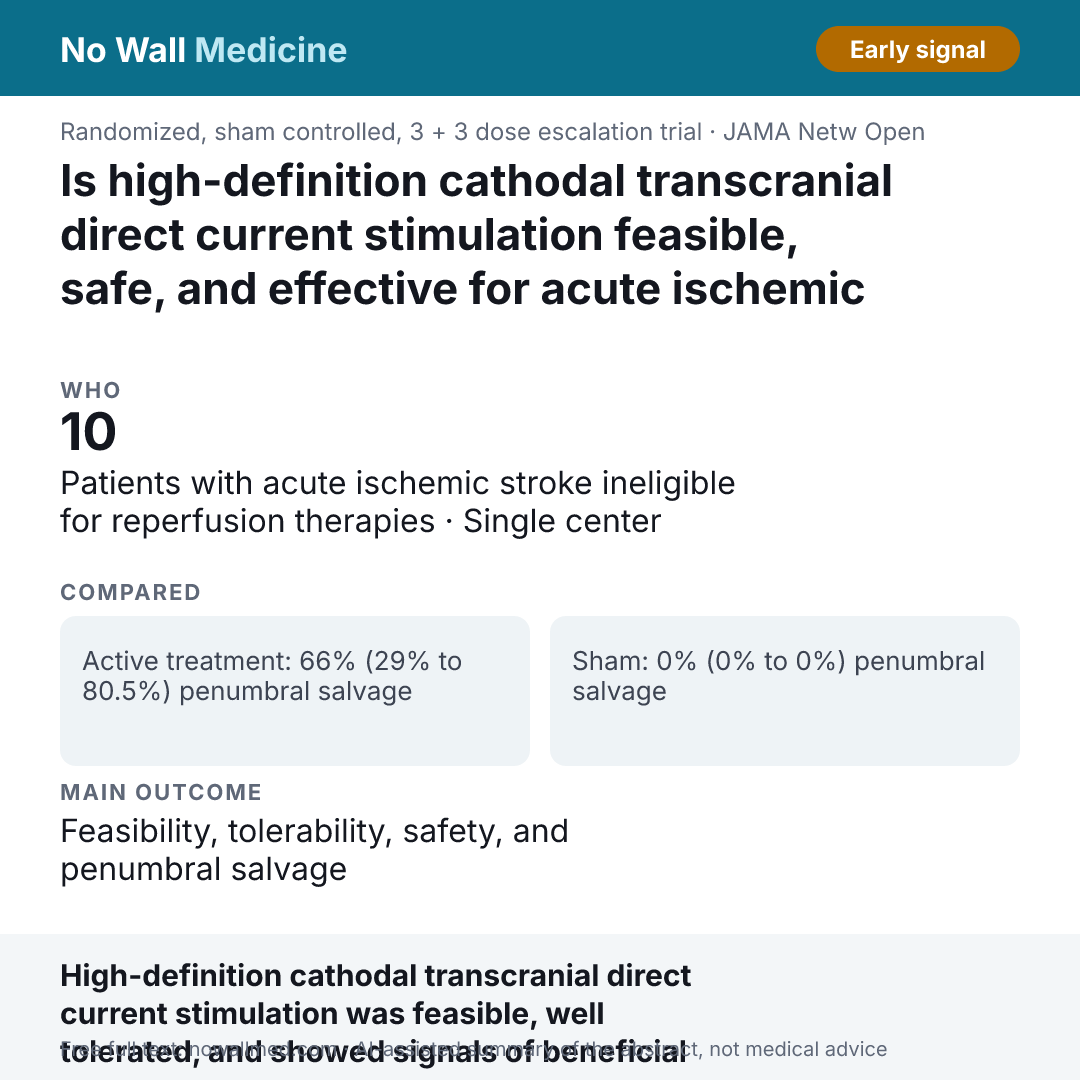
Is high-definition cathodal transcranial direct current stimulation feasible, safe, and effective for acute ischemic stroke?
Who
10
Patients with acute ischemic stroke ineligible for reperfusion therapies · Single center
Compared
Active treatment: 66% (29% to 80.5%) penumbral salvage
Sham: 0% (0% to 0%) penumbral salvage
Main outcome
Feasibility, tolerability, safety, and penumbral salvage
Bottom line: High-definition cathodal transcranial direct current stimulation was feasible, well tolerated, and showed signals of beneficial penumbral salvage.
JAMA Netw Open · 2023-06-01 · Save PNG
Key points
- Researchers conducted a randomized trial with 10 patients with acute ischemic stroke, comparing high-definition cathodal transcranial direct current stimulation to a sham treatment.
- In the active group, the median penumbral salvage was 66% (29% to 80.5%) compared to 0% (0% to 0%) in the sham group.
- The treatment was well tolerated with no permanent cessation of stimulation and a median implementation time of 12.5 minutes (9-15 minutes) in the last 4 patients.
Limitation the authors note: This was a single-center pilot study with only 10 participants.
Discussion prompts
- Would these patients look like yours? Who was left out?
- Is the main outcome one that matters to patients?
- Is the difference large enough to change what you do?
Cite: Bahr-Hosseini M, Nael K, Unal G, et al. High-definition Cathodal Direct Current Stimulation for Treatment of Acute Ischemic Stroke: A Randomized Clinical Trial. JAMA Netw Open. 2023;6(6):e2319231. doi:10.1001/jamanetworkopen.2023.19231
Free full text: PubMed Central · Summary and visual abstract: nowallmed.com/a/high-definition-cathodal-direct-current-stimulation-for-treatment-of-c9cyll/ (AI-assisted from the abstract; check the paper before relying on it).