High-definition direct current stimulation showed signals of penumbral salvage in a pilot stroke trial
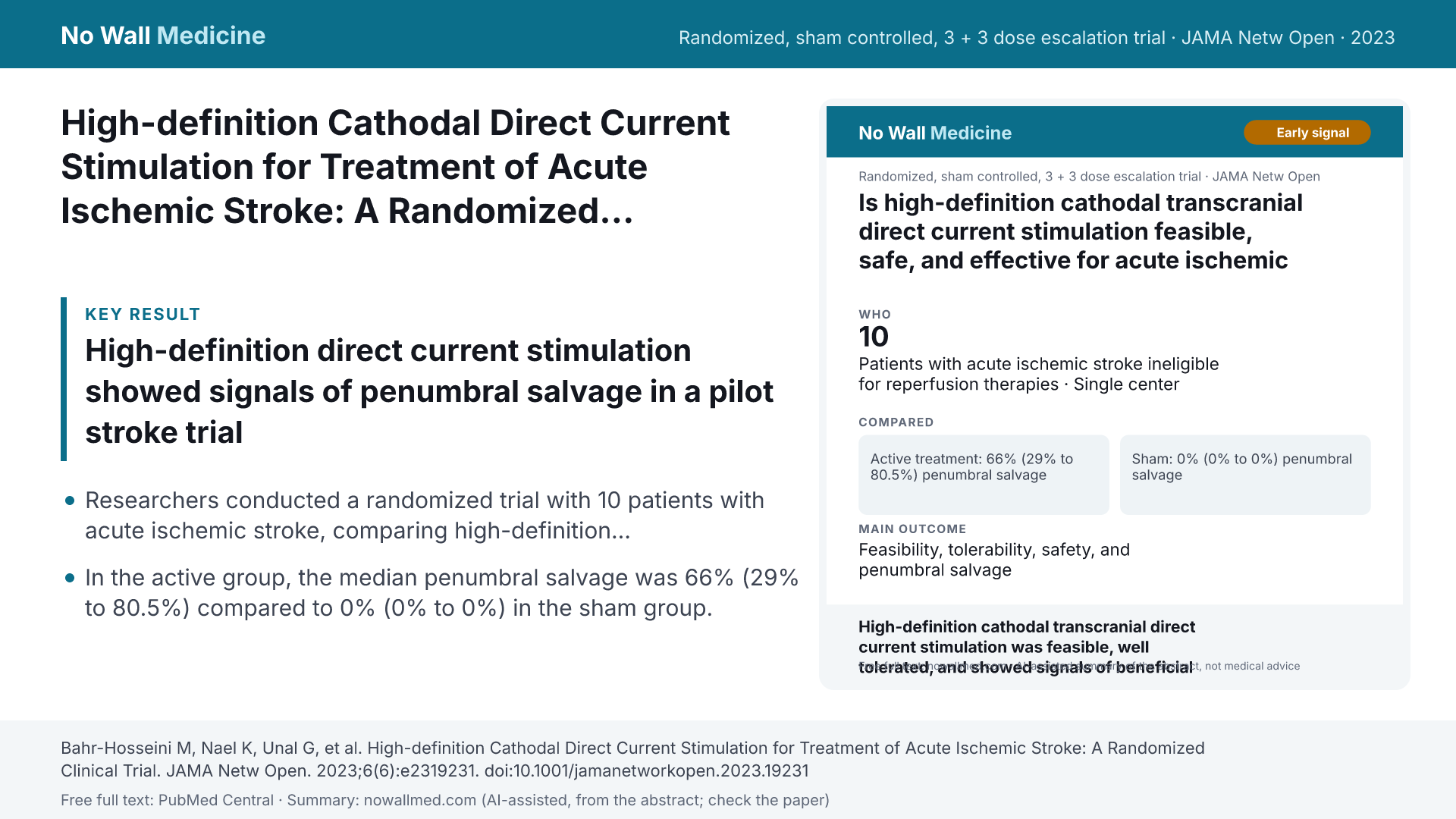
High-definition Cathodal Direct Current Stimulation for Treatment of Acute Ischemic Stroke: A Randomized Clinical Trial
Randomized, sham controlled, 3 + 3 dose escalation trialBenefit found
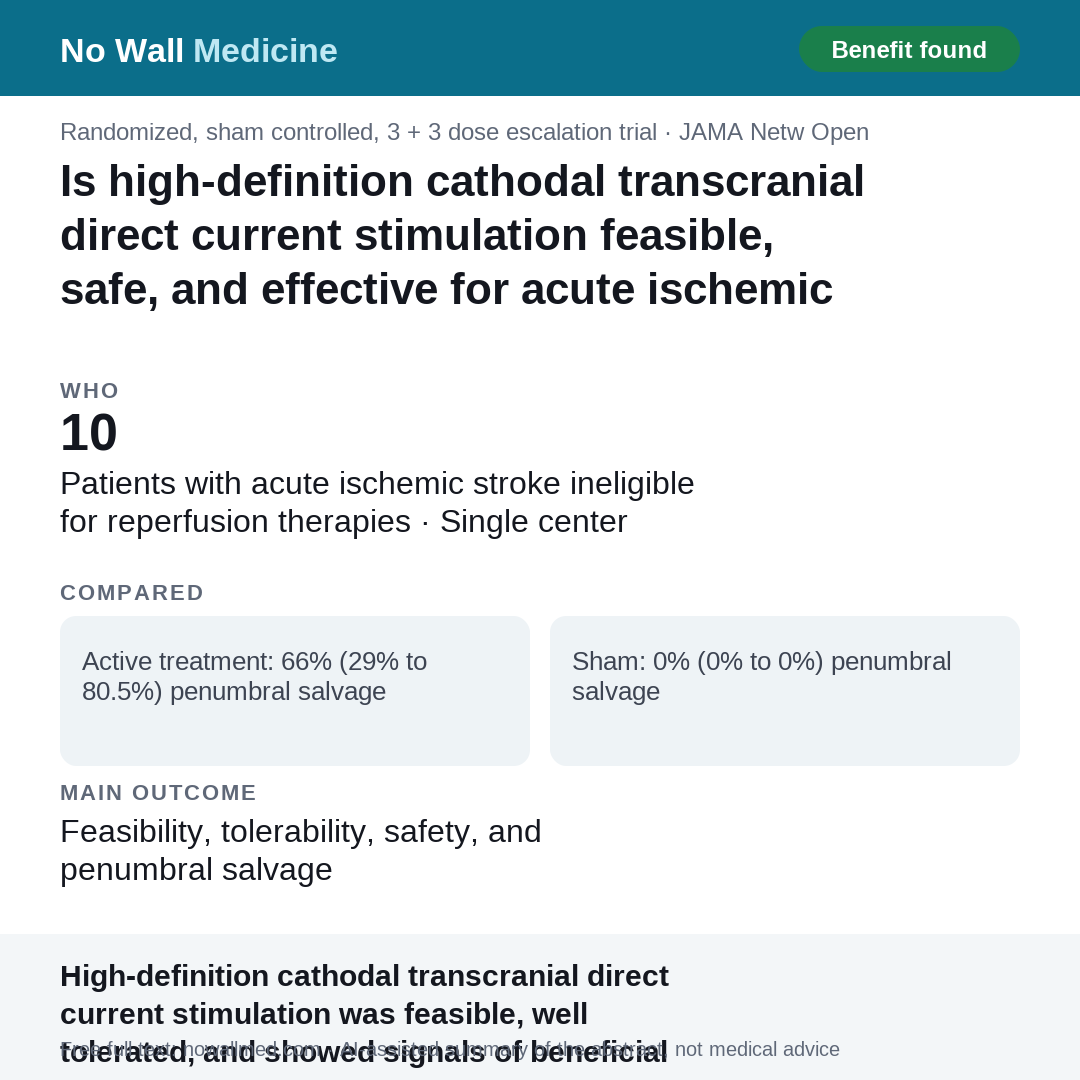
Is high-definition cathodal transcranial direct current stimulation feasible, safe, and effective for acute ischemic stroke?
Who
10
Patients with acute ischemic stroke ineligible for reperfusion therapies · Single center
Compared
Active treatment: 66% (29% to 80.5%) penumbral salvage
Sham: 0% (0% to 0%) penumbral salvage
Main outcome
Feasibility, tolerability, safety, and penumbral salvage
Bottom line: High-definition cathodal transcranial direct current stimulation was feasible, well tolerated, and showed signals of beneficial penumbral salvage.
JAMA Netw Open · 2023-06-01Download image
Clinical question: Is high-definition cathodal transcranial direct current stimulation feasible, safe, and effective for acute ischemic stroke?
Why it matters: It was unknown if individualized high-definition cathodal transcranial direct current stimulation is feasible, safe, and effective for treating acute ischemic stroke in humans.
Key points
- Researchers conducted a randomized trial with 10 patients with acute ischemic stroke, comparing high-definition cathodal transcranial direct current stimulation to a sham treatment.
- In the active group, the median penumbral salvage was 66% (29% to 80.5%) compared to 0% (0% to 0%) in the sham group.
- The treatment was well tolerated with no permanent cessation of stimulation and a median implementation time of 12.5 minutes (9-15 minutes) in the last 4 patients.
Limitation the authors note: This was a single-center pilot study with only 10 participants.
Headline and key points written with AI from the paper’s abstract, with every number checked against it. Read the paper before relying on them.
Was this summary helpful?
Subject terms
Cite this article
Bahr-Hosseini M, Nael K, Unal G, Iacoboni M, Liebeskind DS, Bikson M. High-definition Cathodal Direct Current Stimulation for Treatment of Acute Ischemic Stroke: A Randomized Clinical Trial. JAMA Netw Open. 2023. doi:10.1001/jamanetworkopen.2023.19231
Spotted a mistake? Suggest a correction