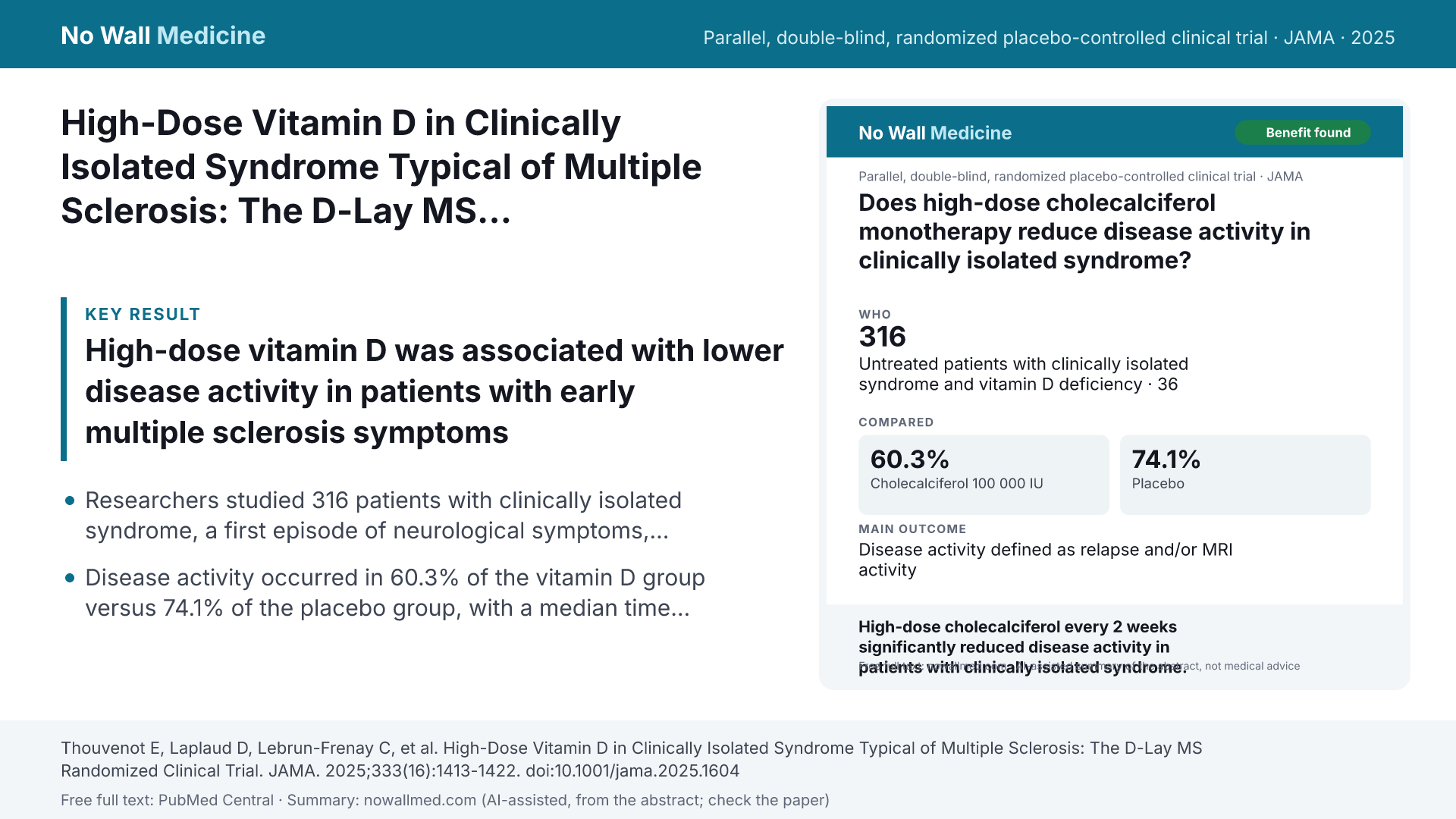
High-dose vitamin D was associated with lower disease activity in patients with early multiple sclerosis symptoms
High-Dose Vitamin D in Clinically Isolated Syndrome Typical of Multiple Sclerosis: The D-Lay MS Randomized Clinical Trial
Parallel, double-blind, randomized placebo-controlled clinical trialBenefit found
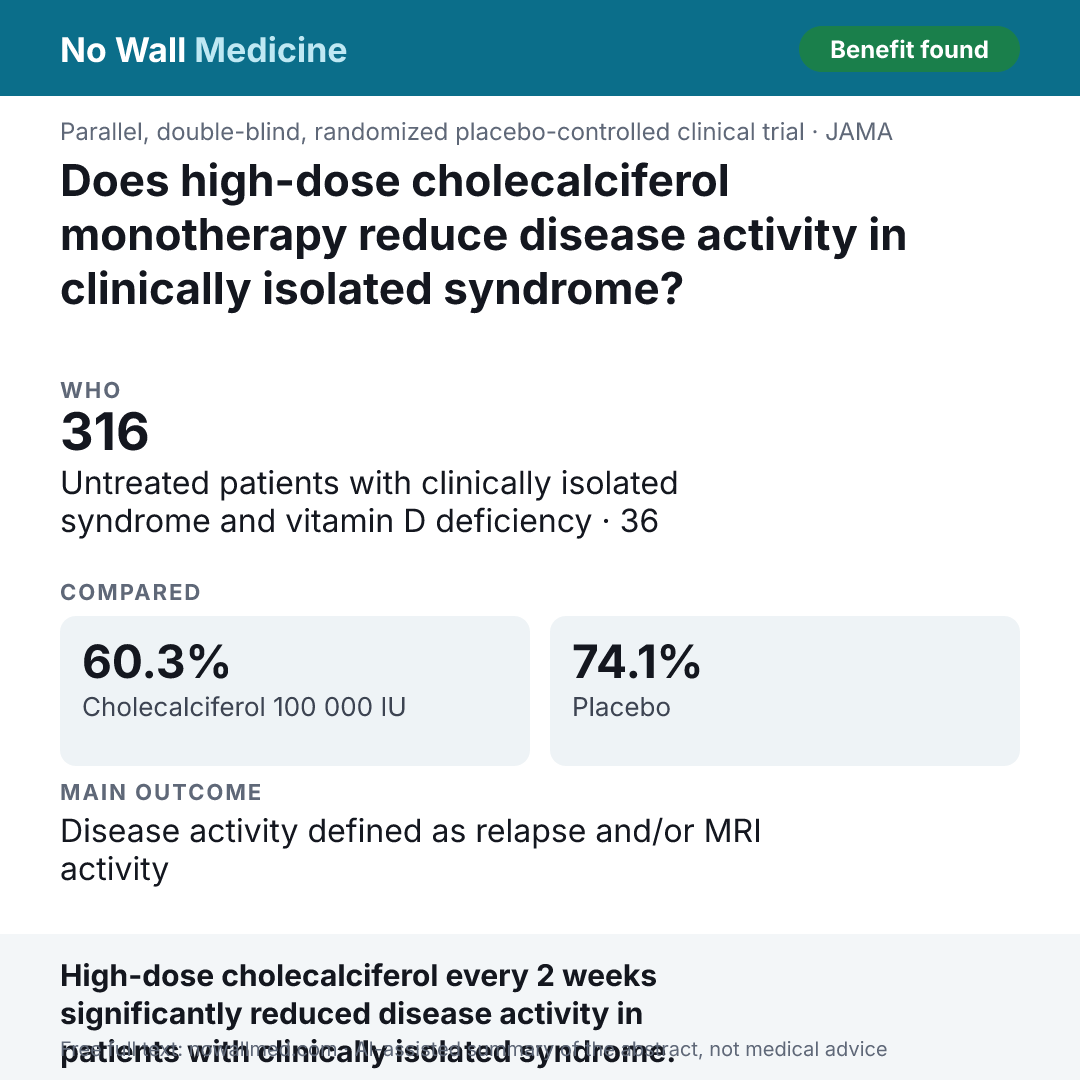
Does high-dose cholecalciferol monotherapy reduce disease activity in clinically isolated syndrome?
Who
316
Untreated patients with clinically isolated syndrome and vitamin D deficiency · 36 multiple sclerosis centers in France
Compared
60.3%Cholecalciferol 100 000 IU
74.1%Placebo
Main outcome
Disease activity defined as relapse and/or MRI activity
Result: hazard ratio 0.66 (95% CI 0.50-0.87)
Bottom line: High-dose cholecalciferol every 2 weeks significantly reduced disease activity in patients with clinically isolated syndrome.
JAMA · 2025-03-10 · Save PNG
Clinical question: Does high-dose cholecalciferol monotherapy reduce disease activity in clinically isolated syndrome?
Why it matters: Data on whether vitamin D supplementation benefits patients with clinically isolated syndrome typical of multiple sclerosis are currently conflicting.
In absolute numbers
Cholecalciferol 100 000 IU: 60.3% · Placebo: 74.1% → a difference of 13.8 percentage points, so about 8 people would need the treatment for 1 more to benefit (number needed to treat) over the trial’s follow-up.
Worked out by us from the two group results above, not reported by the authors. Check the paper for the exact outcome and timing.
Key points
- Researchers studied 316 patients with clinically isolated syndrome, a first episode of neurological symptoms, comparing high-dose vitamin D to a placebo over 24 months.
- Disease activity occurred in 60.3% of the vitamin D group versus 74.1% of the placebo group, with a median time to activity of 432 versus 224 days.
- While MRI activity and new lesions were lower in the vitamin D group, there was no significant difference in clinical relapses between the two groups.
Headline and key points written with AI from the paper’s abstract, with every number checked against it. Read the paper before relying on them.
Was this summary helpful?
Subject terms
Headline, design, result, key points, caveat and citation as plain text.
Cite this article
Thouvenot E, Laplaud D, Lebrun-Frenay C, et al. High-Dose Vitamin D in Clinically Isolated Syndrome Typical of Multiple Sclerosis: The D-Lay MS Randomized Clinical Trial. JAMA. 2025;333(16):1413-1422. doi:10.1001/jama.2025.1604
Spotted a mistake? Suggest a correction