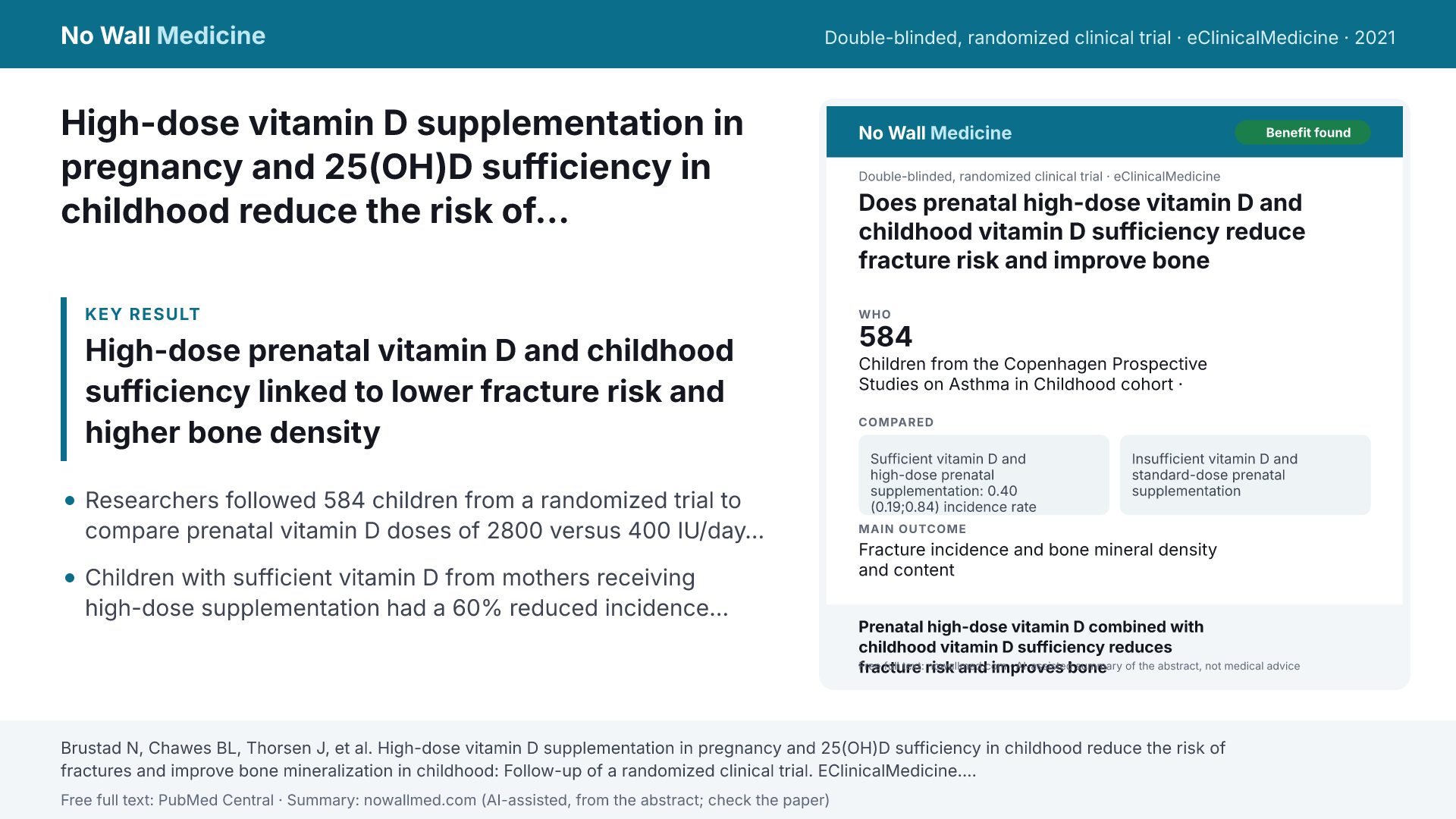
High-dose prenatal vitamin D and childhood sufficiency linked to lower fracture risk and higher bone density
High-dose vitamin D supplementation in pregnancy and 25(OH)D sufficiency in childhood reduce the risk of fractures and improve bone mineralization in childhood: Follow-up of a randomized clinical trial
PediatricsAdult and pediatric
Double-blinded, randomized clinical trialBenefit found
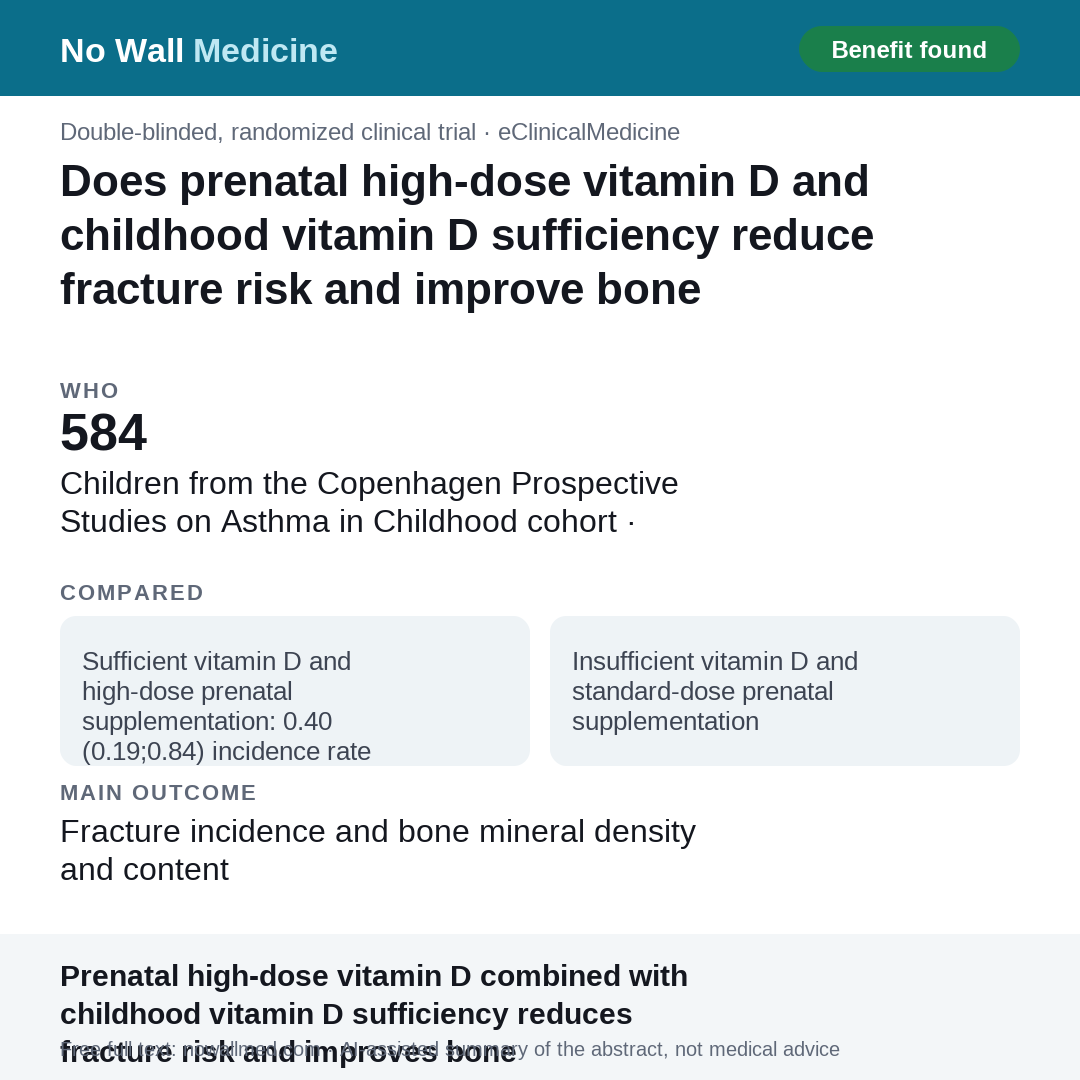
Does prenatal high-dose vitamin D and childhood vitamin D sufficiency reduce fracture risk and improve bone mineralization?
Who
584
Children from the Copenhagen Prospective Studies on Asthma in Childhood cohort · Copenhagen
Compared
Sufficient vitamin D and high-dose prenatal supplementation: 0.40 (0.19;0.84) incidence rate ratio for fractures
Insufficient vitamin D and standard-dose prenatal supplementation
Main outcome
Fracture incidence and bone mineral density and content
Result: incidence rate ratio 0.40 (95% CI 0.19 to 0.84)
Bottom line: Prenatal high-dose vitamin D combined with childhood vitamin D sufficiency reduces fracture risk and improves bone mineralization.
eClinicalMedicine · 2021-12-24Download image
Clinical question: Does prenatal high-dose vitamin D and childhood vitamin D sufficiency reduce fracture risk and improve bone mineralization?
Why it matters: It was unknown if combining prenatal high-dose vitamin D supplementation with sufficient childhood vitamin D concentrations affects bone mineralization and fracture risk.
Key points
- Researchers followed 584 children from a randomized trial to compare prenatal vitamin D doses of 2800 versus 400 IU/day and childhood vitamin D levels.
- Children with sufficient vitamin D from mothers receiving high-dose supplementation had a 60% reduced incidence of fractures compared to insufficient children from mothers receiving standard doses.
- At age 6 years, vitamin D sufficient children had higher bone mineral density, with an adjusted mean difference of 0.011 g/cm2.
Headline and key points written with AI from the paper’s abstract, with every number checked against it. Read the paper before relying on them.
Was this summary helpful?
Cite this article
Brustad N, Chawes BL, Thorsen J, et al. High-dose vitamin D supplementation in pregnancy and 25(OH)D sufficiency in childhood reduce the risk of fractures and improve bone mineralization in childhood: Follow-up of a randomized clinical trial. eClinicalMedicine. 2021. doi:10.1016/j.eclinm.2021.101254
Spotted a mistake? Suggest a correction