High-flow nasal cannula did not change intubation rates for patients with acute COPD exacerbation
High-flow nasal cannula versus conventional oxygen therapy in acute COPD exacerbation with mild hypercapnia: a multicenter randomized controlled trial
Multicenter randomized controlled trialNo clear difference
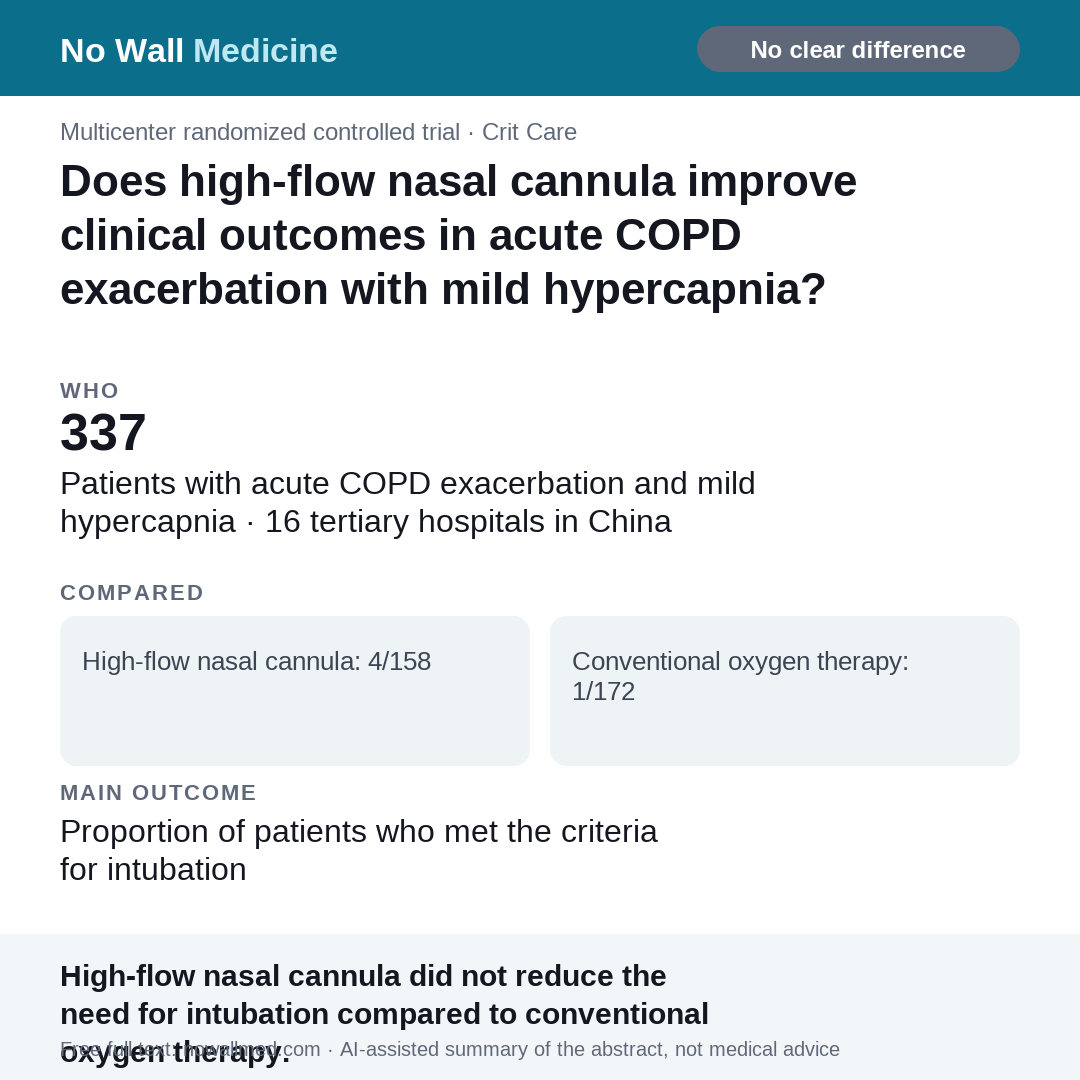
Does high-flow nasal cannula improve clinical outcomes in acute COPD exacerbation with mild hypercapnia?
Who
337
Patients with acute COPD exacerbation and mild hypercapnia · 16 tertiary hospitals in China
Compared
High-flow nasal cannula: 4/158
Conventional oxygen therapy: 1/172
Main outcome
Proportion of patients who met the criteria for intubation
Bottom line: High-flow nasal cannula did not reduce the need for intubation compared to conventional oxygen therapy.
Limitation: The study was underpowered to show a meaningful difference because the primary outcome rate was low.
Crit Care · 2022-04-15Download image
Clinical question: Does high-flow nasal cannula improve clinical outcomes in acute COPD exacerbation with mild hypercapnia?
Why it matters: The effect of high-flow nasal cannula on clinical outcomes for patients with acute COPD exacerbation and mild hypercapnia remains uncertain.
Key points
- Researchers studied 337 patients with acute chronic obstructive pulmonary disease exacerbation and mild hypercapnia, comparing high-flow nasal cannula to conventional oxygen therapy.
- The rate of intubation was 4/158 in the high-flow nasal cannula group and 1/172 in the conventional oxygen therapy group (P = 0.198).
- High-flow nasal cannula was associated with a longer median hospital stay of 9.0 days compared to 8.0 days and higher median costs of approximately $2298 versus $2005.
Headline and key points written with AI from the paper’s abstract, with every number checked against it. Read the paper before relying on them.
Was this summary helpful?
Subject terms
Cite this article
Xia J, Gu S, Lei W, Zhang J, Wei H, Liu C. High-flow nasal cannula versus conventional oxygen therapy in acute COPD exacerbation with mild hypercapnia: a multicenter randomized controlled trial. Crit Care. 2022. doi:10.1186/s13054-022-03973-7
Spotted a mistake? Suggest a correction
Top studies every Monday
The week’s key trials and guidelines in your specialties, plus any topics you follow. By email, free.
Get the weekly digest