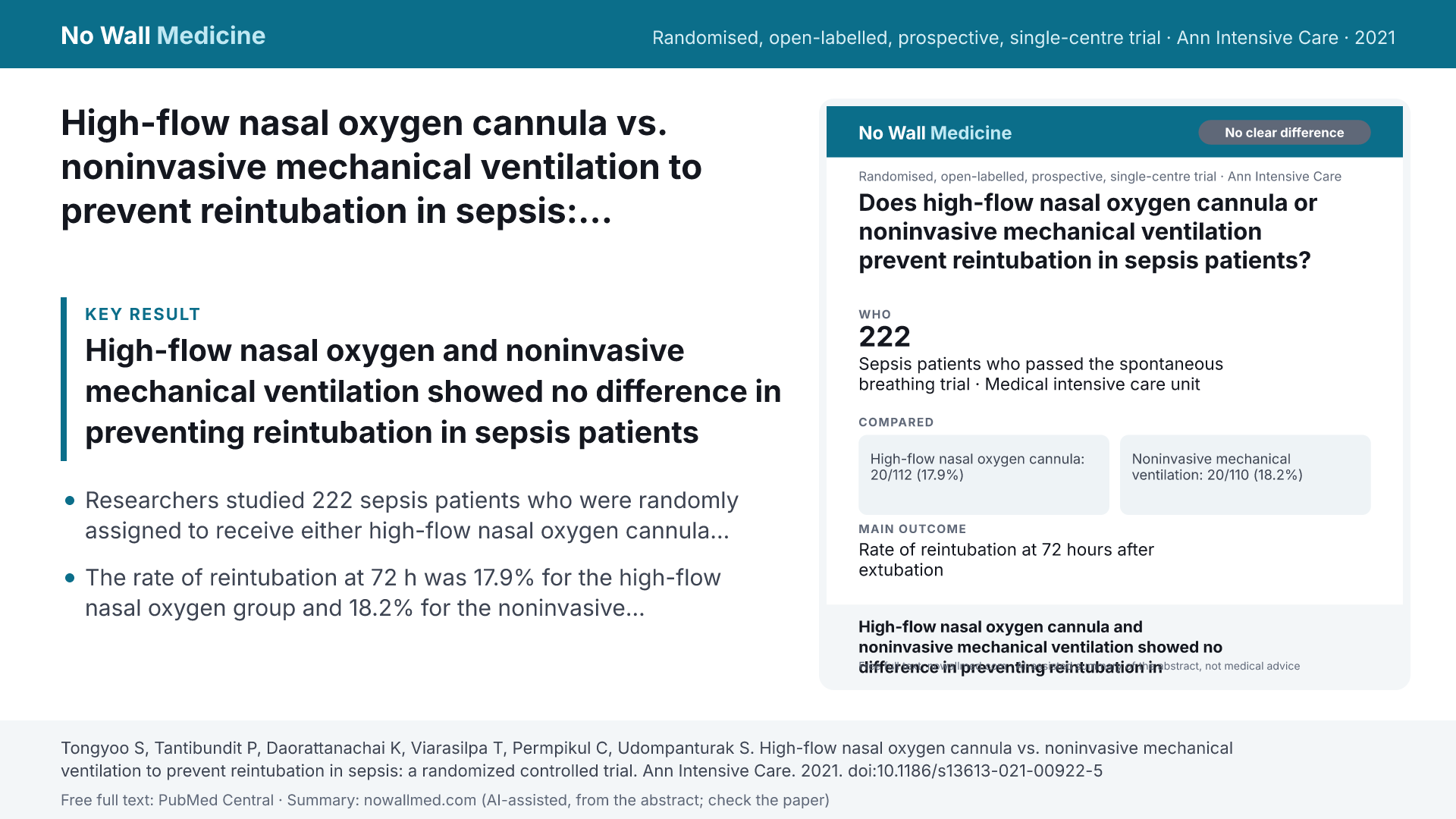
High-flow nasal oxygen and noninvasive mechanical ventilation showed no difference in preventing reintubation in sepsis patients
High-flow nasal oxygen cannula vs. noninvasive mechanical ventilation to prevent reintubation in sepsis: a randomized controlled trial
Randomised, open-labelled, prospective, single-centre trialNo clear difference
Does high-flow nasal oxygen cannula or noninvasive mechanical ventilation prevent reintubation in sepsis patients?
Who
222
Sepsis patients who passed the spontaneous breathing trial · Medical intensive care unit in Thailand
Compared
High-flow nasal oxygen cannula: 20/112 (17.9%)
Noninvasive mechanical ventilation: 20/110 (18.2%)
Main outcome
Rate of reintubation at 72 hours after extubation
Result: relative risk 0.99 (95% CI 0.70-1.39)
Bottom line: High-flow nasal oxygen cannula and noninvasive mechanical ventilation showed no difference in preventing reintubation in sepsis patients.
Ann Intensive Care · 2021-09-14Download image
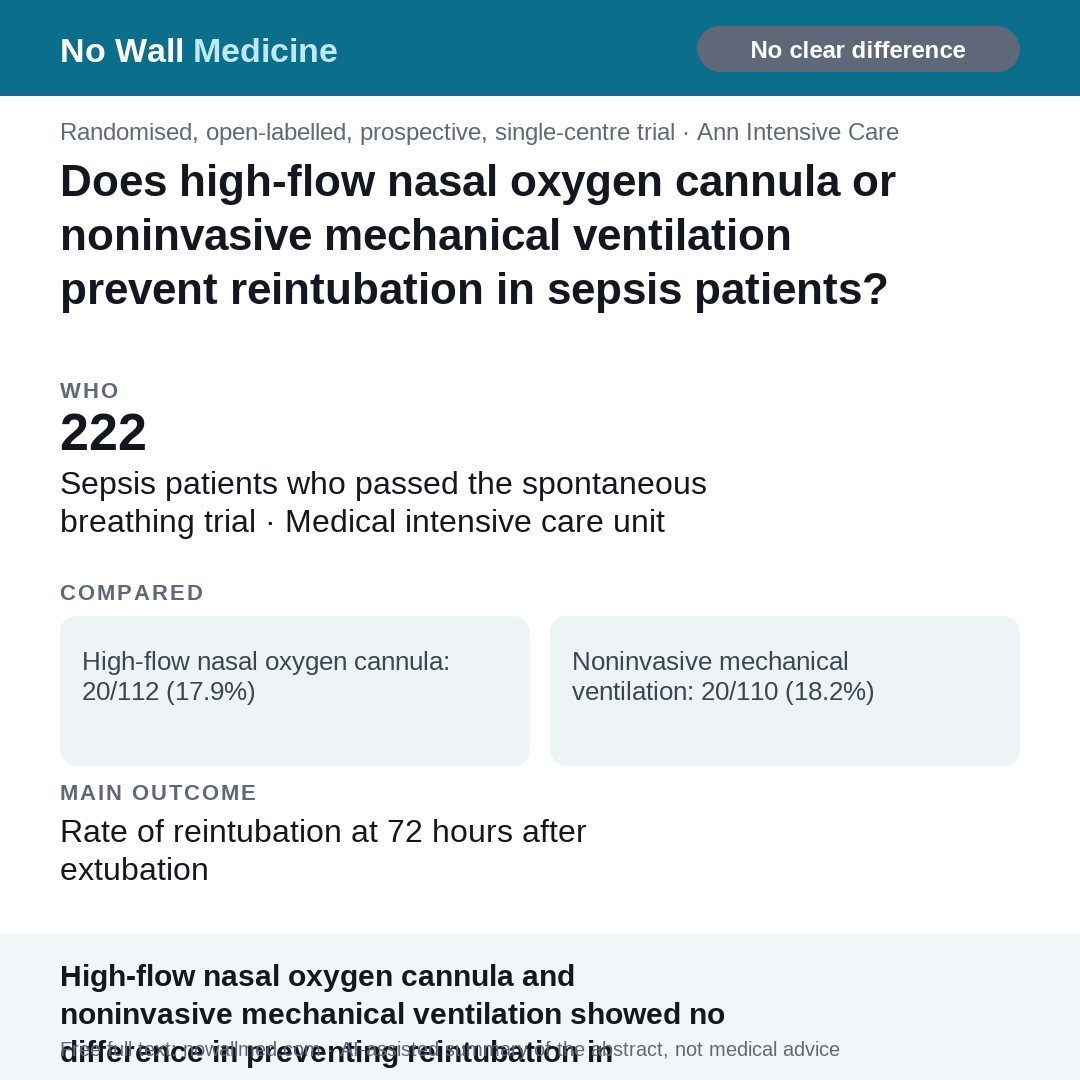
Clinical question: Does high-flow nasal oxygen cannula or noninvasive mechanical ventilation prevent reintubation in sepsis patients?
Why it matters: It was unclear whether high-flow nasal oxygen cannula or noninvasive mechanical ventilation is more effective at preventing reintubation in patients with sepsis after they are extubated.
Key points
- Researchers studied 222 sepsis patients who were randomly assigned to receive either high-flow nasal oxygen cannula or noninvasive mechanical ventilation after being taken off a breathing tube.
- The rate of reintubation at 72 h was 17.9% for the high-flow nasal oxygen group and 18.2% for the noninvasive mechanical ventilation group.
- There was no significant difference in 28-day mortality between the high-flow nasal oxygen group at 7.1% and the noninvasive mechanical ventilation group at 9.1%.
Headline and key points written with AI from the paper’s abstract, with every number checked against it. Read the paper before relying on them.
Was this summary helpful?
Cite this article
Tongyoo S, Tantibundit P, Daorattanachai K, Viarasilpa T, Permpikul C, Udompanturak S. High-flow nasal oxygen cannula vs. noninvasive mechanical ventilation to prevent reintubation in sepsis: a randomized controlled trial. Ann Intensive Care. 2021. doi:10.1186/s13613-021-00922-5
Spotted a mistake? Suggest a correction
Top studies every Monday
The week’s key trials and guidelines in your specialties, plus any topics you follow. By email, free.
Get the weekly digest