High-flow nasal oxygen cannula vs. noninvasive mechanical ventilation to prevent reintubation in sepsis: a randomized controlled trial
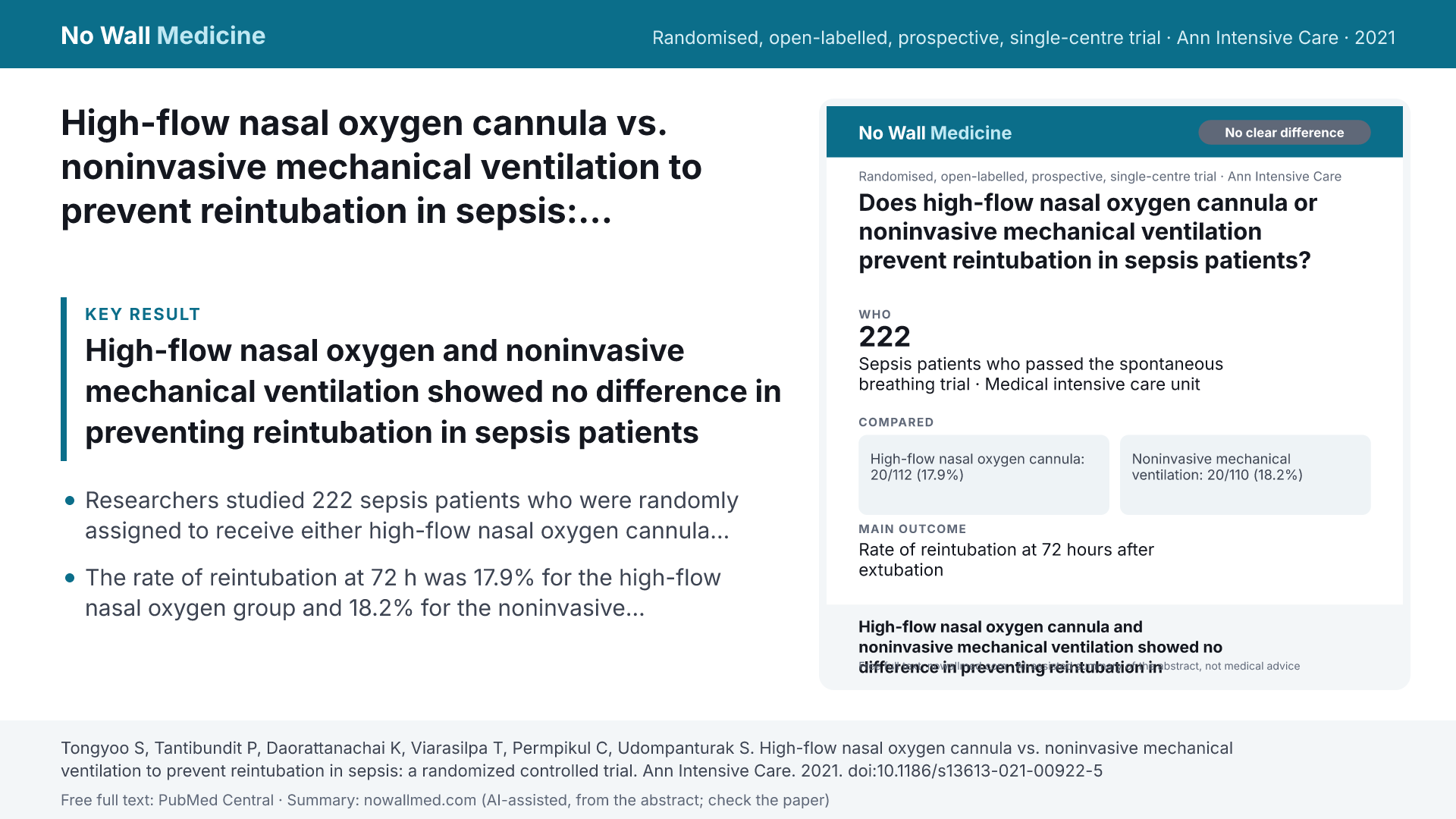
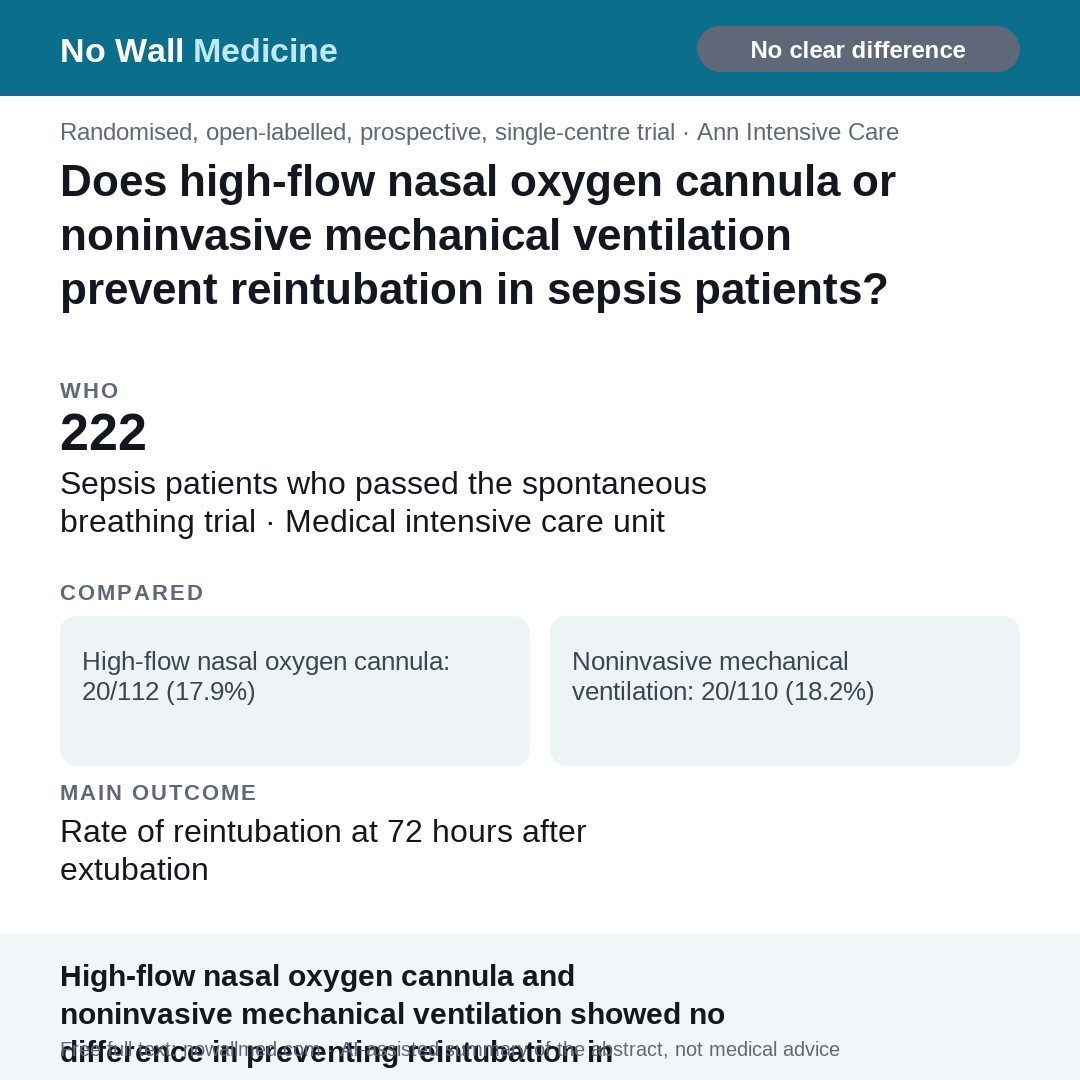
Key result: High-flow nasal oxygen and noninvasive mechanical ventilation showed no difference in preventing reintubation in sepsis patients
Key points
- Researchers studied 222 sepsis patients who were randomly assigned to receive either high-flow nasal oxygen cannula or noninvasive mechanical ventilation after being taken off a breathing tube.
- The rate of reintubation at 72 h was 17.9% for the high-flow nasal oxygen group and 18.2% for the noninvasive mechanical ventilation group.
- There was no significant difference in 28-day mortality between the high-flow nasal oxygen group at 7.1% and the noninvasive mechanical ventilation group at 9.1%.
Why it matters: It was unclear whether high-flow nasal oxygen cannula or noninvasive mechanical ventilation is more effective at preventing reintubation in patients with sepsis after they are extubated.
Discussion prompts
- Would these patients look like yours? Who was left out?
- Is the main outcome one that matters to patients?
- Is the difference large enough to change what you do?
Cite: Tongyoo S, Tantibundit P, Daorattanachai K, Viarasilpa T, Permpikul C, Udompanturak S. High-flow nasal oxygen cannula vs. noninvasive mechanical ventilation to prevent reintubation in sepsis: a randomized controlled trial. Ann Intensive Care. 2021. doi:10.1186/s13613-021-00922-5
Free full text: PubMed Central · Summary and visual abstract: nowallmed.com/a/high-flow-nasal-oxygen-cannula-vs-noninvasive-mechanical-ventilation-1amfgpu/ (AI-assisted from the abstract; check the paper before relying on it).