Polymethylmethacrylate membranes reduced soluble CD40 ligand levels compared to polysulfone in hemodialysis patients
High-flux hemodialysis with polymethylmethacrylate membranes reduces soluble CD40L, a mediator of cardiovascular disease in uremia
Randomized crossover trialBenefit found
Does polymethylmethacrylate membrane reduce soluble CD40 ligand levels compared to polysulfone?
Who
54
High-flux hemodialysis patients with soluble CD40 ligand above median
Compared
Polymethylmethacrylate: significantly reduced soluble CD40 ligand levels
Polysulfone
Main outcome
soluble CD40 ligand levels
Bottom line: Polymethylmethacrylate membranes significantly reduce soluble CD40 ligand levels compared to polysulfone in high-risk hemodialysis patients.
Nephrol Dial Transplant · 2025-06-06 · Save PNG
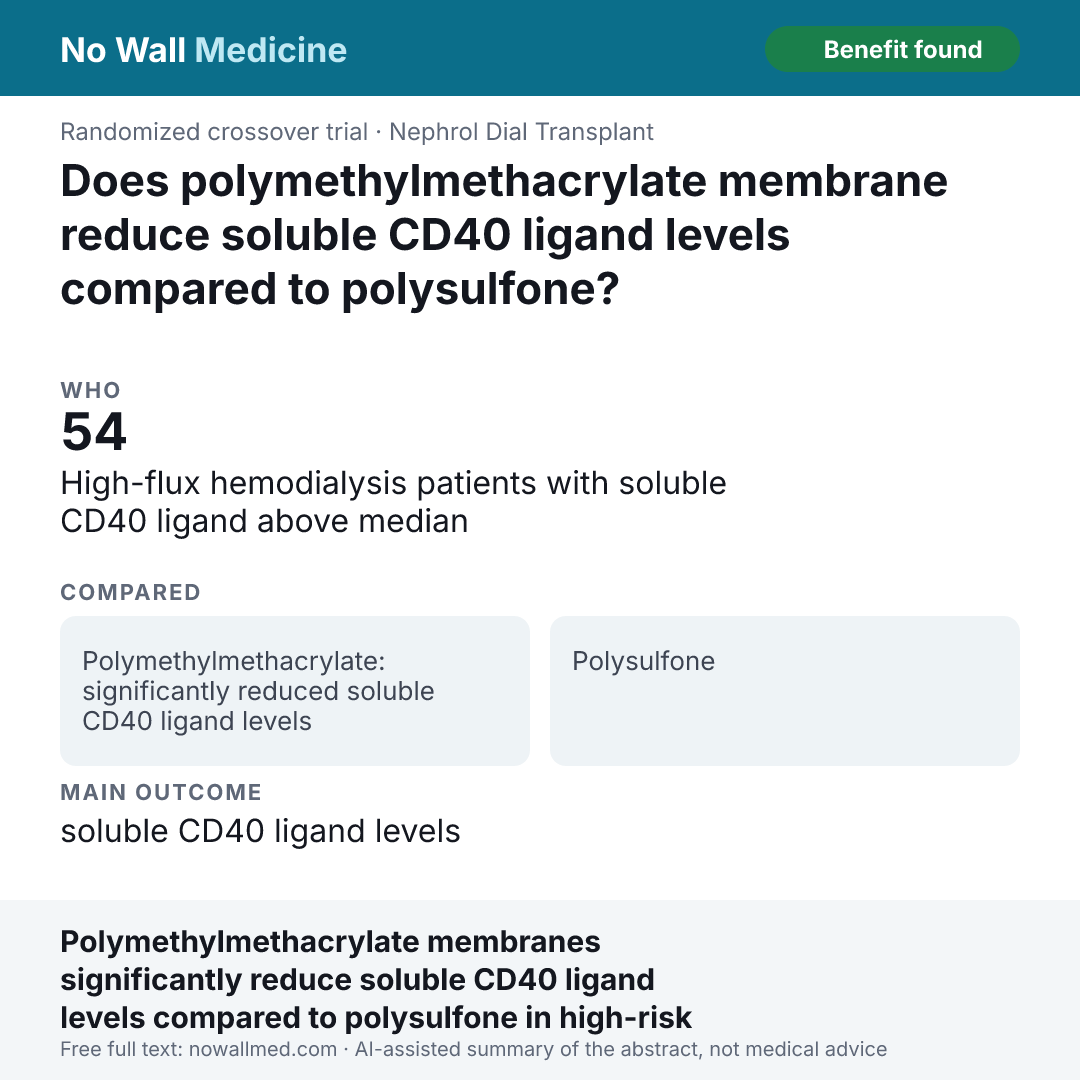
Clinical question: Does polymethylmethacrylate membrane reduce soluble CD40 ligand levels compared to polysulfone?
Why it matters: Soluble CD40 ligand is a potential mediator of major adverse cardiovascular events in patients undergoing hemodialysis.
Key points
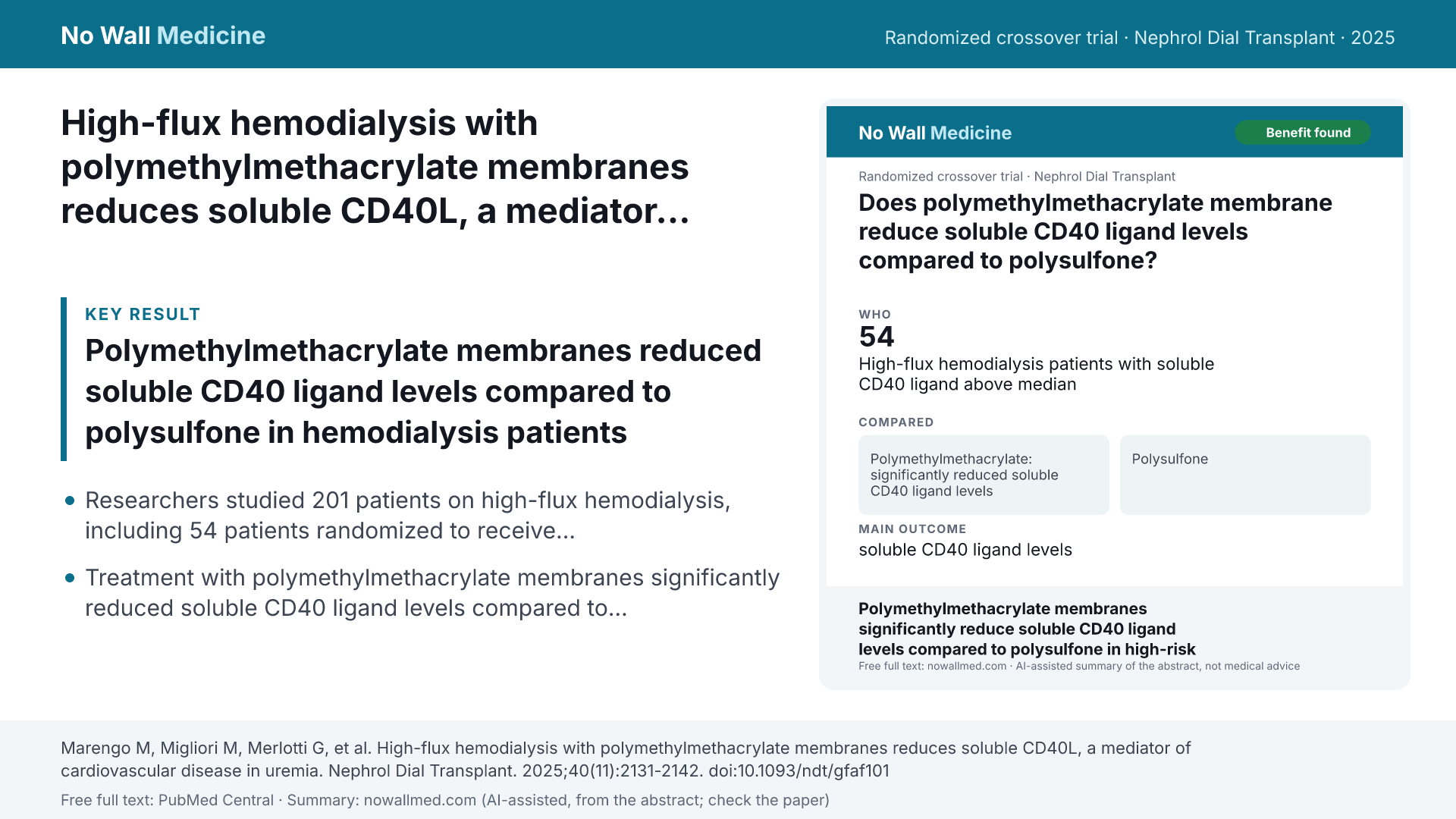
- Researchers studied 201 patients on high-flux hemodialysis, including 54 patients randomized to receive either polymethylmethacrylate or polysulfone membranes for 9 months.
- Treatment with polymethylmethacrylate membranes significantly reduced soluble CD40 ligand levels compared to polysulfone membranes.
- In laboratory tests, sera collected after polymethylmethacrylate treatment reduced endothelial cell dysfunction and vascular smooth muscle cell calcification.
Headline and key points written with AI from the paper’s abstract, with every number checked against it. Read the paper before relying on them.
Was this summary helpful?
Subject terms
Headline, design, result, key points, caveat and citation as plain text.
Cite this article
Marengo M, Migliori M, Merlotti G, et al. High-flux hemodialysis with polymethylmethacrylate membranes reduces soluble CD40L, a mediator of cardiovascular disease in uremia. Nephrol Dial Transplant. 2025;40(11):2131-2142. doi:10.1093/ndt/gfaf101
Spotted a mistake? Suggest a correction