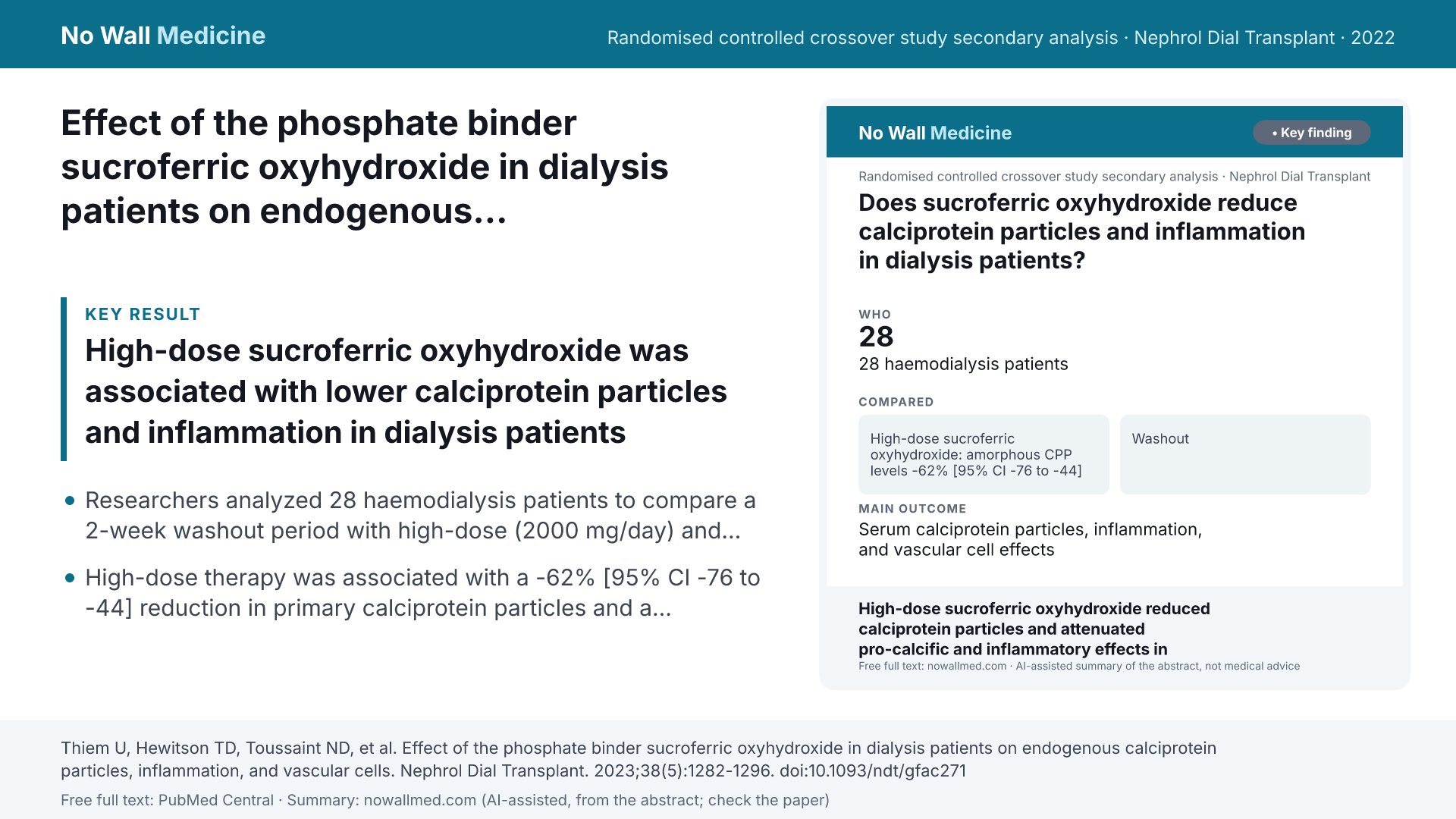
High-dose sucroferric oxyhydroxide was associated with lower calciprotein particles and inflammation in dialysis patients
Effect of the phosphate binder sucroferric oxyhydroxide in dialysis patients on endogenous calciprotein particles, inflammation, and vascular cells
Randomised controlled crossover study secondary analysisKey finding
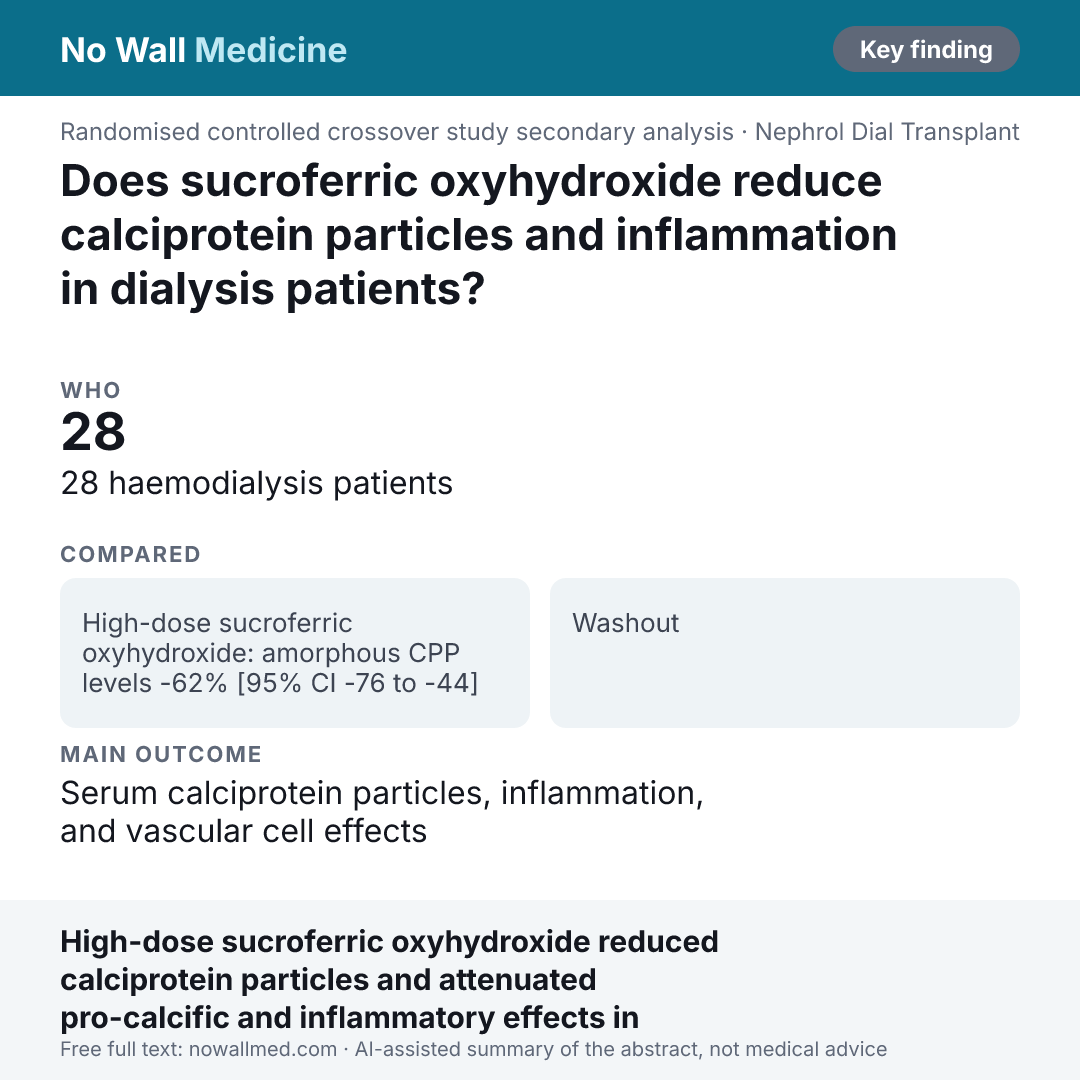
Does sucroferric oxyhydroxide reduce calciprotein particles and inflammation in dialysis patients?
Who
28
28 haemodialysis patients
Compared
High-dose sucroferric oxyhydroxide: amorphous CPP levels -62% [95% CI -76 to -44]
Washout
Main outcome
Serum calciprotein particles, inflammation, and vascular cell effects
Bottom line: High-dose sucroferric oxyhydroxide reduced calciprotein particles and attenuated pro-calcific and inflammatory effects in dialysis patients.
Nephrol Dial Transplant · 2022-09-16 · Save PNG
Clinical question: Does sucroferric oxyhydroxide reduce calciprotein particles and inflammation in dialysis patients?
Key points
- Researchers analyzed 28 haemodialysis patients to compare a 2-week washout period with high-dose (2000 mg/day) and low-dose (250 mg/day) sucroferric oxyhydroxide therapy.
- High-dose therapy was associated with a -62% [95% CI -76 to -44] reduction in primary calciprotein particles and a -38% [-62 to -0.14] reduction in secondary calciprotein particles compared to washout.
- High-dose therapy was associated with significant decreases in nine of 14 plasma cytokines and chemokines, including interleukin-6 and interleukin-8.
Headline and key points written with AI from the paper’s abstract, with every number checked against it. Read the paper before relying on them.
Was this summary helpful?
Subject terms
Headline, design, result, key points, caveat and citation as plain text.
Cite this article
Thiem U, Hewitson TD, Toussaint ND, et al. Effect of the phosphate binder sucroferric oxyhydroxide in dialysis patients on endogenous calciprotein particles, inflammation, and vascular cells. Nephrol Dial Transplant. 2023;38(5):1282-1296. doi:10.1093/ndt/gfac271
Spotted a mistake? Suggest a correction