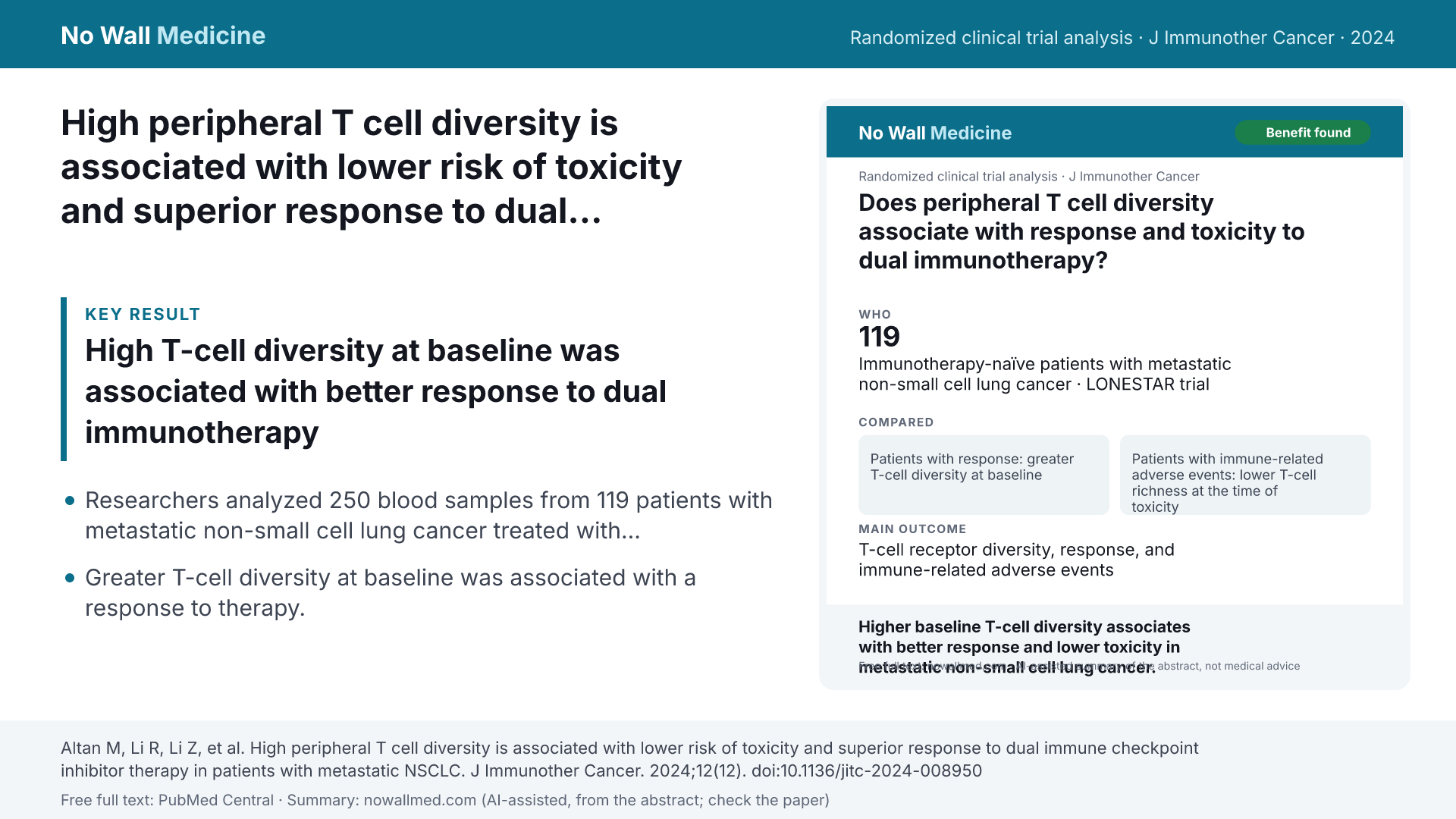
High peripheral T cell diversity is associated with lower risk of toxicity and superior response to dual immune checkpoint inhibitor therapy in patients with metastatic NSCLC
Key result: High T-cell diversity at baseline was associated with better response to dual immunotherapy
Randomized clinical trial analysisBenefit found
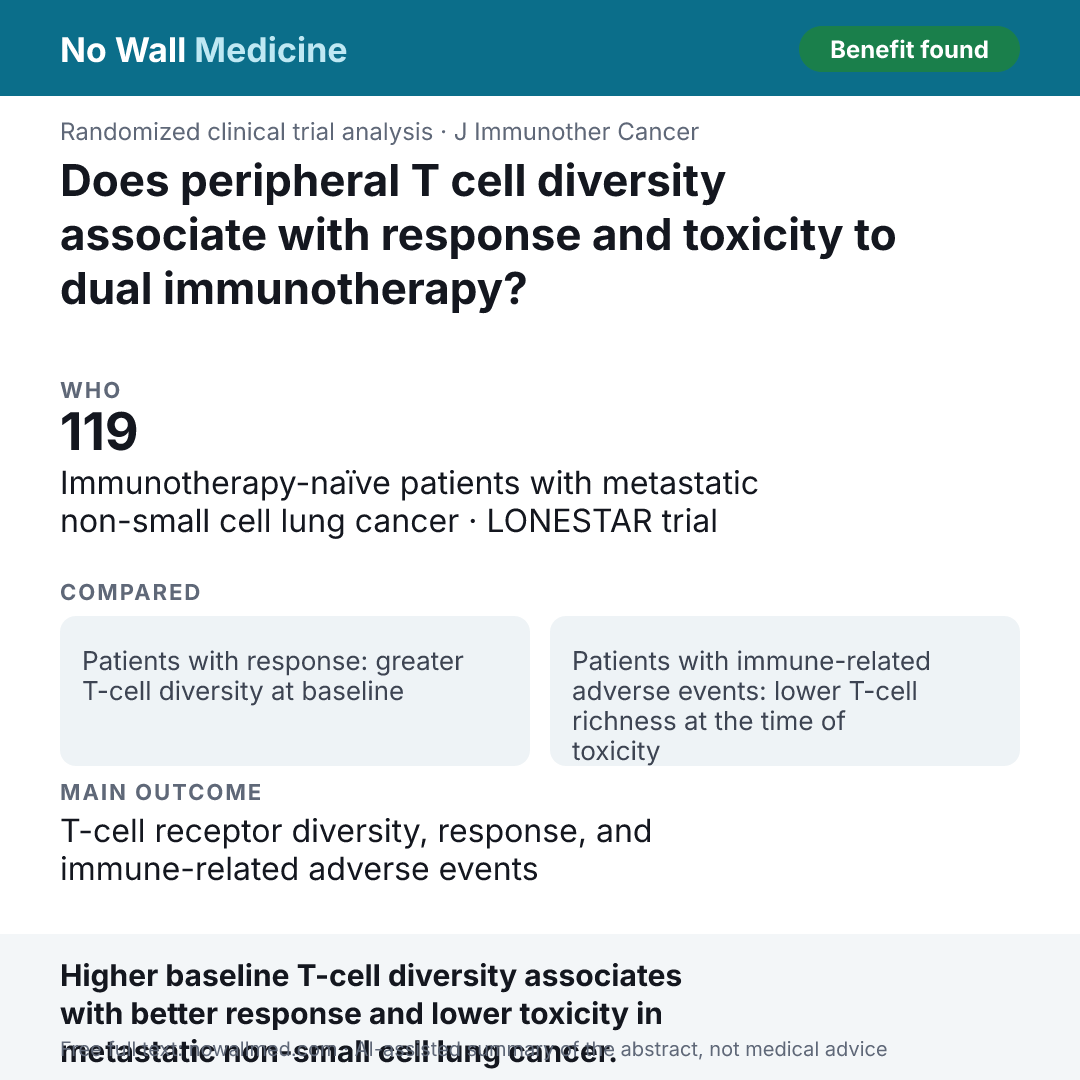
Does peripheral T cell diversity associate with response and toxicity to dual immunotherapy?
Who
119
Immunotherapy-naïve patients with metastatic non-small cell lung cancer · LONESTAR trial
Compared
Patients with response: greater T-cell diversity at baseline
Patients with immune-related adverse events: lower T-cell richness at the time of toxicity
Main outcome
T-cell receptor diversity, response, and immune-related adverse events
Bottom line: Higher baseline T-cell diversity associates with better response and lower toxicity in metastatic non-small cell lung cancer.
J Immunother Cancer · 2024-12-25 · Save PNG
Key points
- Researchers analyzed 250 blood samples from 119 patients with metastatic non-small cell lung cancer treated with ipilimumab and nivolumab.
- Greater T-cell diversity at baseline was associated with a response to therapy.
- Lower T-cell richness at the time of toxicity was associated with patients experiencing immune-related adverse events of grade 2 or higher.
Why it matters: Predictive markers for response to immune checkpoint blockade are imperfect and immune-related adverse events remain unpredictable.
Discussion prompts
- Would these patients look like yours? Who was left out?
- Is the main outcome one that matters to patients?
- Is the difference large enough to change what you do?
Cite: Altan M, Li R, Li Z, et al. High peripheral T cell diversity is associated with lower risk of toxicity and superior response to dual immune checkpoint inhibitor therapy in patients with metastatic NSCLC. J Immunother Cancer. 2024;12(12). doi:10.1136/jitc-2024-008950
Free full text: PubMed Central · Summary and visual abstract: nowallmed.com/a/high-peripheral-t-cell-diversity-is-associated-with-lower-risk-of-1cgw4aa/ (AI-assisted from the abstract; check the paper before relying on it).