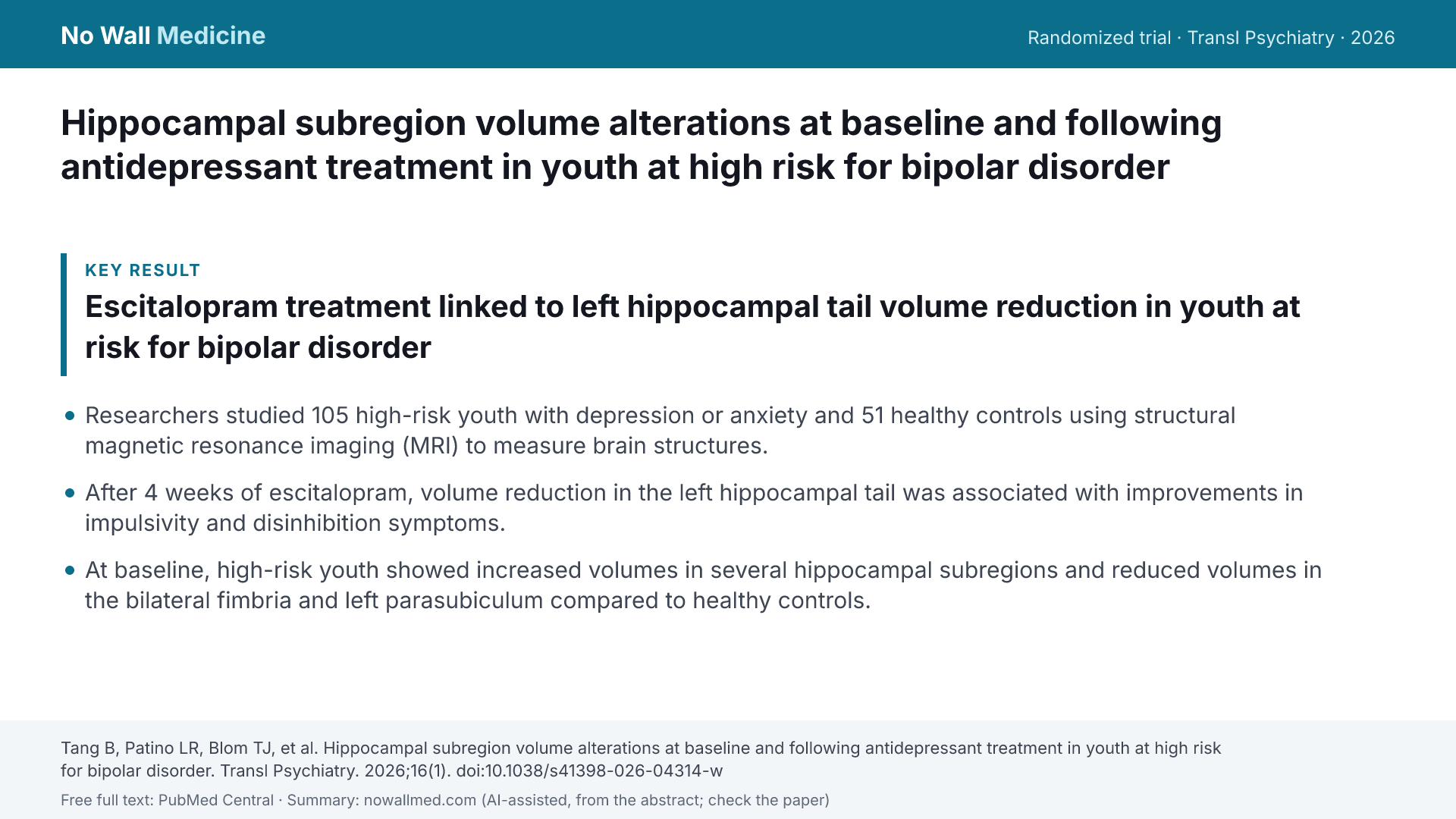
Escitalopram treatment linked to left hippocampal tail volume reduction in youth at risk for bipolar disorder
Hippocampal subregion volume alterations at baseline and following antidepressant treatment in youth at high risk for bipolar disorder
Why it matters: It is important to understand how brain structure changes in high-risk youth during antidepressant treatment to better understand bipolar disorder development.
Key points
- Researchers studied 105 high-risk youth with depression or anxiety and 51 healthy controls using structural magnetic resonance imaging (MRI) to measure brain structures.
- After 4 weeks of escitalopram, volume reduction in the left hippocampal tail was associated with improvements in impulsivity and disinhibition symptoms.
- At baseline, high-risk youth showed increased volumes in several hippocampal subregions and reduced volumes in the bilateral fimbria and left parasubiculum compared to healthy controls.
Headline and key points written with AI from the paper’s abstract, with every number checked against it. Read the paper before relying on them.
Was this summary helpful?
Subject terms
Cite this article
Tang B, Patino LR, Blom TJ, et al. Hippocampal subregion volume alterations at baseline and following antidepressant treatment in youth at high risk for bipolar disorder. Transl Psychiatry. 2026. doi:10.1038/s41398-026-04314-w
Spotted a mistake? Suggest a correction