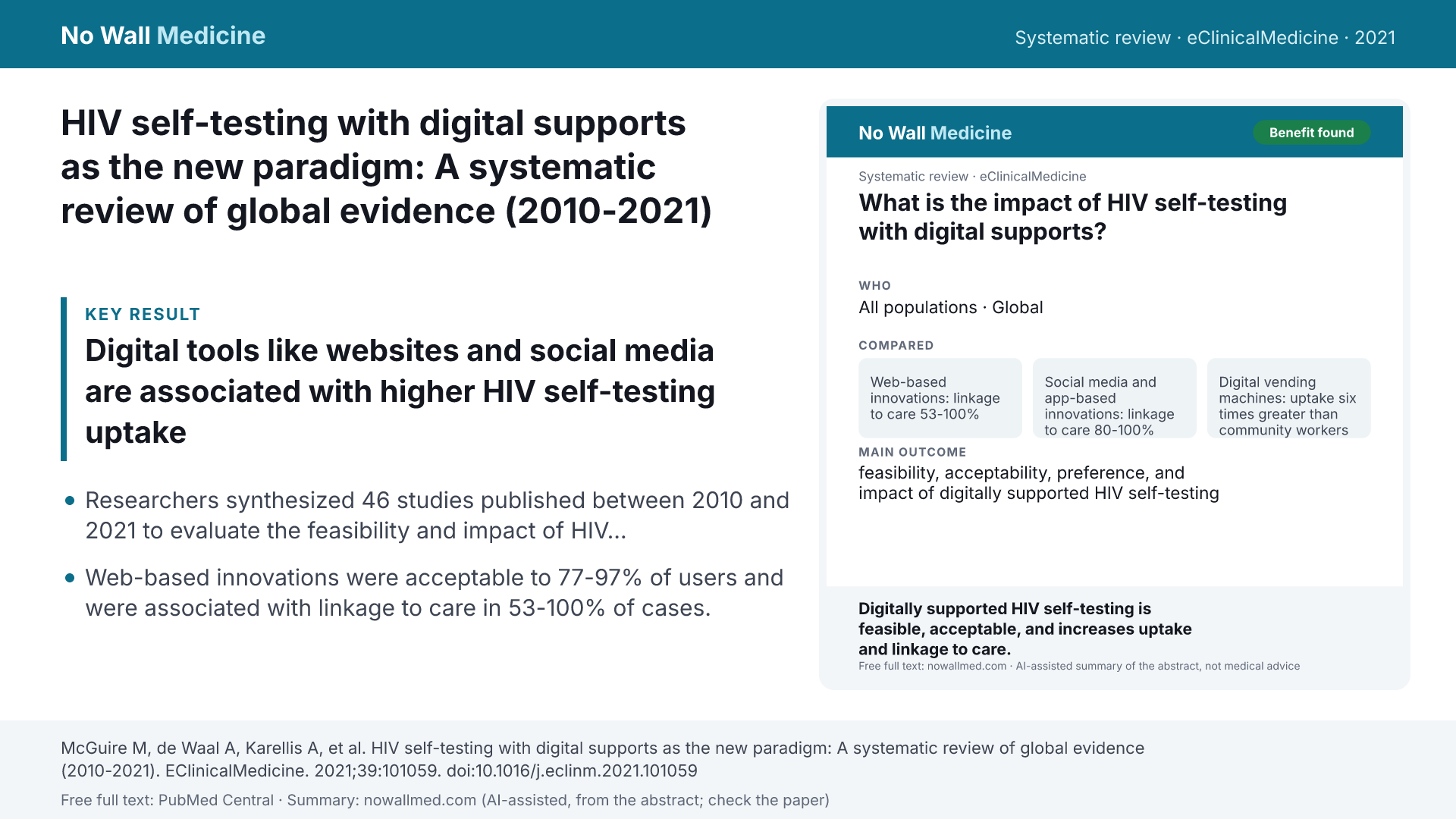
Digital tools like websites and social media are associated with higher HIV self-testing uptake
HIV self-testing with digital supports as the new paradigm: A systematic review of global evidence (2010-2021)
Systematic reviewBenefit found
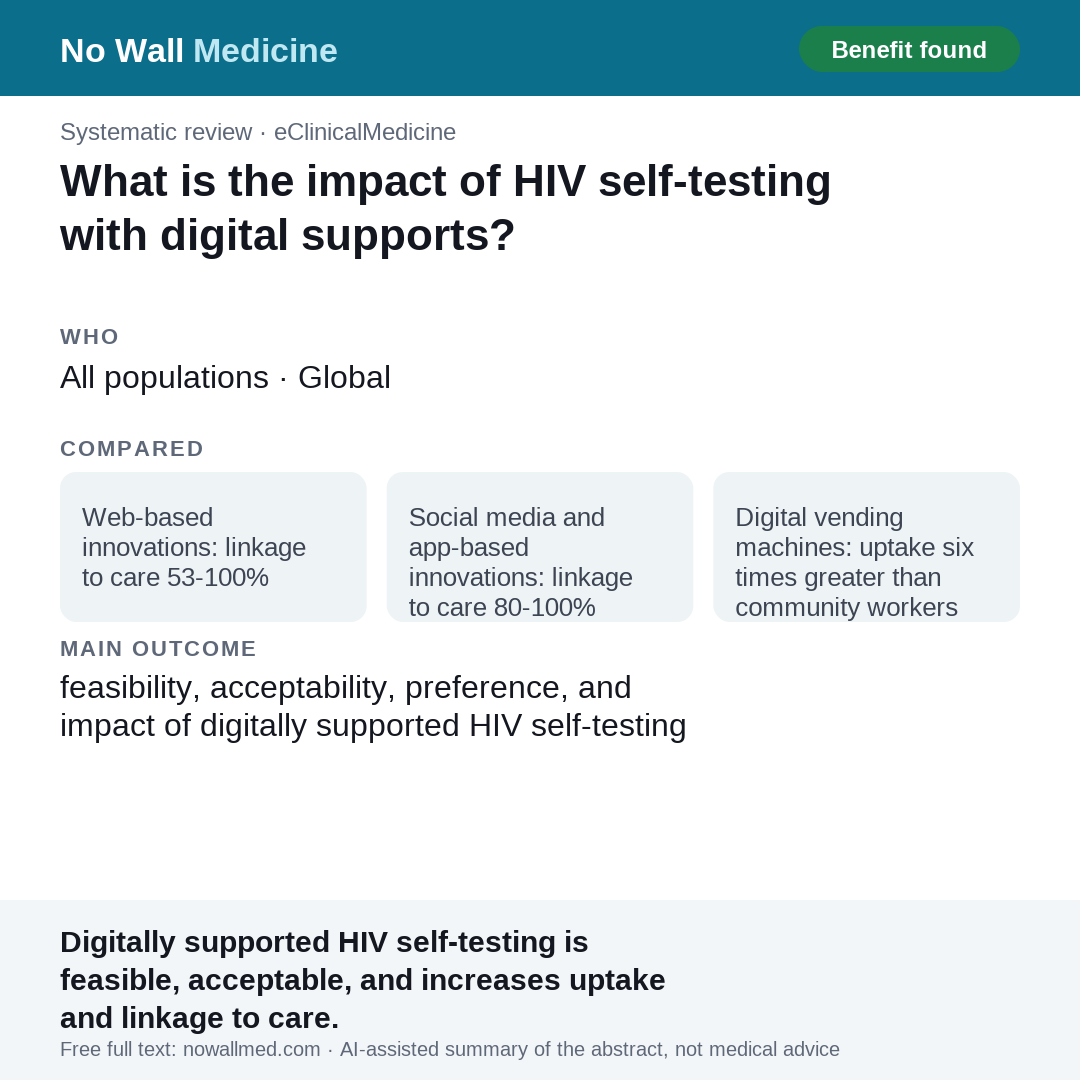
What is the impact of HIV self-testing with digital supports?
Who
All populations · Global
Compared
Web-based innovations: linkage to care 53-100%
Social media and app-based innovations: linkage to care 80-100%
Digital vending machines: uptake six times greater than community workers
Main outcome
feasibility, acceptability, preference, and impact of digitally supported HIV self-testing
Bottom line: Digitally supported HIV self-testing is feasible, acceptable, and increases uptake and linkage to care.
eClinicalMedicine · 2021-08-13Download image
Clinical question: What is the impact of HIV self-testing with digital supports?
Why it matters: It was unknown how digital interventions like mobile apps, social media, or text messaging impact the efficiency and effectiveness of HIV self-testing.
Key points
- Researchers synthesized 46 studies published between 2010 and 2021 to evaluate the feasibility and impact of HIV self-testing supported by digital tools.
- Web-based innovations were acceptable to 77-97% of users and were associated with linkage to care in 53-100% of cases.
- Digital vending machines were associated with HIV self-testing uptake that was six times greater than distribution by community workers.
Limitation the authors note: The heterogeneity of the interventions and reported metrics precluded the researchers from conducting a meta-analysis.
Headline and key points written with AI from the paper’s abstract, with every number checked against it. Read the paper before relying on them.
Was this summary helpful?
Cite this article
McGuire M, de Waal A, Karellis A, Janssen R, Engel N, Sampath R. HIV self-testing with digital supports as the new paradigm: A systematic review of global evidence (2010-2021). eClinicalMedicine. 2021. doi:10.1016/j.eclinm.2021.101059
Spotted a mistake? Suggest a correction
Top studies every Monday
The week’s key trials and guidelines in your specialties, plus any topics you follow. By email, free.
Get the weekly digest