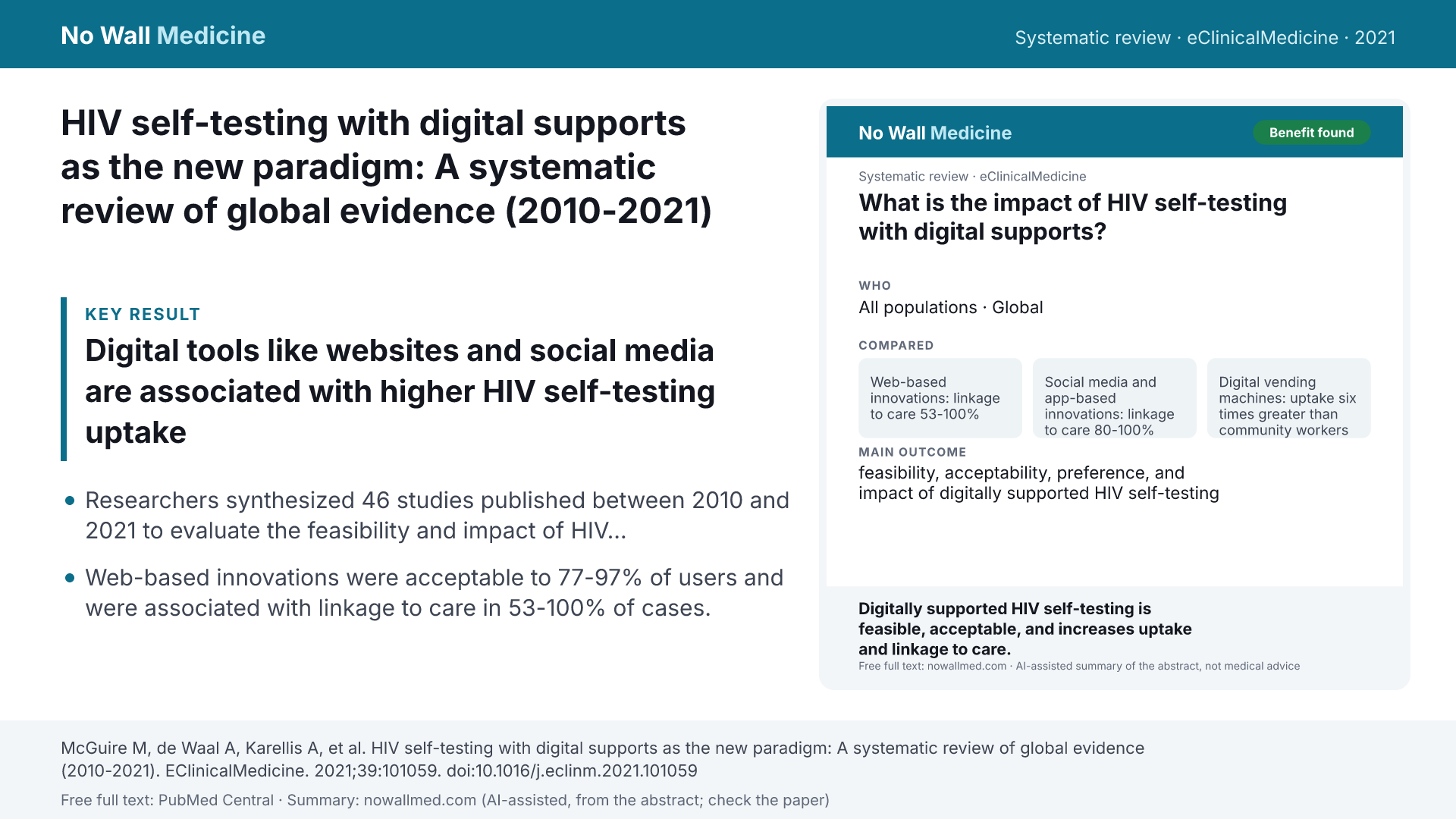
HIV self-testing with digital supports as the new paradigm: A systematic review of global evidence (2010-2021)
Key result: Digital tools like websites and social media are associated with higher HIV self-testing uptake
Key points
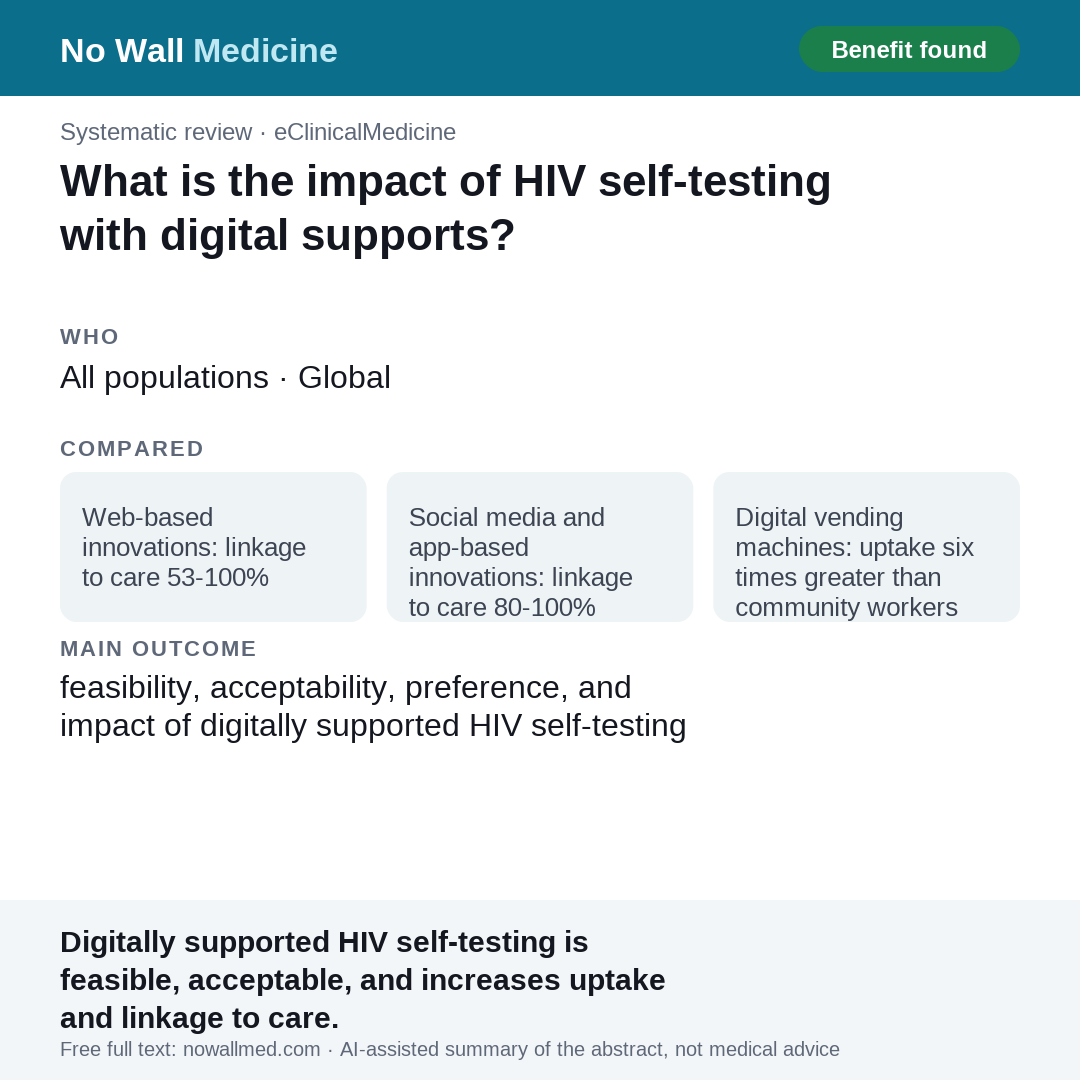
- Researchers synthesized 46 studies published between 2010 and 2021 to evaluate the feasibility and impact of HIV self-testing supported by digital tools.
- Web-based innovations were acceptable to 77-97% of users and were associated with linkage to care in 53-100% of cases.
- Digital vending machines were associated with HIV self-testing uptake that was six times greater than distribution by community workers.
Why it matters: It was unknown how digital interventions like mobile apps, social media, or text messaging impact the efficiency and effectiveness of HIV self-testing.
Limitation the authors note: The heterogeneity of the interventions and reported metrics precluded the researchers from conducting a meta-analysis.
Discussion prompts
- Would these patients look like yours? Who was left out?
- Is the main outcome one that matters to patients?
- Is the difference large enough to change what you do?
Cite: McGuire M, de Waal A, Karellis A, Janssen R, Engel N, Sampath R. HIV self-testing with digital supports as the new paradigm: A systematic review of global evidence (2010-2021). eClinicalMedicine. 2021. doi:10.1016/j.eclinm.2021.101059
Free full text: PubMed Central · Summary and visual abstract: nowallmed.com/a/hiv-self-testing-with-digital-supports-as-the-new-paradigm-a-z8bh4/ (AI-assisted from the abstract; check the paper before relying on it).