Lethal house lure intervention was associated with lower malaria infection prevalence in Côte d'Ivoire
Housing modification for malaria control: impact of a "lethal house lure" intervention on malaria infection prevalence in a cluster randomised control trial in Côte d'Ivoire
Cluster-randomised trialBenefit found
Does house modification reduce malaria infection?
Who
People in forty villages in Côte d'Ivoire · Côte d'Ivoire
Compared
50.4%Control arm
36.7%Intervention arm
Main outcome
Malaria infection prevalence
Result: odds ratio 0.57 (0.45-0.71)
Bottom line: House modification reduces malaria infection prevalence
BMC Med · 2023-05-04Download image
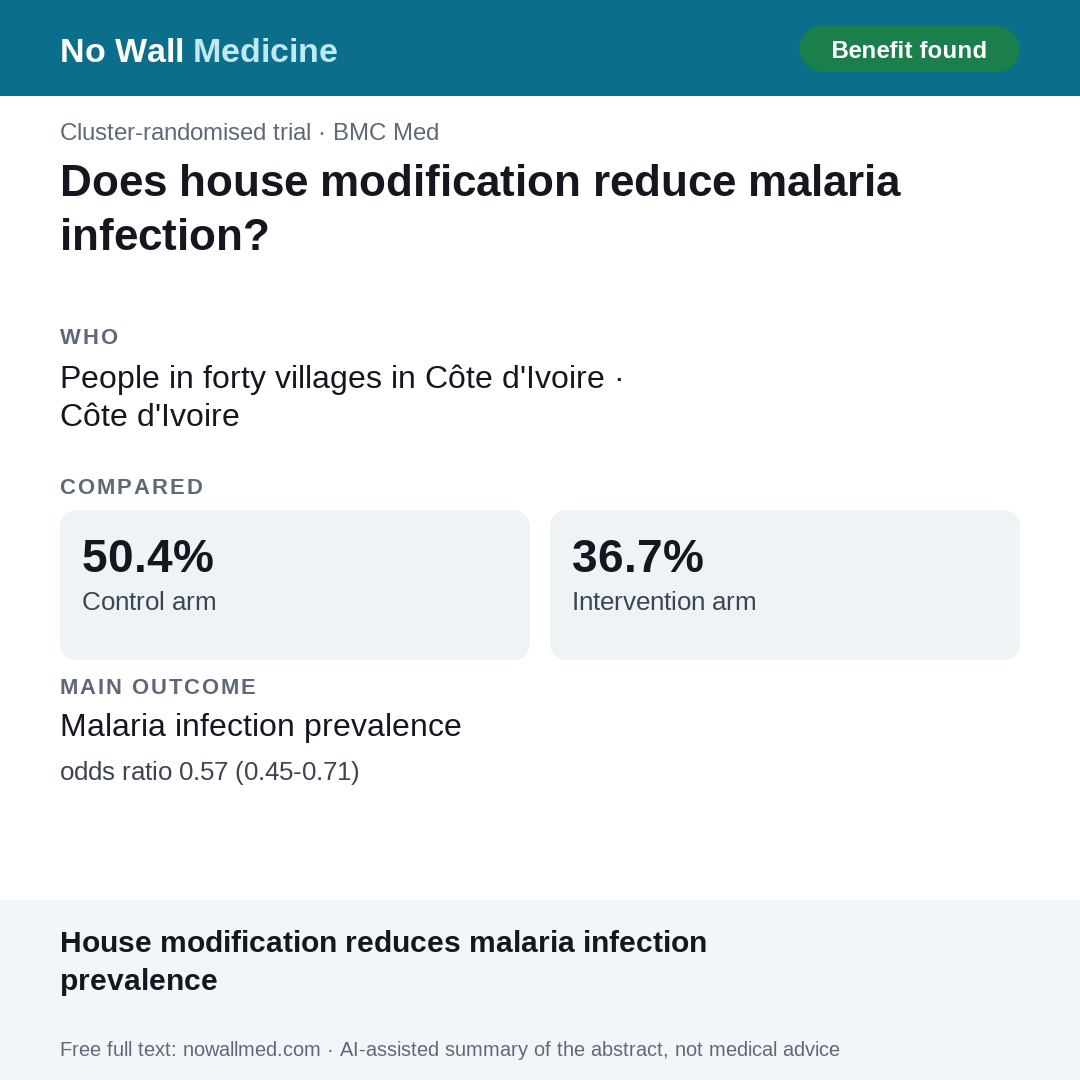
Clinical question: Does house modification reduce malaria infection?
Why it matters: New tools are needed to further reduce malaria transmission because the downward trajectory of malaria transmission has slowed or reversed in some places.
Key points
- Researchers conducted a cluster-randomized trial in 40 villages to compare a combined house screening and EaveTubes intervention against a control group.
- Malaria infection prevalence measured by rapid diagnostic tests was 50.4% in the control arm and 36.7% in the intervention arm.
- When using microscopy to measure infection, the odds of infection were 36% lower in the intervention group.
Headline and key points written with AI from the paper’s abstract, with every number checked against it. Read the paper before relying on them.
Was this summary helpful?
Subject terms
Cite this article
Cook J, Sternberg E, Aoura CJ, N'Guessan R, Kleinschmidt I, Koffi AA. Housing modification for malaria control: impact of a "lethal house lure" intervention on malaria infection prevalence in a cluster randomised control trial in Côte d'Ivoire. BMC Med. 2023. doi:10.1186/s12916-023-02871-1
Spotted a mistake? Suggest a correction
Top studies every Monday
The week’s key trials and guidelines in your specialties, plus any topics you follow. By email, free.
Get the weekly digest