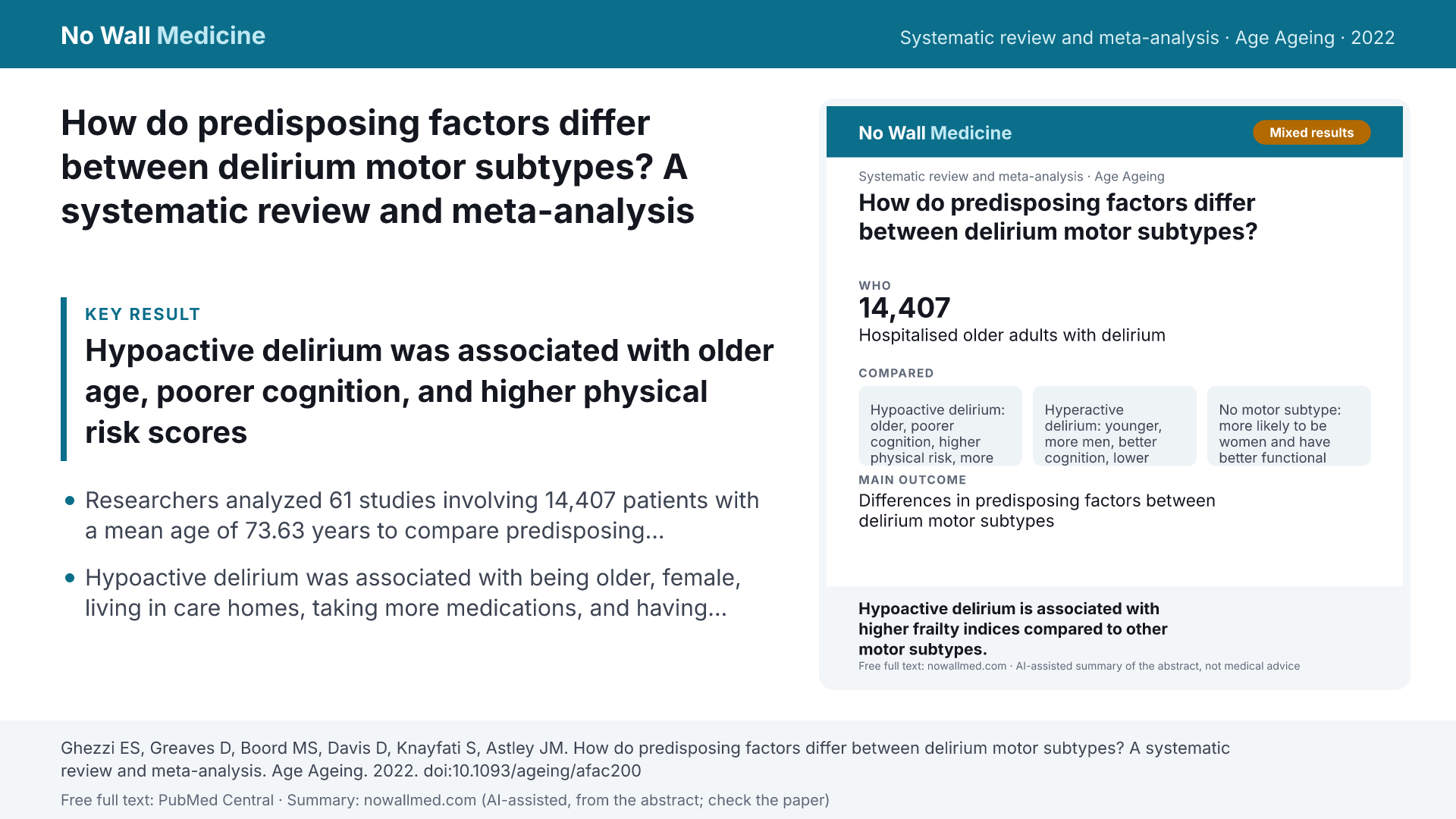
How do predisposing factors differ between delirium motor subtypes? A systematic review and meta-analysis
Key result: Hypoactive delirium was associated with older age, poorer cognition, and higher physical risk scores
Key points
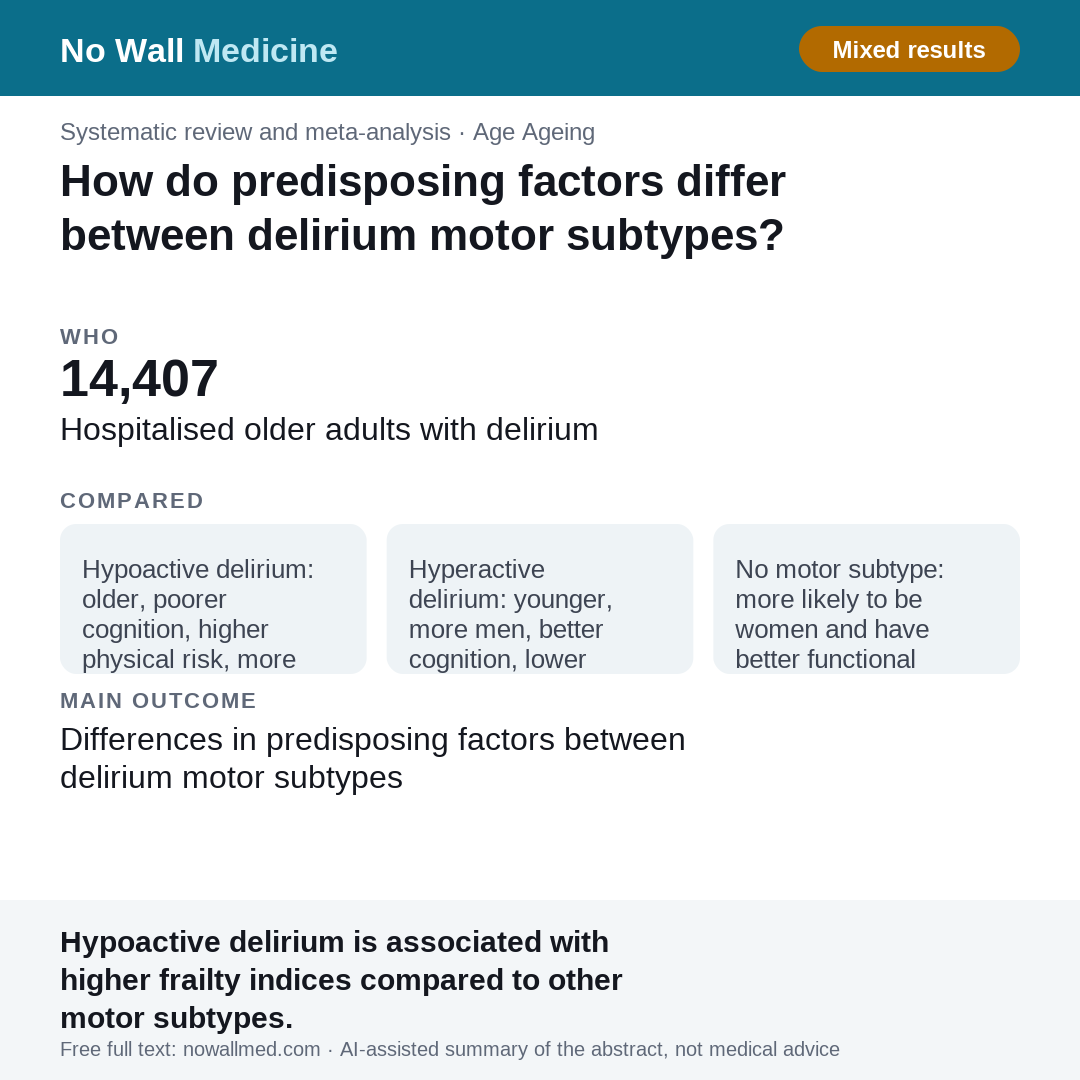
- Researchers analyzed 61 studies involving 14,407 patients with a mean age of 73.63 years to compare predisposing factors across delirium motor subtypes.
- Hypoactive delirium was associated with being older, female, living in care homes, taking more medications, and having worse functional performance or cerebrovascular disease.
- Hyperactive delirium was associated with being younger, male, having better cognition, and having lower physical risk scores compared to other subtypes.
Why it matters: It was unknown how predisposing factors differ between the hypoactive, hyperactive, and mixed motor subtypes of delirium.
Limitation the authors note: The effect sizes were small.
Discussion prompts
- Would these patients look like yours? Who was left out?
- Is the main outcome one that matters to patients?
- Is the difference large enough to change what you do?
Cite: Ghezzi ES, Greaves D, Boord MS, Davis D, Knayfati S, Astley JM. How do predisposing factors differ between delirium motor subtypes? A systematic review and meta-analysis. Age Ageing. 2022. doi:10.1093/ageing/afac200
Free full text: PubMed Central · Summary and visual abstract: nowallmed.com/a/how-do-predisposing-factors-differ-between-delirium-motor-subtypes-a-1f13upp/ (AI-assisted from the abstract; check the paper before relying on it).