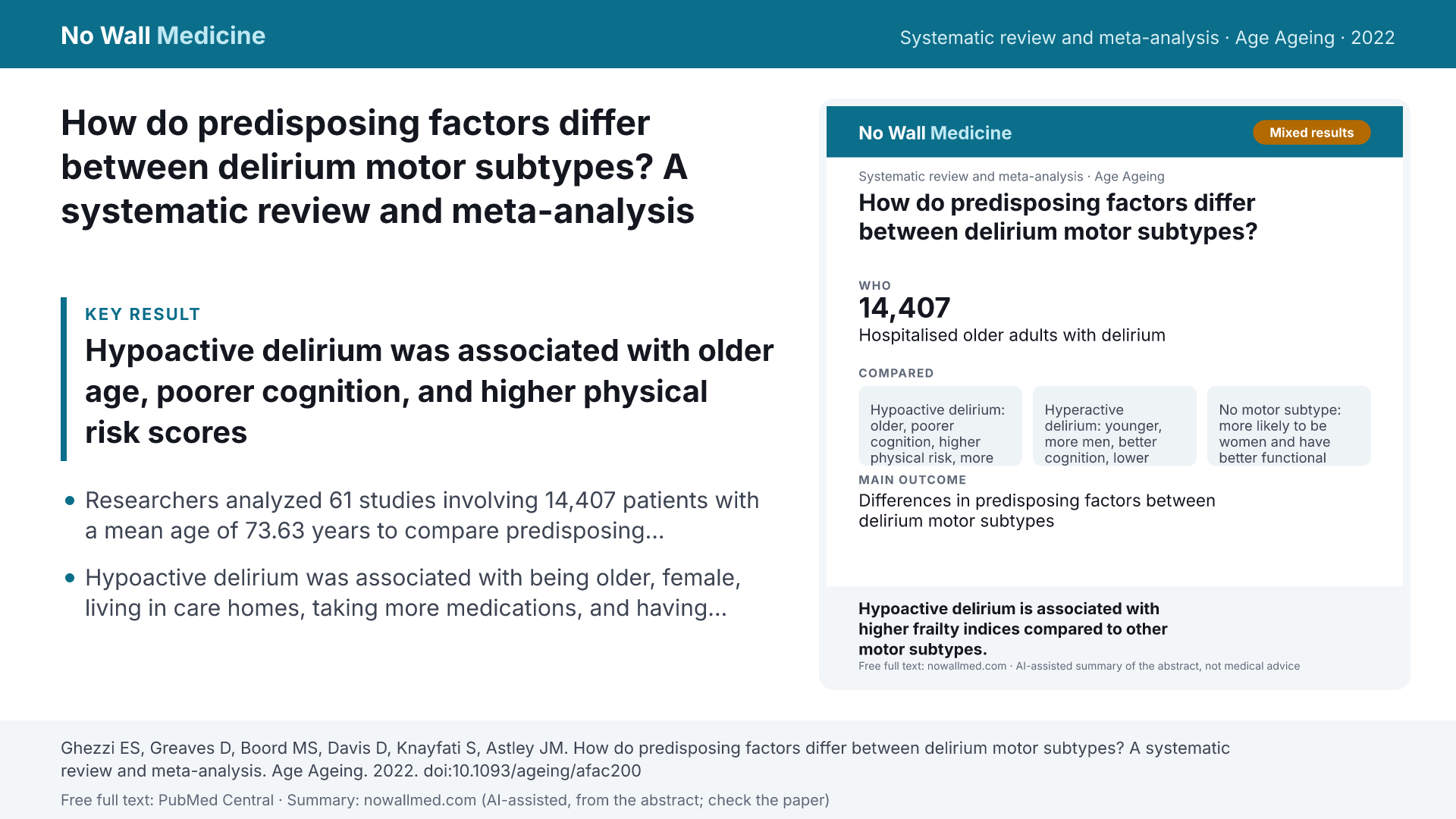
Hypoactive delirium was associated with older age, poorer cognition, and higher physical risk scores
How do predisposing factors differ between delirium motor subtypes? A systematic review and meta-analysis
Systematic review and meta-analysisMixed results
How do predisposing factors differ between delirium motor subtypes?
Who
14,407
Hospitalised older adults with delirium
Compared
Hypoactive delirium: older, poorer cognition, higher physical risk, more women, care homes, more medications, worse functional performance, cerebrovascular disease
Hyperactive delirium: younger, more men, better cognition, lower physical risk
No motor subtype: more likely to be women and have better functional performance
Main outcome
Differences in predisposing factors between delirium motor subtypes
Bottom line: Hypoactive delirium is associated with higher frailty indices compared to other motor subtypes.
Age Ageing · 2022-09-25Download image
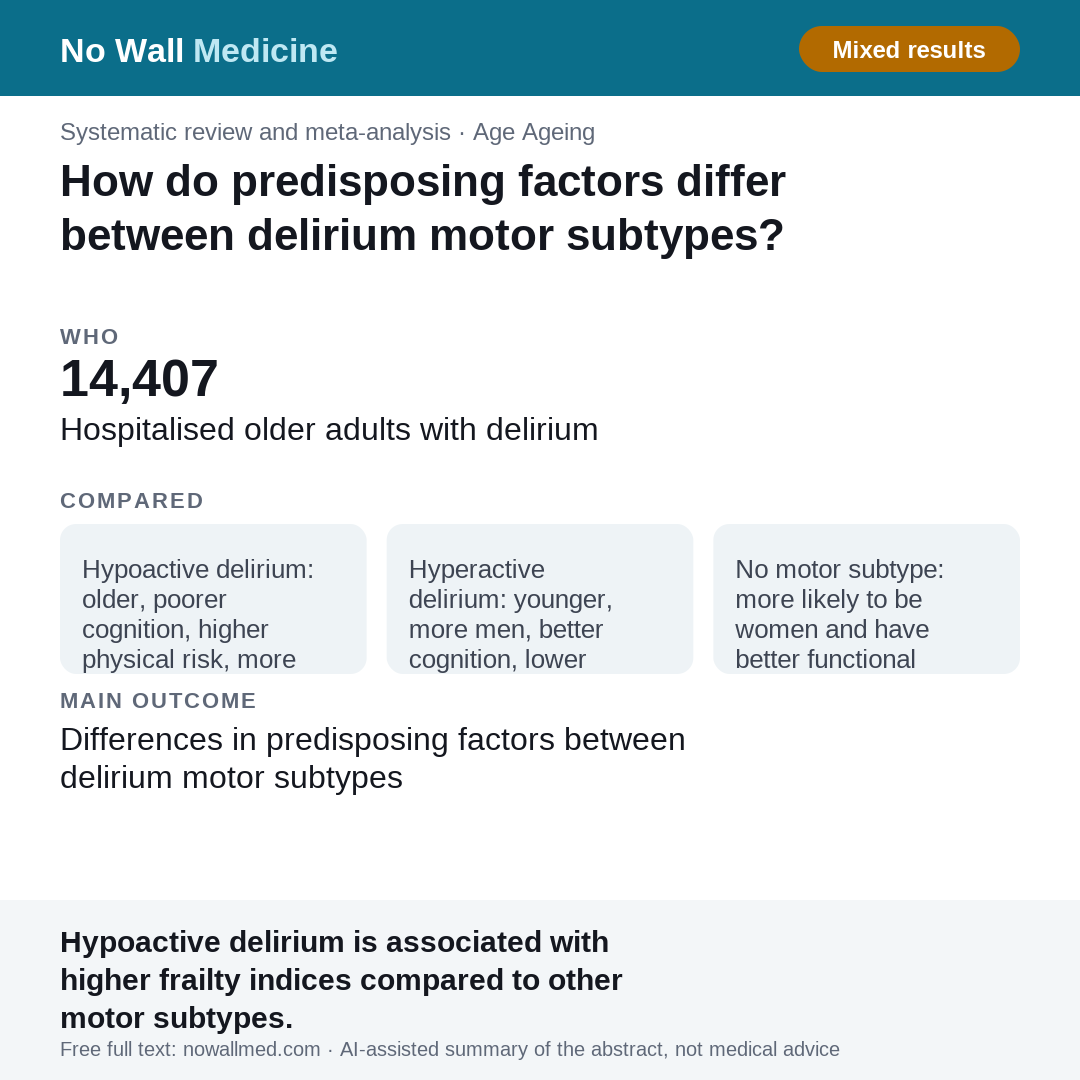
Clinical question: How do predisposing factors differ between delirium motor subtypes?
Why it matters: It was unknown how predisposing factors differ between the hypoactive, hyperactive, and mixed motor subtypes of delirium.
Key points
- Researchers analyzed 61 studies involving 14,407 patients with a mean age of 73.63 years to compare predisposing factors across delirium motor subtypes.
- Hypoactive delirium was associated with being older, female, living in care homes, taking more medications, and having worse functional performance or cerebrovascular disease.
- Hyperactive delirium was associated with being younger, male, having better cognition, and having lower physical risk scores compared to other subtypes.
Limitation the authors note: The effect sizes were small.
Headline and key points written with AI from the paper’s abstract, with every number checked against it. Read the paper before relying on them.
Was this summary helpful?
Subject terms
Cite this article
Ghezzi ES, Greaves D, Boord MS, Davis D, Knayfati S, Astley JM. How do predisposing factors differ between delirium motor subtypes? A systematic review and meta-analysis. Age Ageing. 2022. doi:10.1093/ageing/afac200
Spotted a mistake? Suggest a correction