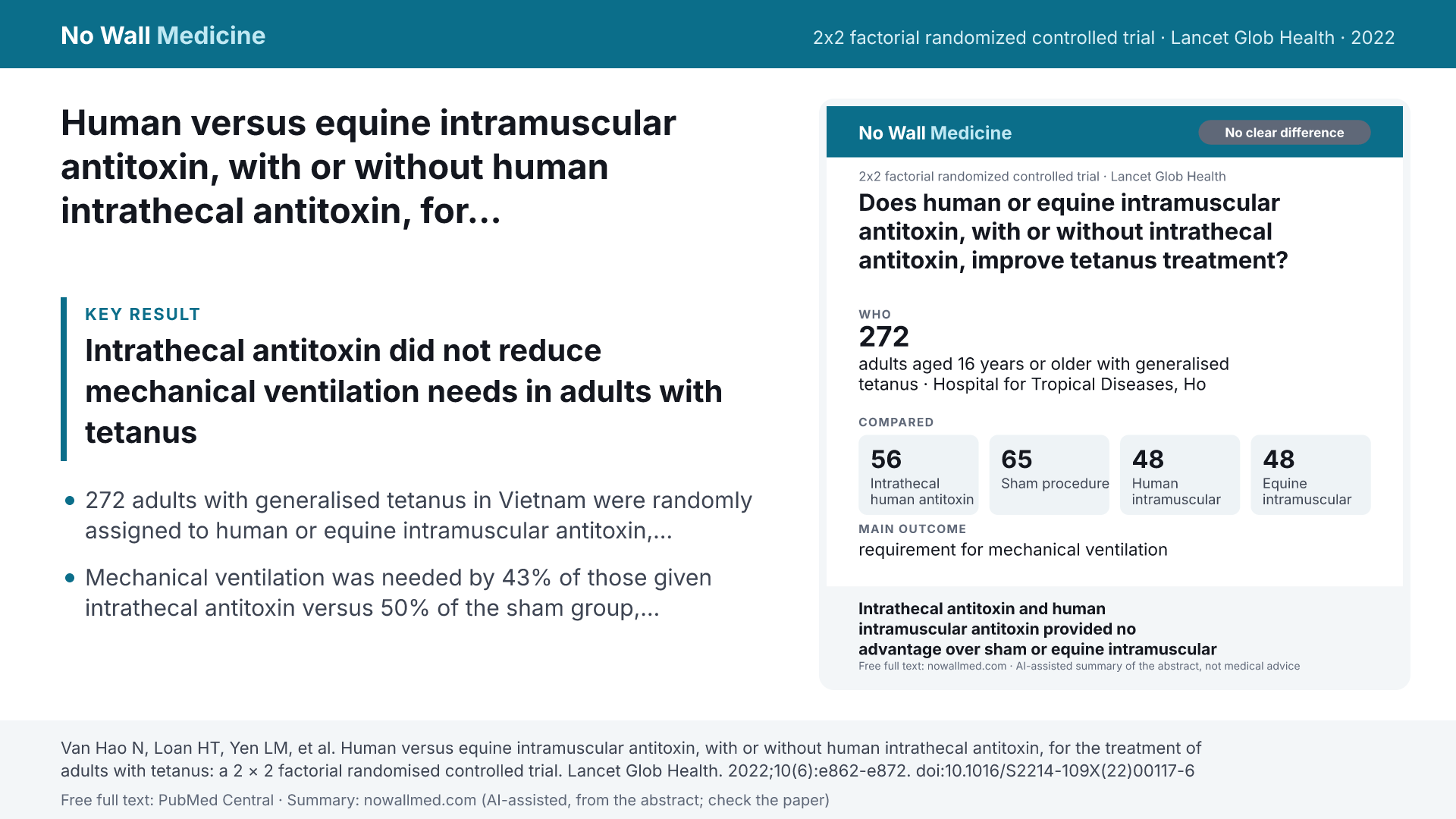
Human versus equine intramuscular antitoxin, with or without human intrathecal antitoxin, for the treatment of adults with tetanus: a 2 × 2 factorial randomised controlled trial
Key result: Intrathecal antitoxin did not reduce mechanical ventilation needs in adults with tetanus
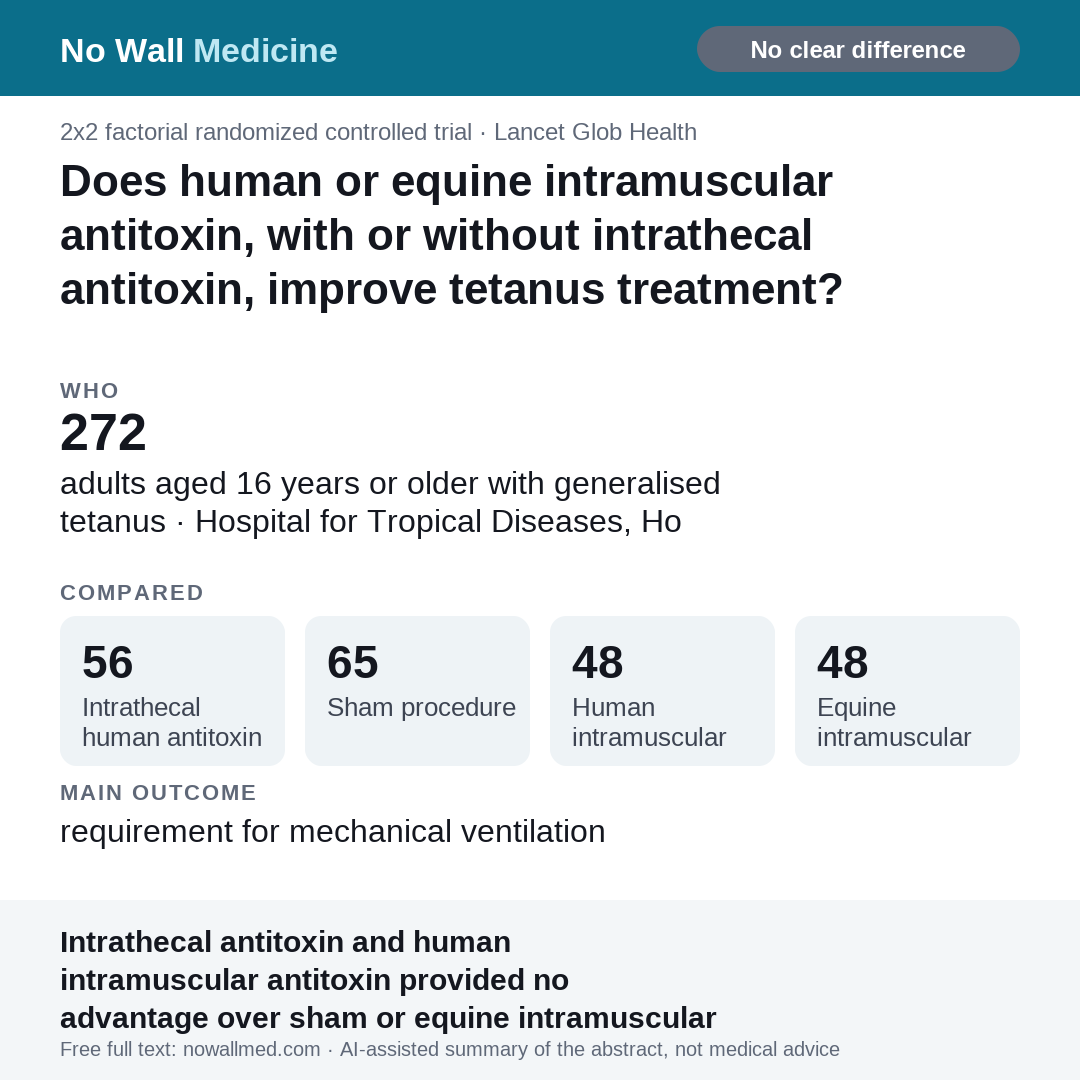
Key points
- 272 adults with generalised tetanus in Vietnam were randomly assigned to human or equine intramuscular antitoxin, plus intrathecal antitoxin or sham.
- Mechanical ventilation was needed by 43% of those given intrathecal antitoxin versus 50% of the sham group, a difference that was not statistically significant.
- No clinically relevant difference in adverse events was reported between the groups, and there were no intervention-related deaths.
Why it matters: Few data compared human and equine antitoxin, and it was unclear if intrathecal injection improved outcomes given limited central nervous system penetration.
Limitation the authors note: 54 patients received antitoxin at a previous hospital, excluding them from the intramuscular antitoxin groups.
Discussion prompts
- Would these patients look like yours? Who was left out?
- Is the main outcome one that matters to patients?
- Is the difference large enough to change what you do?
Cite: Van Hao N, Loan HT, Yen LM, et al. Human versus equine intramuscular antitoxin, with or without human intrathecal antitoxin, for the treatment of adults with tetanus: a 2 × 2 factorial randomised controlled trial. Lancet Glob Health. 2022. doi:10.1016/S2214-109X(22)00117-6
Free full text: PubMed Central · Summary and visual abstract: nowallmed.com/a/human-versus-equine-intramuscular-antitoxin-with-or-without-human-1hnme23/ (AI-assisted from the abstract; check the paper before relying on it).