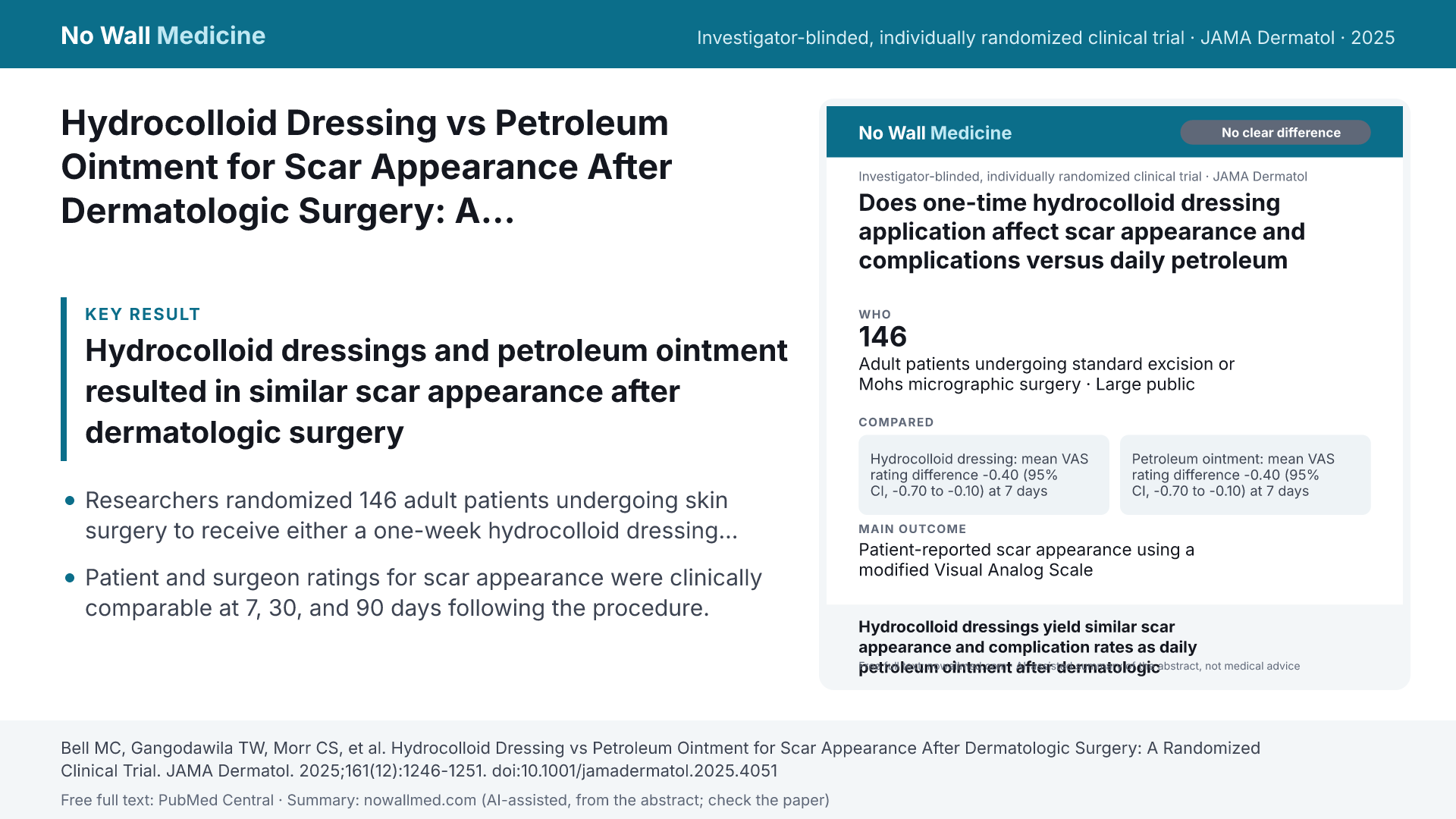
Hydrocolloid Dressing vs Petroleum Ointment for Scar Appearance After Dermatologic Surgery: A Randomized Clinical Trial
Key result: Hydrocolloid dressings and petroleum ointment resulted in similar scar appearance after dermatologic surgery
Key points
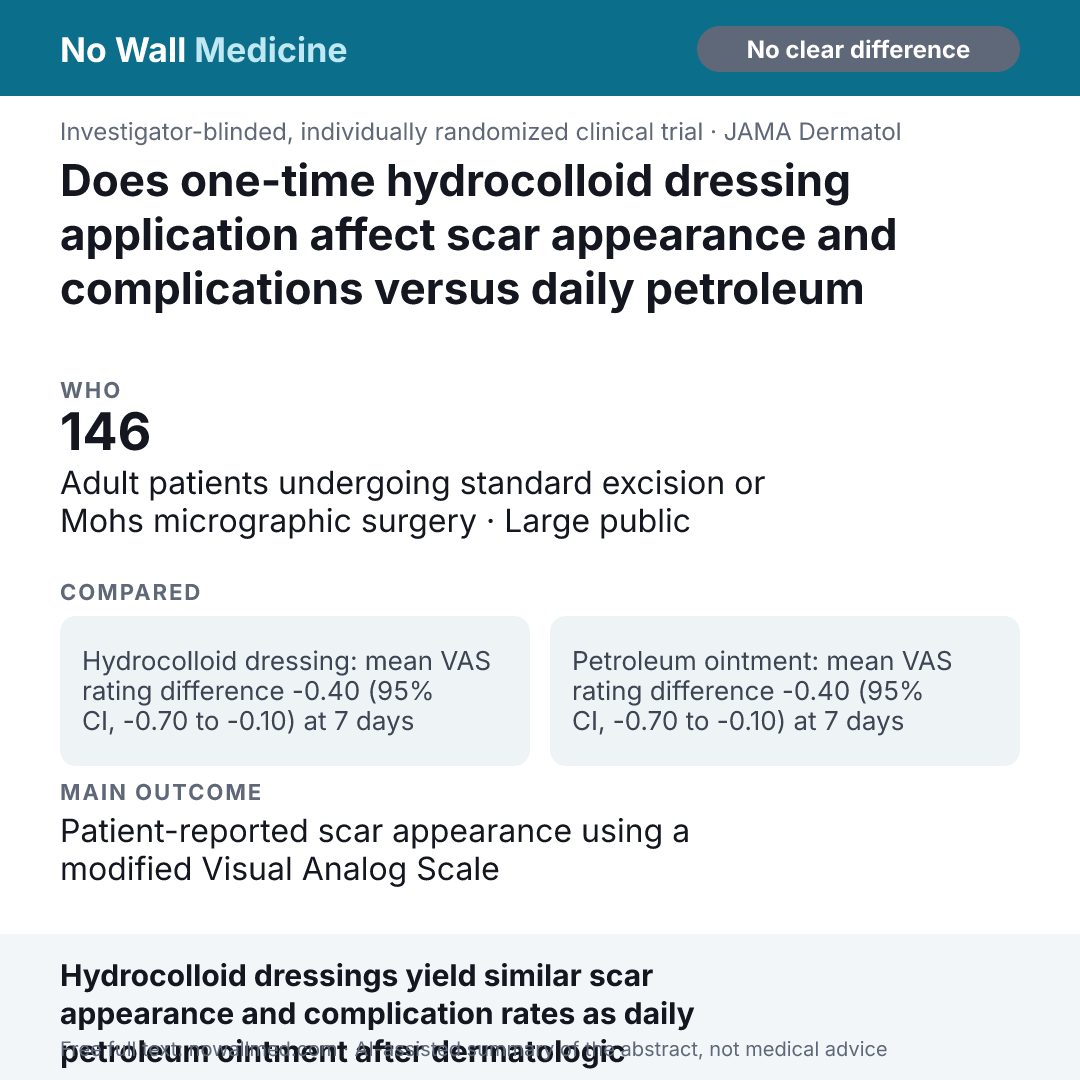
- Researchers randomized 146 adult patients undergoing skin surgery to receive either a one-week hydrocolloid dressing or daily petroleum ointment.
- Patient and surgeon ratings for scar appearance were clinically comparable at 7, 30, and 90 days following the procedure.
- The hydrocolloid dressing group reported higher rates of postoperative bleeding, wound opening, and pain, though these differences were not statistically significant.
Why it matters: There are no randomized clinical trials comparing how hydrocolloid dressings affect scar appearance compared to daily petroleum ointment after excisional surgery.
Discussion prompts
- Would these patients look like yours? Who was left out?
- Is the main outcome one that matters to patients?
- Is the difference large enough to change what you do?
Cite: Bell MC, Gangodawila TW, Morr CS, et al. Hydrocolloid Dressing vs Petroleum Ointment for Scar Appearance After Dermatologic Surgery: A Randomized Clinical Trial. JAMA Dermatol. 2025;161(12):1246-1251. doi:10.1001/jamadermatol.2025.4051
Free full text: PubMed Central · Summary and visual abstract: nowallmed.com/a/hydrocolloid-dressing-vs-petroleum-ointment-for-scar-appearance-after-1gzv6j9/ (AI-assisted from the abstract; check the paper before relying on it).