Hydroxychloroquine in patients with inflammatory and erosive osteoarthritis of the hands: results of the OA-TREAT study-a randomised, double-blind, placebo-controlled, multicentre, investigator-initiated trial
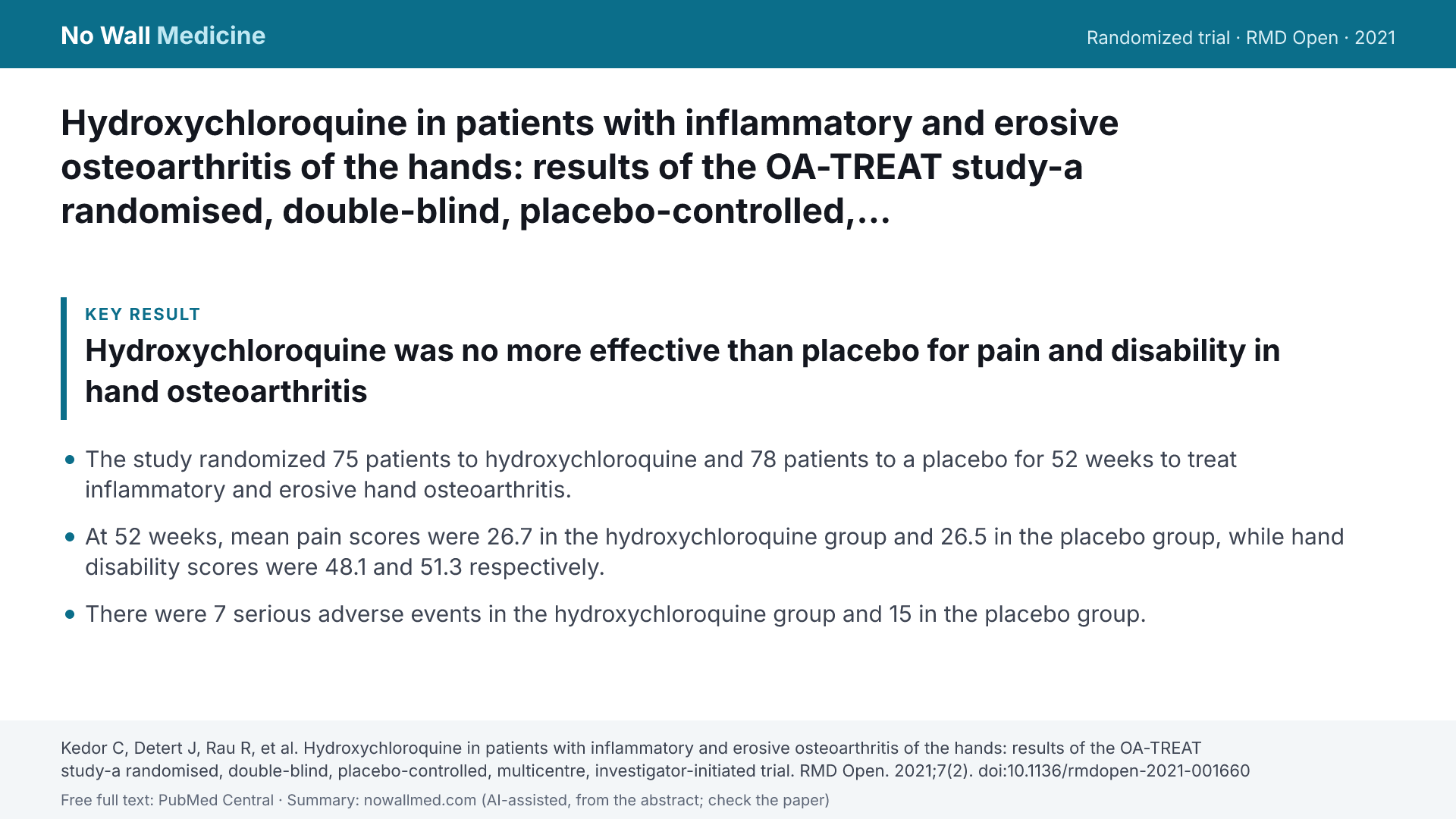
Key result: Hydroxychloroquine was no more effective than placebo for pain and disability in hand osteoarthritis
Key points
- The study randomized 75 patients to hydroxychloroquine and 78 patients to a placebo for 52 weeks to treat inflammatory and erosive hand osteoarthritis.
- At 52 weeks, mean pain scores were 26.7 in the hydroxychloroquine group and 26.5 in the placebo group, while hand disability scores were 48.1 and 51.3 respectively.
- There were 7 serious adverse events in the hydroxychloroquine group and 15 in the placebo group.
Discussion prompts
- Would these patients look like yours? Who was left out?
- Is the main outcome one that matters to patients?
- Is the difference large enough to change what you do?
Cite: Kedor C, Detert J, Rau R, et al. Hydroxychloroquine in patients with inflammatory and erosive osteoarthritis of the hands: results of the OA-TREAT study-a randomised, double-blind, placebo-controlled, multicentre, investigator-initiated trial. RMD Open. 2021. doi:10.1136/rmdopen-2021-001660
Free full text: PubMed Central · Summary and visual abstract: nowallmed.com/a/hydroxychloroquine-in-patients-with-inflammatory-and-erosive-jkky43/ (AI-assisted from the abstract; check the paper before relying on it).