Hypofractionated, Dose-Escalated Radiation Versus Conventionally Fractionated Radiation for Localized Prostate Cancer: Long-Term Update of a Phase III, Prospective, Randomized Controlled Trial
Phase III, prospective, randomized controlled trialNo clear difference
Is hypofractionated dose-escalated radiation better than conventionally fractionated radiation for localized prostate cancer?
Who
Patients with localized prostate cancer, predominantly low-risk and intermediate-risk disease · MD Anderson
Compared
dose-escalated, hypofractionated intensity-modulated radiation: 13 treatment failures
conventionally fractionated intensity-modulated radiation therapy: 22 treatment failures
Main outcome
treatment failure and distant metastases
Bottom line: Long-term outcomes show no statistically significant difference in treatment failure or toxicity between the two radiation methods.
J Clin Oncol · 2025-05-14Download image
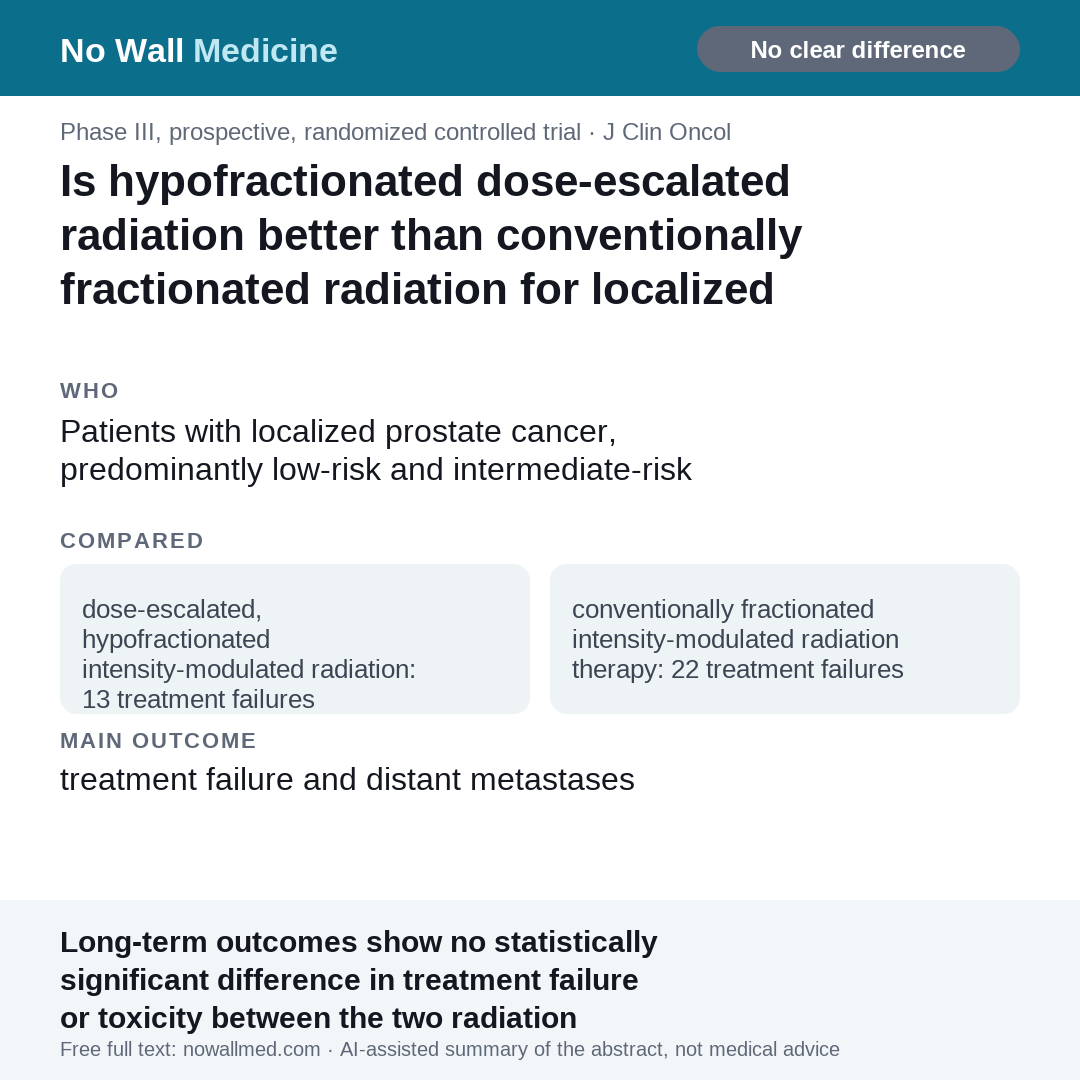
Clinical question: Is hypofractionated dose-escalated radiation better than conventionally fractionated radiation for localized prostate cancer?
Abstract
The MD Anderson dose-escalated, hypofractionated prostate radiation study was a phase III randomized trial comparing conventionally fractionated intensity-modulated radiation therapy (CIMRT, 75.6 Gy in 1.8-Gy fractions) with dose-escalated, hypofractionated intensity-modulated radiation (HIMRT, 72 Gy in 2.4-Gy fractions) in patients with localized prostate cancer, predominantly low-risk and intermediate-risk disease. The initial publication highlighted statistically fewer treatment failures in the HIMRT arm. We present long-term updated 13-year outcomes to determine whether cancer control benefit was maintained and to evaluate distant metastases post hoc. With a median follow-up of 13.2 years (IQR, 8.8-15.9 years), treatment failure occurred less frequently in men undergoing HIMRT (n = 13) compared with those undergoing CIMRT (n = 22), although the difference no longer meets statistical significance (P = .08). Distant metastases were rare, and no statistically significant difference was noted (P = .2). There remained no statistically significant difference in late GI 2+ (10-year 10% HIMRT v 4% CIMRT, P = .09) or genitourinary grade 2+ toxicity (10-year 26% v 23%, P = .5).
Topics
Cite this article
Hassanzadeh C, Kuban D, Pasyar S, Bassett R, Troncoso P, Ansari M. Hypofractionated, Dose-Escalated Radiation Versus Conventionally Fractionated Radiation for Localized Prostate Cancer: Long-Term Update of a Phase III, Prospective, Randomized Controlled Trial. J Clin Oncol. 2025. doi:10.1200/JCO-24-02057
Spotted a mistake? Suggest a correction
Top studies every Monday
The week’s key trials and guidelines in your specialties, by email. Free.
Get the weekly digest