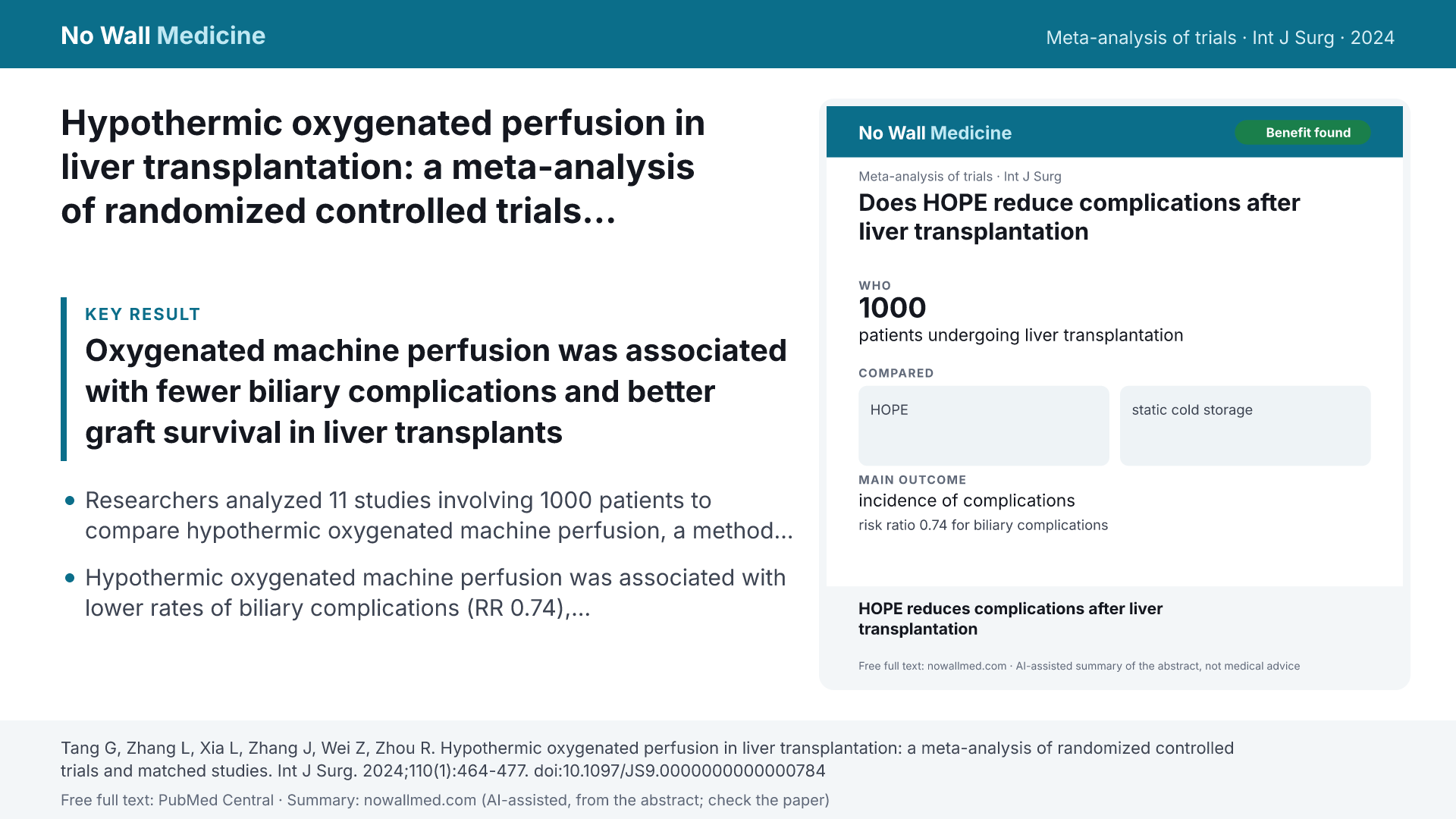
Hypothermic oxygenated perfusion in liver transplantation: a meta-analysis of randomized controlled trials and matched studies
Key result: Oxygenated machine perfusion was associated with fewer biliary complications and better graft survival in liver transplants
Meta-analysis of trialsBenefit found
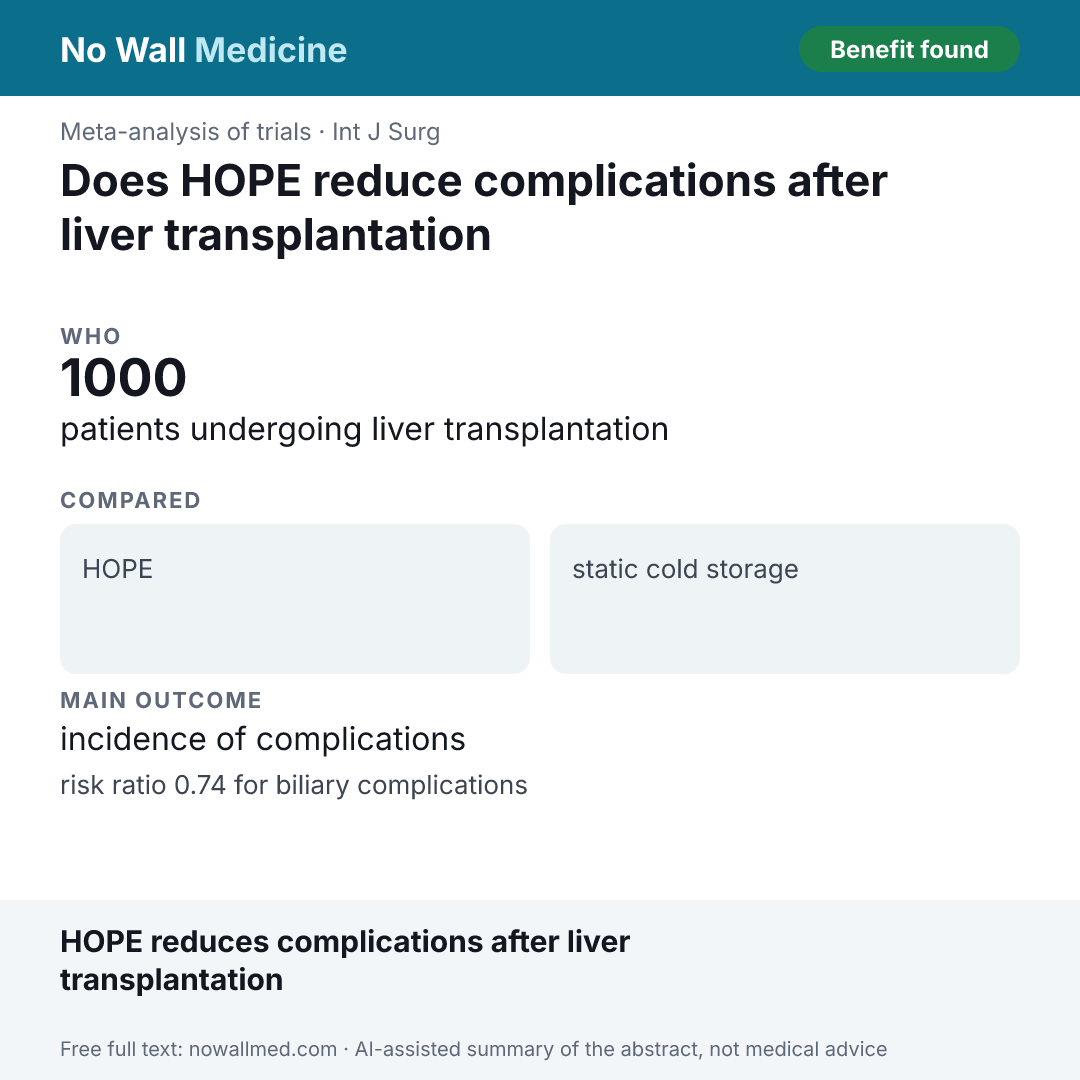
Does HOPE reduce complications after liver transplantation
Who
1000
patients undergoing liver transplantation
Compared
HOPE
static cold storage
Main outcome
incidence of complications
Result: risk ratio 0.74 for biliary complications
Bottom line: HOPE reduces complications after liver transplantation
Limitation: further research needed
Int J Surg · 2024-01-01 · Save PNG
Key points
- Researchers analyzed 11 studies involving 1000 patients to compare hypothermic oxygenated machine perfusion, a method of preserving organs with cold oxygenated fluid, against static cold storage.
- Hypothermic oxygenated machine perfusion was associated with lower rates of biliary complications (RR 0.74), non-anastomotic biliary strictures (RR 0.34), early allograft dysfunction (RR 0.54), and acute rejection (RR 0.54).
- The technology was also linked to lower retransplantation rates (RR 0.42) and improved 1-year graft loss rates (RR 0.38), though it did not change major postoperative complications or death.
Discussion prompts
- Would these patients look like yours? Who was left out?
- Is the main outcome one that matters to patients?
- Is the difference large enough to change what you do?
Cite: Tang G, Zhang L, Xia L, Zhang J, Wei Z, Zhou R. Hypothermic oxygenated perfusion in liver transplantation: a meta-analysis of randomized controlled trials and matched studies. Int J Surg. 2024;110(1):464-477. doi:10.1097/JS9.0000000000000784
Free full text: PubMed Central · Summary and visual abstract: nowallmed.com/a/hypothermic-oxygenated-perfusion-in-liver-transplantation-a-meta-ceyc65/ (AI-assisted from the abstract; check the paper before relying on it).