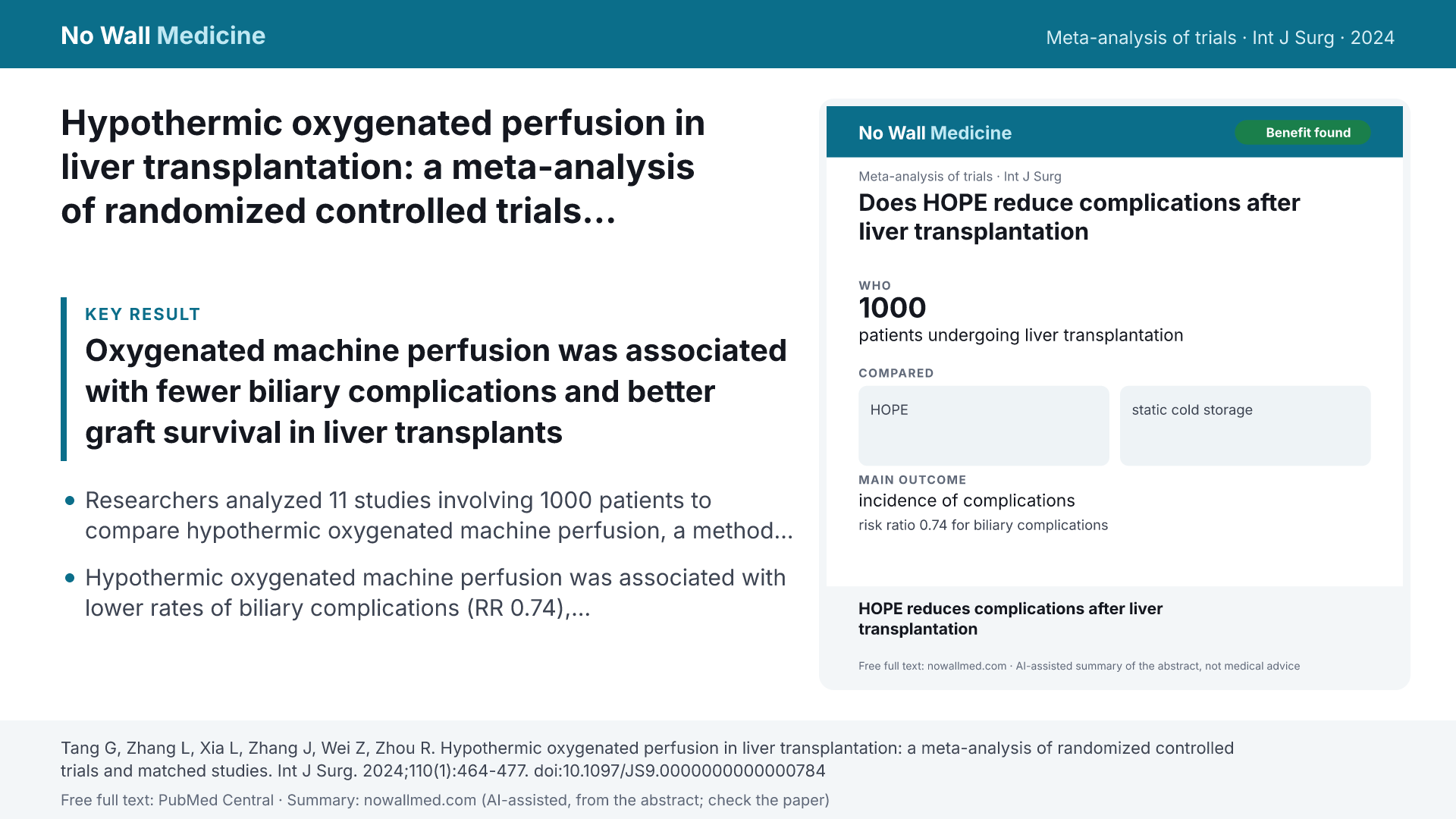
Oxygenated machine perfusion was associated with fewer biliary complications and better graft survival in liver transplants
Hypothermic oxygenated perfusion in liver transplantation: a meta-analysis of randomized controlled trials and matched studies
Meta-analysis of trialsBenefit found
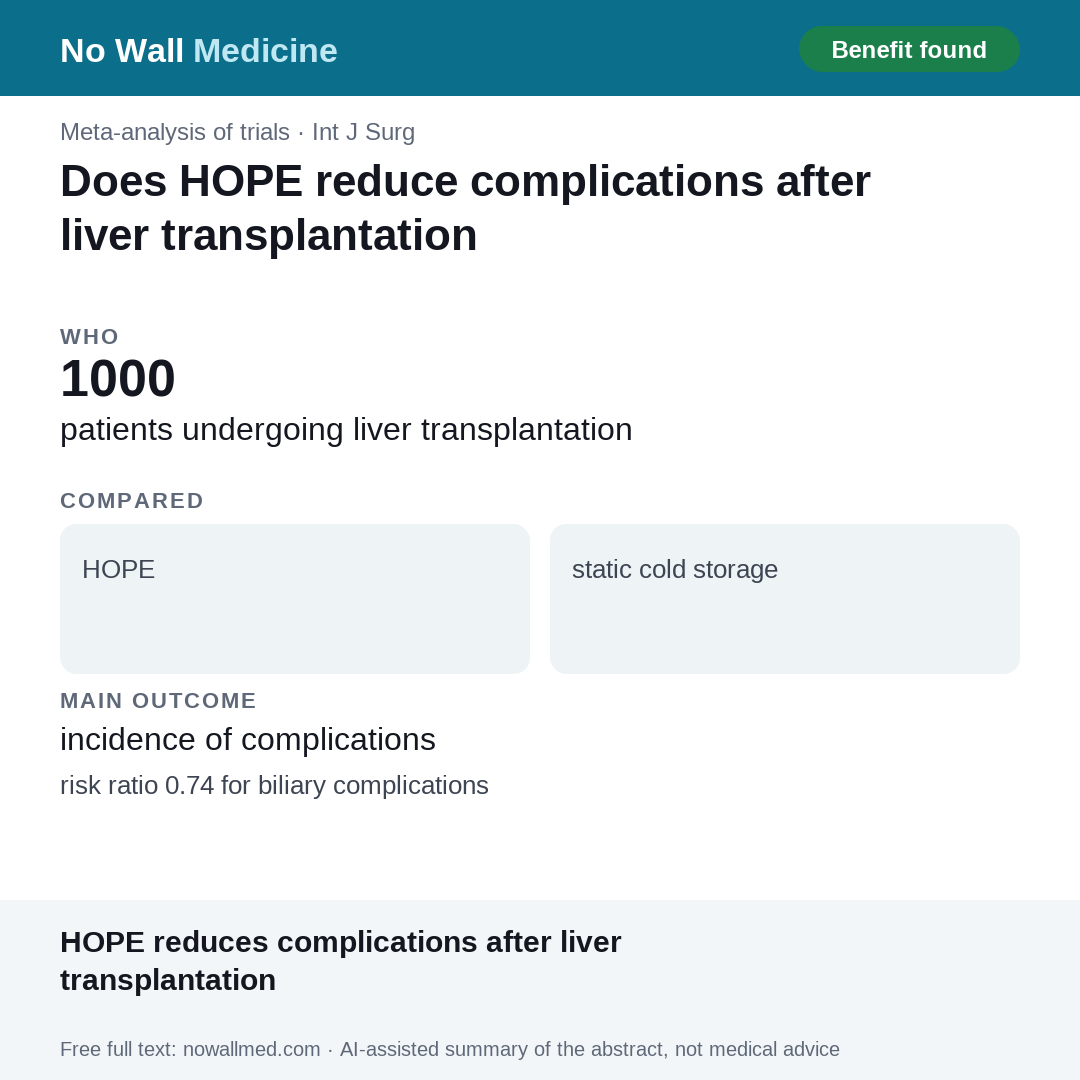
Does HOPE reduce complications after liver transplantation
Who
1000
patients undergoing liver transplantation
Compared
HOPE
static cold storage
Main outcome
incidence of complications
Result: risk ratio 0.74 for biliary complications
Bottom line: HOPE reduces complications after liver transplantation
Limitation: further research needed
Int J Surg · 2024-01-01Download image
Why it matters: The effects of hypothermic oxygenated machine perfusion on morbidity and mortality after liver transplantation remain unclear.
Key points
- Researchers analyzed 11 studies involving 1000 patients to compare hypothermic oxygenated machine perfusion, a method of preserving organs with cold oxygenated fluid, against static cold storage.
- Hypothermic oxygenated machine perfusion was associated with lower rates of biliary complications (RR 0.74), non-anastomotic biliary strictures (RR 0.34), early allograft dysfunction (RR 0.54), and acute rejection (RR 0.54).
- The technology was also linked to lower retransplantation rates (RR 0.42) and improved 1-year graft loss rates (RR 0.38), though it did not change major postoperative complications or death.
Headline and key points written with AI from the paper’s abstract, with every number checked against it. Read the paper before relying on them.
Was this summary helpful?
Subject terms
Cite this article
Tang G, Zhang L, Xia L, Zhang J, Wei Z, Zhou R. Hypothermic oxygenated perfusion in liver transplantation: a meta-analysis of randomized controlled trials and matched studies. Int J Surg. 2024. doi:10.1097/JS9.0000000000000784
Spotted a mistake? Suggest a correction
Top studies every Monday
The week’s key trials and guidelines in your specialties, plus any topics you follow. By email, free.
Get the weekly digest