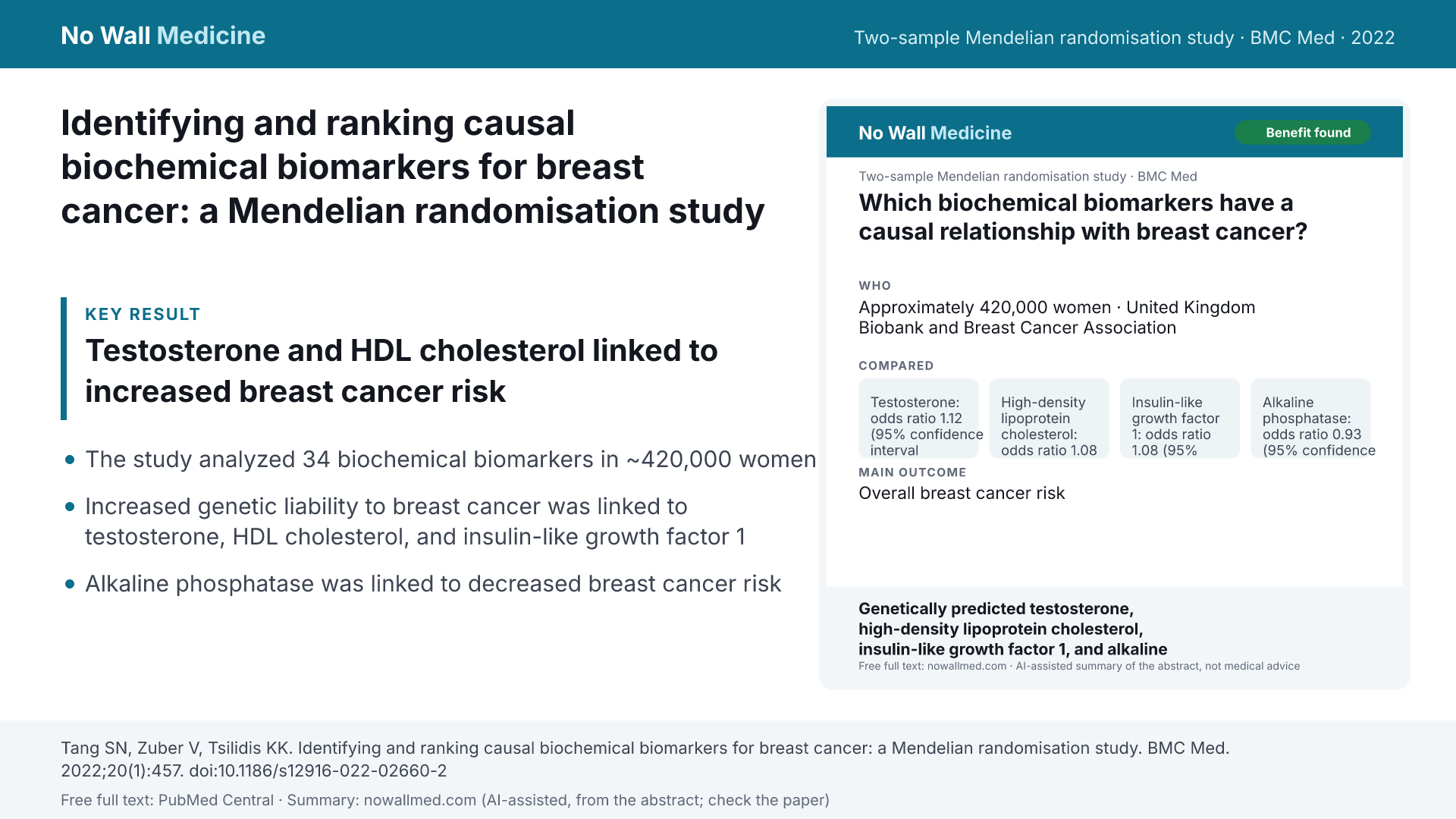
Testosterone and HDL cholesterol linked to increased breast cancer risk
Identifying and ranking causal biochemical biomarkers for breast cancer: a Mendelian randomisation study
Two-sample Mendelian randomisation studyBenefit found
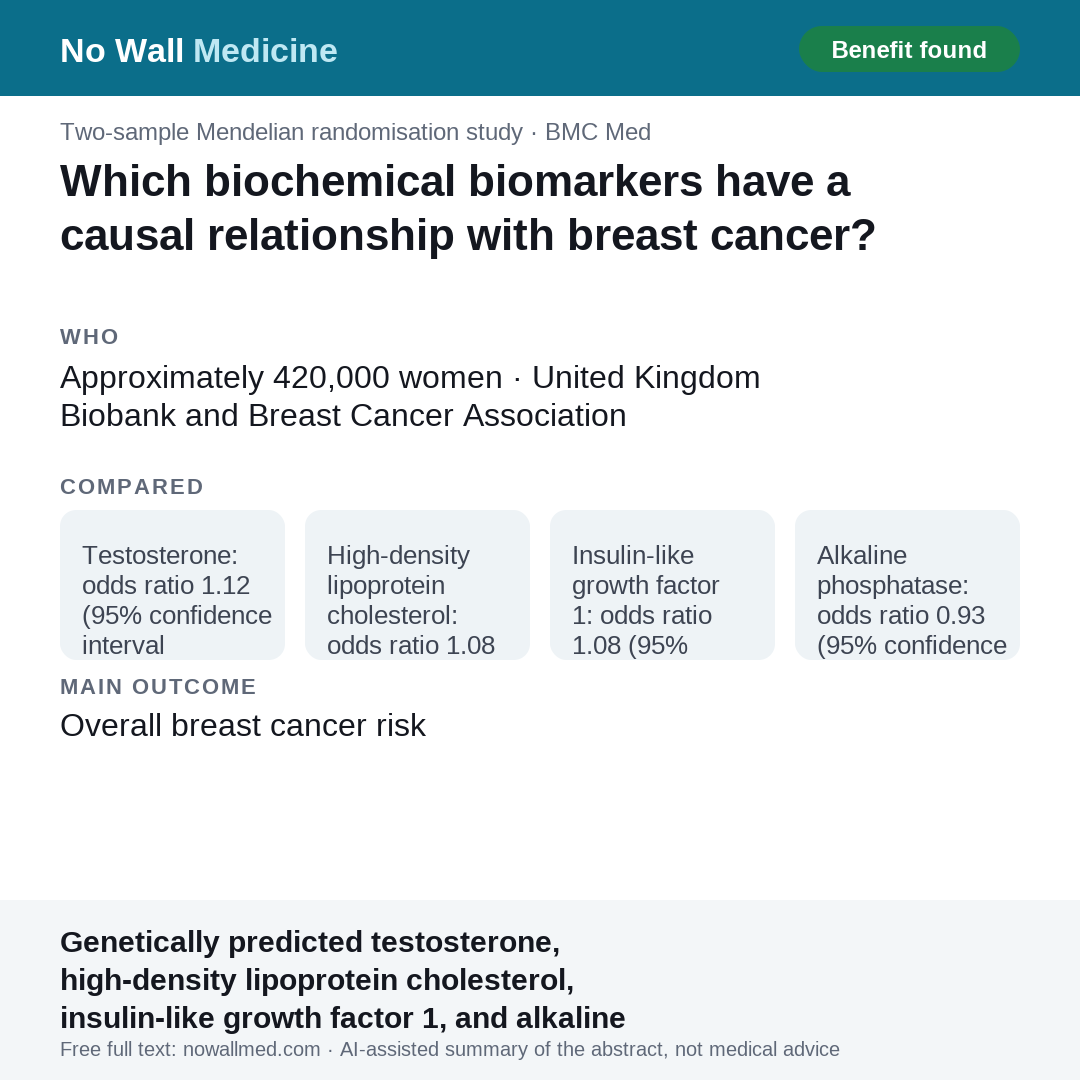
Which biochemical biomarkers have a causal relationship with breast cancer?
Who
Approximately 420,000 women · United Kingdom Biobank and Breast Cancer Association Consortium
Compared
Testosterone: odds ratio 1.12 (95% confidence interval 1.04-1.21)
High-density lipoprotein cholesterol: odds ratio 1.08 (95% confidence interval 1.04-1.13)
Insulin-like growth factor 1: odds ratio 1.08 (95% confidence interval 1.02-1.13)
Alkaline phosphatase: odds ratio 0.93 (95% confidence interval 0.89-0.98)
Main outcome
Overall breast cancer risk
Bottom line: Genetically predicted testosterone, high-density lipoprotein cholesterol, insulin-like growth factor 1, and alkaline phosphatase are causally linked to breast cancer.
Limitation: Further studies are needed to understand full disease pathways.
BMC Med · 2022-11-23Download image
Clinical question: Which biochemical biomarkers have a causal relationship with breast cancer?
Why it matters: The causal relationships between biochemical biomarkers and breast cancer were unclear
Key points
- The study analyzed 34 biochemical biomarkers in ~420,000 women.
- Increased genetic liability to breast cancer was linked to testosterone, HDL cholesterol, and insulin-like growth factor 1.
- Alkaline phosphatase was linked to decreased breast cancer risk.
Limitation the authors note: Further studies are needed to understand full disease pathways
Headline and key points written with AI from the paper’s abstract, with every number checked against it. Read the paper before relying on them.
Was this summary helpful?
Subject terms
Cite this article
Tang SN, Zuber V, Tsilidis KK. Identifying and ranking causal biochemical biomarkers for breast cancer: a Mendelian randomisation study. BMC Med. 2022. doi:10.1186/s12916-022-02660-2
Spotted a mistake? Suggest a correction