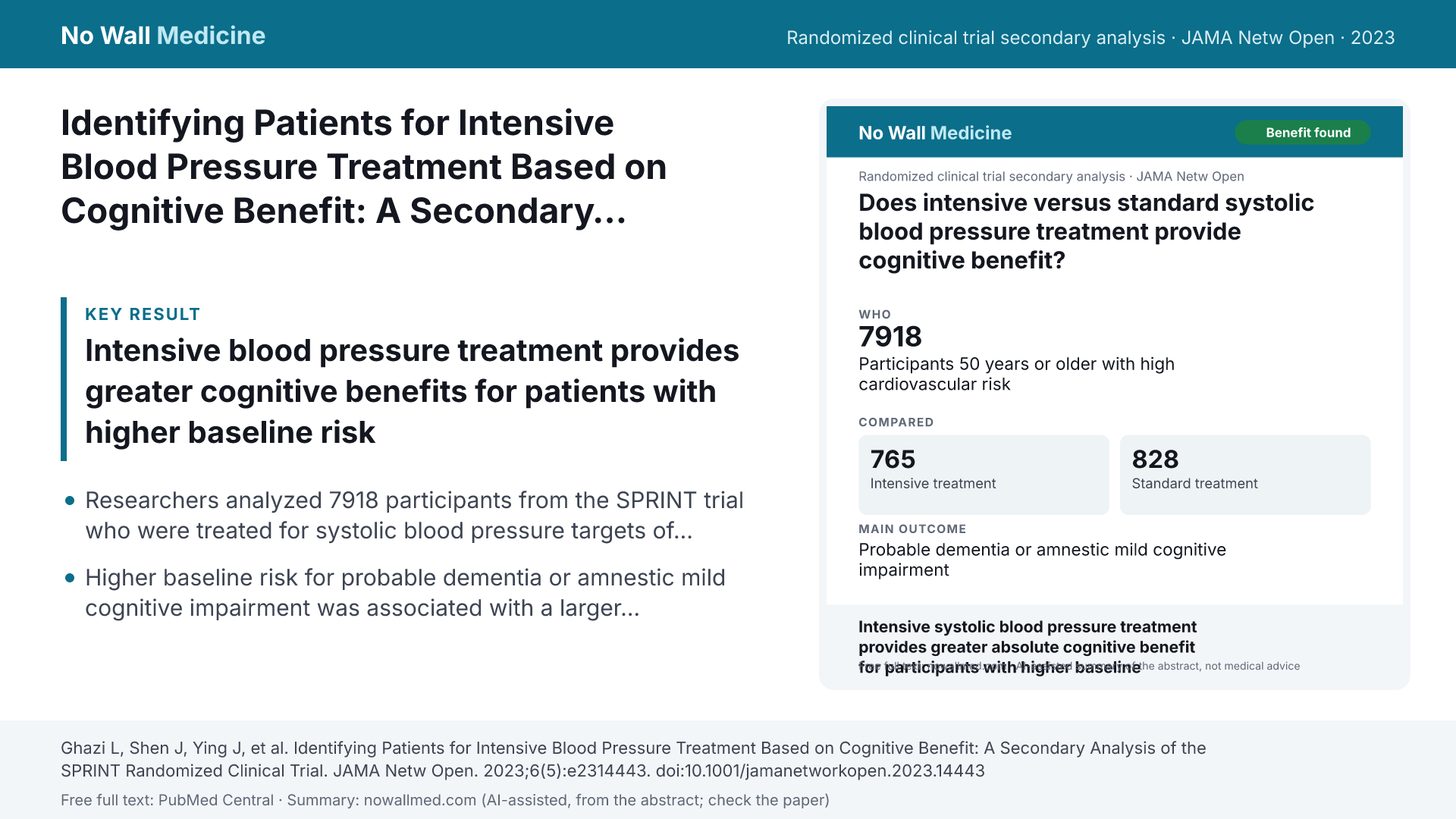
Identifying Patients for Intensive Blood Pressure Treatment Based on Cognitive Benefit: A Secondary Analysis of the SPRINT Randomized Clinical Trial
Key result: Intensive blood pressure treatment provides greater cognitive benefits for patients with higher baseline risk
Key points
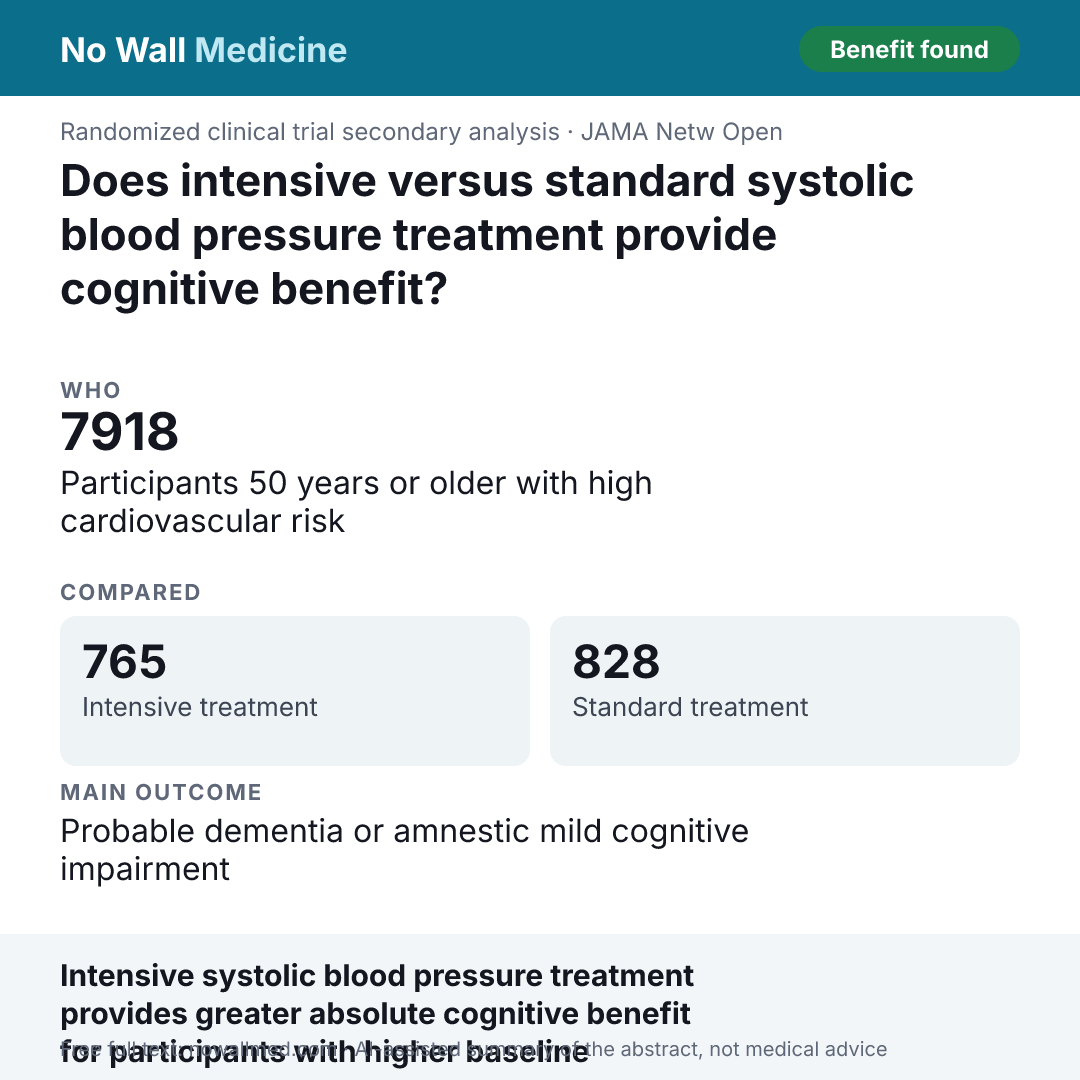
- Researchers analyzed 7918 participants from the SPRINT trial who were treated for systolic blood pressure targets of less than 120 mm Hg or less than 140 mm Hg.
- Higher baseline risk for probable dementia or amnestic mild cognitive impairment was associated with a larger absolute benefit from intensive versus standard blood pressure treatment.
- Older age, Medicare enrollment, and higher baseline serum creatinine levels were associated with a higher risk of the primary cognitive outcome.
Why it matters: The magnitude of cognitive benefit from intensive versus standard systolic blood pressure treatment likely varies among different patients.
Discussion prompts
- Would these patients look like yours? Who was left out?
- Is the main outcome one that matters to patients?
- Is the difference large enough to change what you do?
Cite: Ghazi L, Shen J, Ying J, et al. Identifying Patients for Intensive Blood Pressure Treatment Based on Cognitive Benefit: A Secondary Analysis of the SPRINT Randomized Clinical Trial. JAMA Netw Open. 2023;6(5):e2314443. doi:10.1001/jamanetworkopen.2023.14443
Free full text: PubMed Central · Summary and visual abstract: nowallmed.com/a/identifying-patients-for-intensive-blood-pressure-treatment-based-on-zpmfnr/ (AI-assisted from the abstract; check the paper before relying on it).