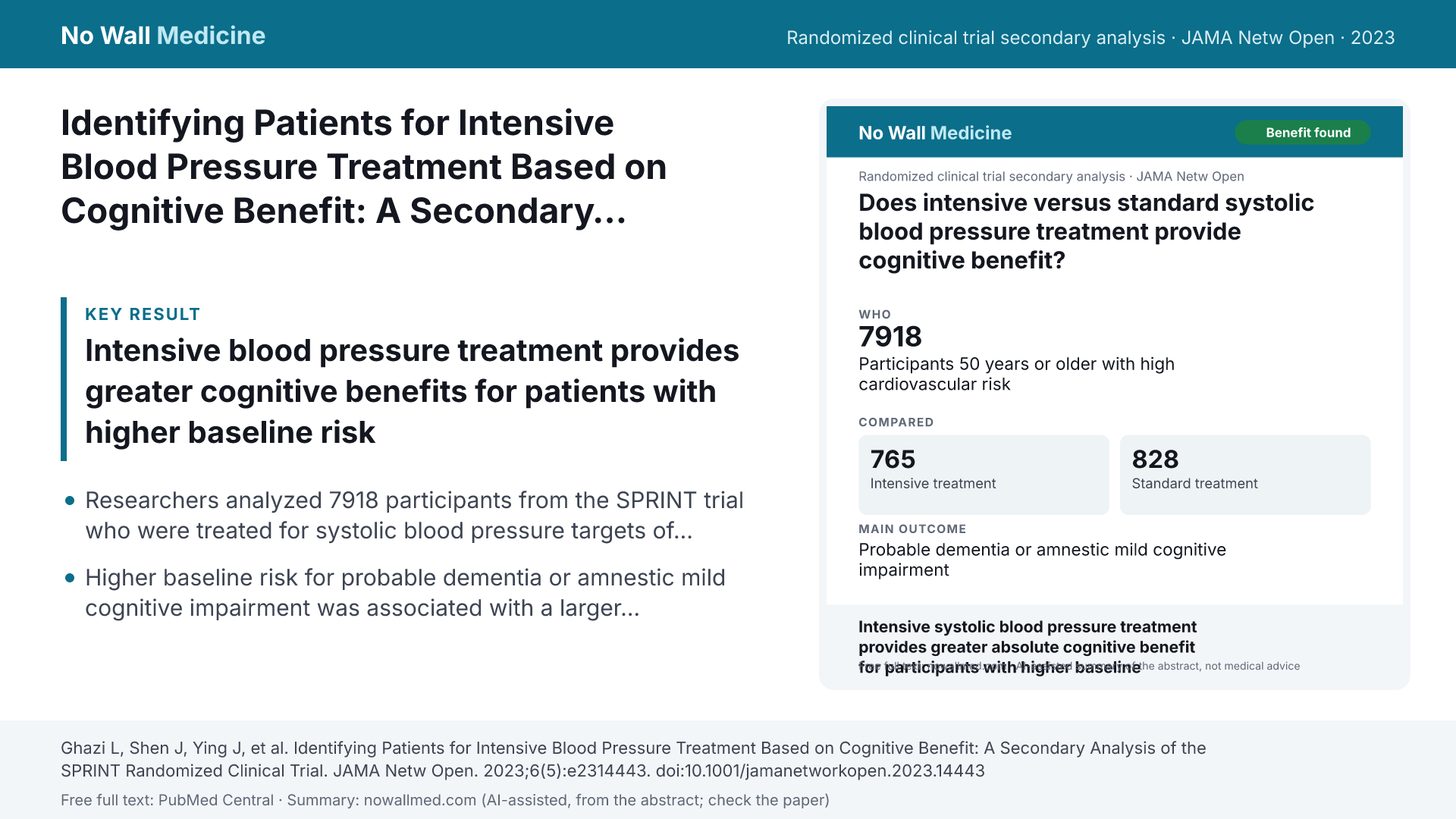
Intensive blood pressure treatment provides greater cognitive benefits for patients with higher baseline risk
Identifying Patients for Intensive Blood Pressure Treatment Based on Cognitive Benefit: A Secondary Analysis of the SPRINT Randomized Clinical Trial
Randomized clinical trial secondary analysisBenefit found
Does intensive versus standard systolic blood pressure treatment provide cognitive benefit?
Who
7918
Participants 50 years or older with high cardiovascular risk
Compared
765Intensive treatment
828Standard treatment
Main outcome
Probable dementia or amnestic mild cognitive impairment
Bottom line: Intensive systolic blood pressure treatment provides greater absolute cognitive benefit for participants with higher baseline projected risk.
JAMA Netw Open · 2023-05-01Download image
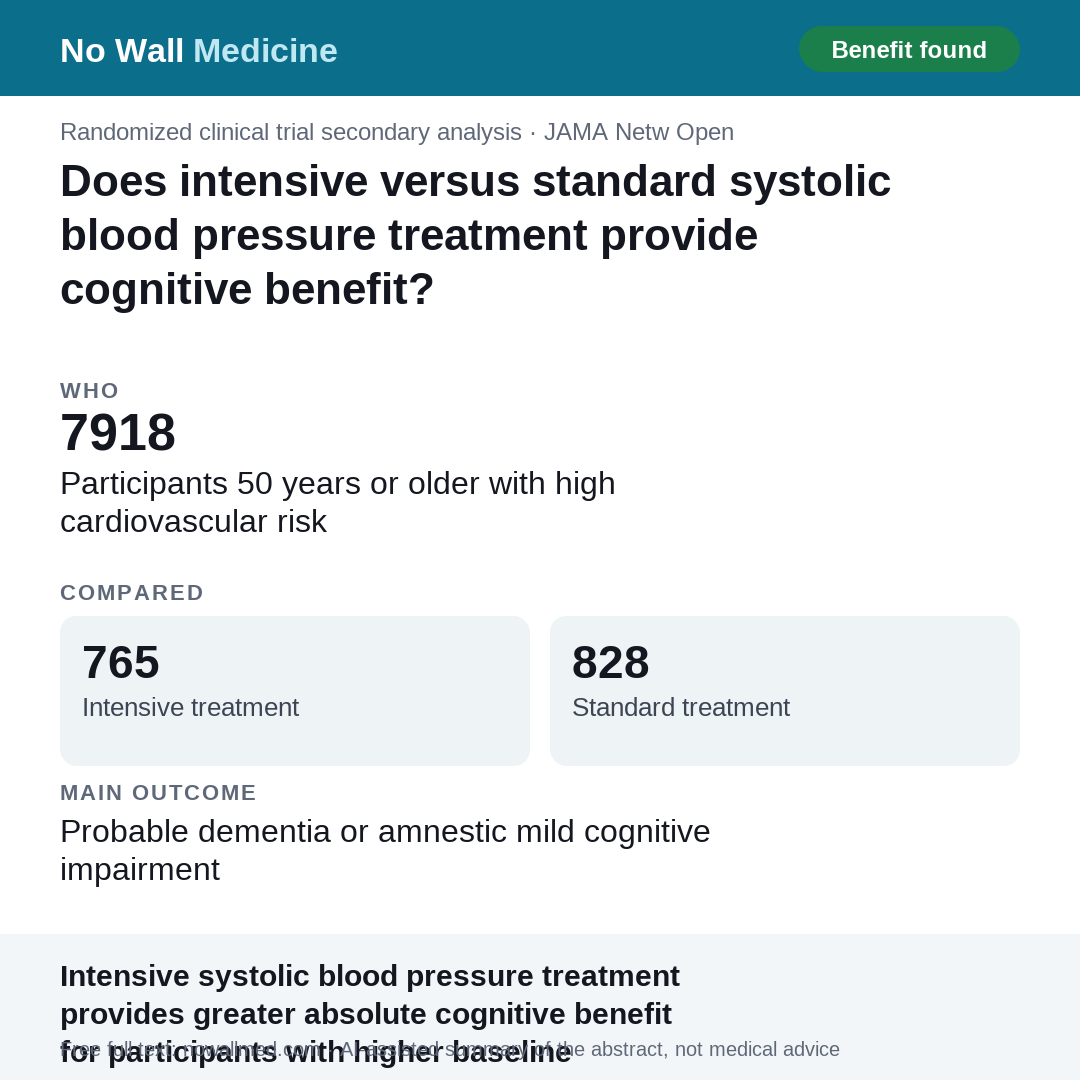
Clinical question: Does intensive versus standard systolic blood pressure treatment provide cognitive benefit?
Why it matters: The magnitude of cognitive benefit from intensive versus standard systolic blood pressure treatment likely varies among different patients.
Key points
- Researchers analyzed 7918 participants from the SPRINT trial who were treated for systolic blood pressure targets of less than 120 mm Hg or less than 140 mm Hg.
- Higher baseline risk for probable dementia or amnestic mild cognitive impairment was associated with a larger absolute benefit from intensive versus standard blood pressure treatment.
- Older age, Medicare enrollment, and higher baseline serum creatinine levels were associated with a higher risk of the primary cognitive outcome.
Headline and key points written with AI from the paper’s abstract, with every number checked against it. Read the paper before relying on them.
Was this summary helpful?
Subject terms
Cite this article
Ghazi L, Shen J, Ying J, et al. Identifying Patients for Intensive Blood Pressure Treatment Based on Cognitive Benefit: A Secondary Analysis of the SPRINT Randomized Clinical Trial. JAMA Netw Open. 2023. doi:10.1001/jamanetworkopen.2023.14443
Spotted a mistake? Suggest a correction