Ifinatamab Deruxtecan in Patients With Extensive-Stage Small Cell Lung Cancer: Primary Analysis of the Phase II IDeate-Lung01 Trial
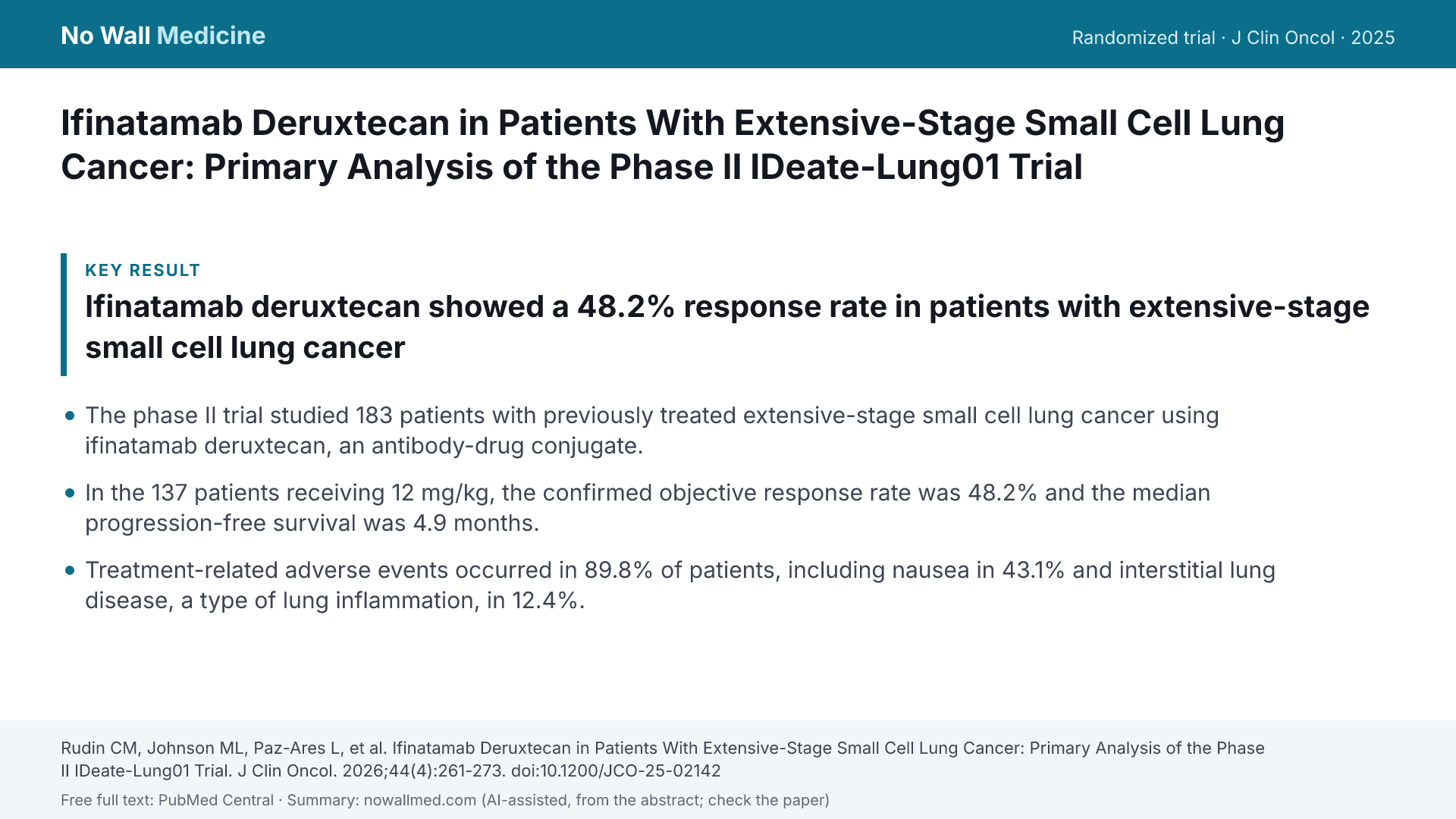
Key result: Ifinatamab deruxtecan showed a 48.2% response rate in patients with extensive-stage small cell lung cancer
Key points
- The phase II trial studied 183 patients with previously treated extensive-stage small cell lung cancer using ifinatamab deruxtecan, an antibody-drug conjugate.
- In the 137 patients receiving 12 mg/kg, the confirmed objective response rate was 48.2% and the median progression-free survival was 4.9 months.
- Treatment-related adverse events occurred in 89.8% of patients, including nausea in 43.1% and interstitial lung disease, a type of lung inflammation, in 12.4%.
Why it matters: Treatment options are limited for patients whose extensive-stage small cell lung cancer has returned or progressed after previous therapies.
Discussion prompts
- Would these patients look like yours? Who was left out?
- Is the main outcome one that matters to patients?
- Is the difference large enough to change what you do?
Cite: Rudin CM, Johnson ML, Paz-Ares L, et al. Ifinatamab Deruxtecan in Patients With Extensive-Stage Small Cell Lung Cancer: Primary Analysis of the Phase II IDeate-Lung01 Trial. J Clin Oncol. 2026;44(4):261-273. doi:10.1200/JCO-25-02142
Free full text: PubMed Central · Summary and visual abstract: nowallmed.com/a/ifinatamab-deruxtecan-in-patients-with-extensive-stage-small-cell-4hv442/ (AI-assisted from the abstract; check the paper before relying on it).