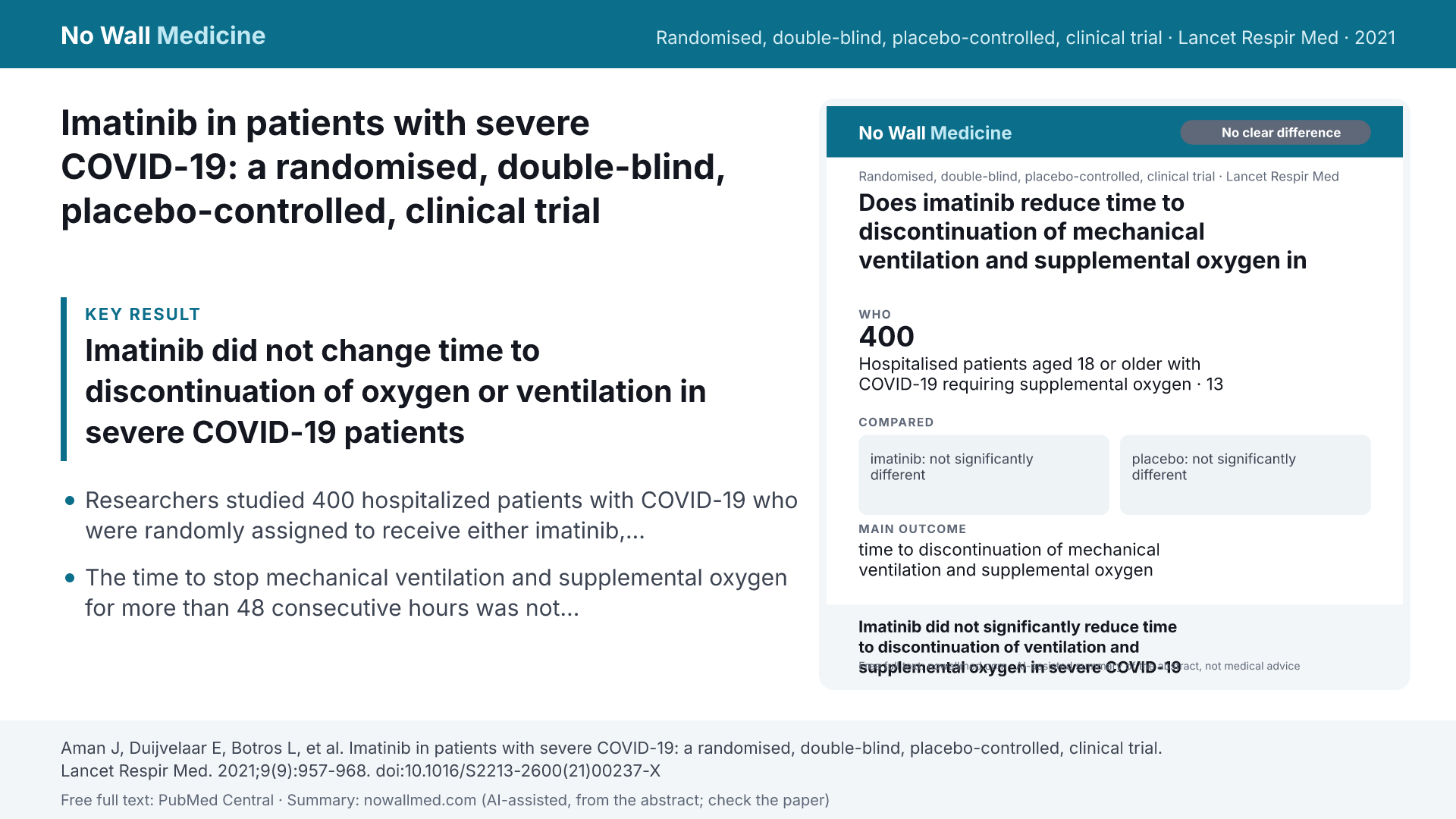
Imatinib did not change time to discontinuation of oxygen or ventilation in severe COVID-19 patients
Imatinib in patients with severe COVID-19: a randomised, double-blind, placebo-controlled, clinical trial
Randomised, double-blind, placebo-controlled, clinical trialNo clear difference
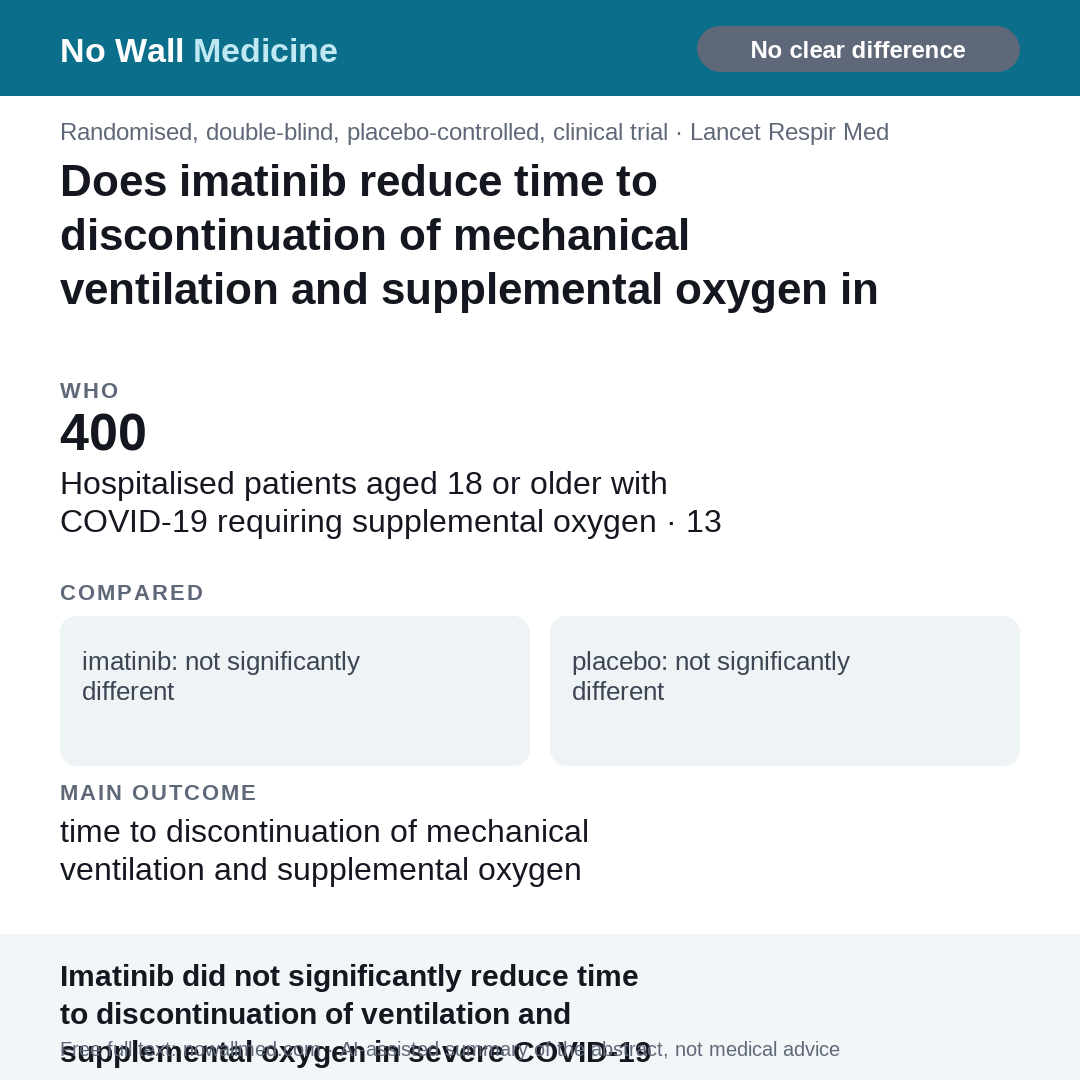
Does imatinib reduce time to discontinuation of mechanical ventilation and supplemental oxygen in severe COVID-19?
Who
400
Hospitalised patients aged 18 or older with COVID-19 requiring supplemental oxygen · 13 teaching hospitals in the Netherlands
Compared
imatinib: not significantly different
placebo: not significantly different
Main outcome
time to discontinuation of mechanical ventilation and supplemental oxygen
Result: unadjusted hazard ratio 0·95 (95% CI 0·76-1·20)
Bottom line: Imatinib did not significantly reduce time to discontinuation of ventilation and supplemental oxygen in severe COVID-19 patients.
Funded by: Amsterdam Medical Center Foundation, ZonMW, and European Union Innovative Medicines Initiative 2
Lancet Respir Med · 2021-06-18Download image
Clinical question: Does imatinib reduce time to discontinuation of mechanical ventilation and supplemental oxygen in severe COVID-19?
Why it matters: It was unknown if the tyrosine-kinase inhibitor imatinib could reverse pulmonary capillary leak and alveolar oedema in patients with severe COVID-19.
Key points
- Researchers studied 400 hospitalized patients with COVID-19 who were randomly assigned to receive either imatinib, a tyrosine-kinase inhibitor, or a placebo.
- The time to stop mechanical ventilation and supplemental oxygen for more than 48 consecutive hours was not significantly different between the imatinib and placebo groups.
- The median duration of invasive mechanical ventilation was 7 days in the imatinib group compared with 12 days in the placebo group.
Headline and key points written with AI from the paper’s abstract, with every number checked against it. Read the paper before relying on them.
Was this summary helpful?
Subject terms
Cite this article
Aman J, Duijvelaar E, Botros L, et al. Imatinib in patients with severe COVID-19: a randomised, double-blind, placebo-controlled, clinical trial. Lancet Respir Med. 2021. doi:10.1016/S2213-2600(21)00237-X
Spotted a mistake? Suggest a correction