Early measles, mumps, and rubella vaccination in infants showed low antibody levels but safe reactogenicity
Immunogenicity and reactogenicity following MMR vaccination in 5-7-month-old infants: a double-blind placebo-controlled randomized clinical trial in 6540 Danish infants
Double-blind, randomized, placebo-controlled trialBenefit found
Is early measles, mumps, and rubella vaccination safe and immunogenic in infants?
Who
6540
Healthy 5-7-month-old Danish infants · Denmark
Compared
M-M-RVaxPro: 47% (13%) measles plaque reduction neutralization test seroprotection rate
Placebo: 28% (2%) mumps and 57% (8%) rubella IgG seroprotection rates
Main outcome
Immunogenicity and reactogenicity following vaccination
Result: hazard ratio 1.0 (95% CI 0.9-1.1)
Bottom line: Early measles, mumps, and rubella vaccination is safe and does not negatively impact subsequent routine vaccination responses.
Funded by: Innovation Fund Denmark
eClinicalMedicine · 2024-01-12Download image
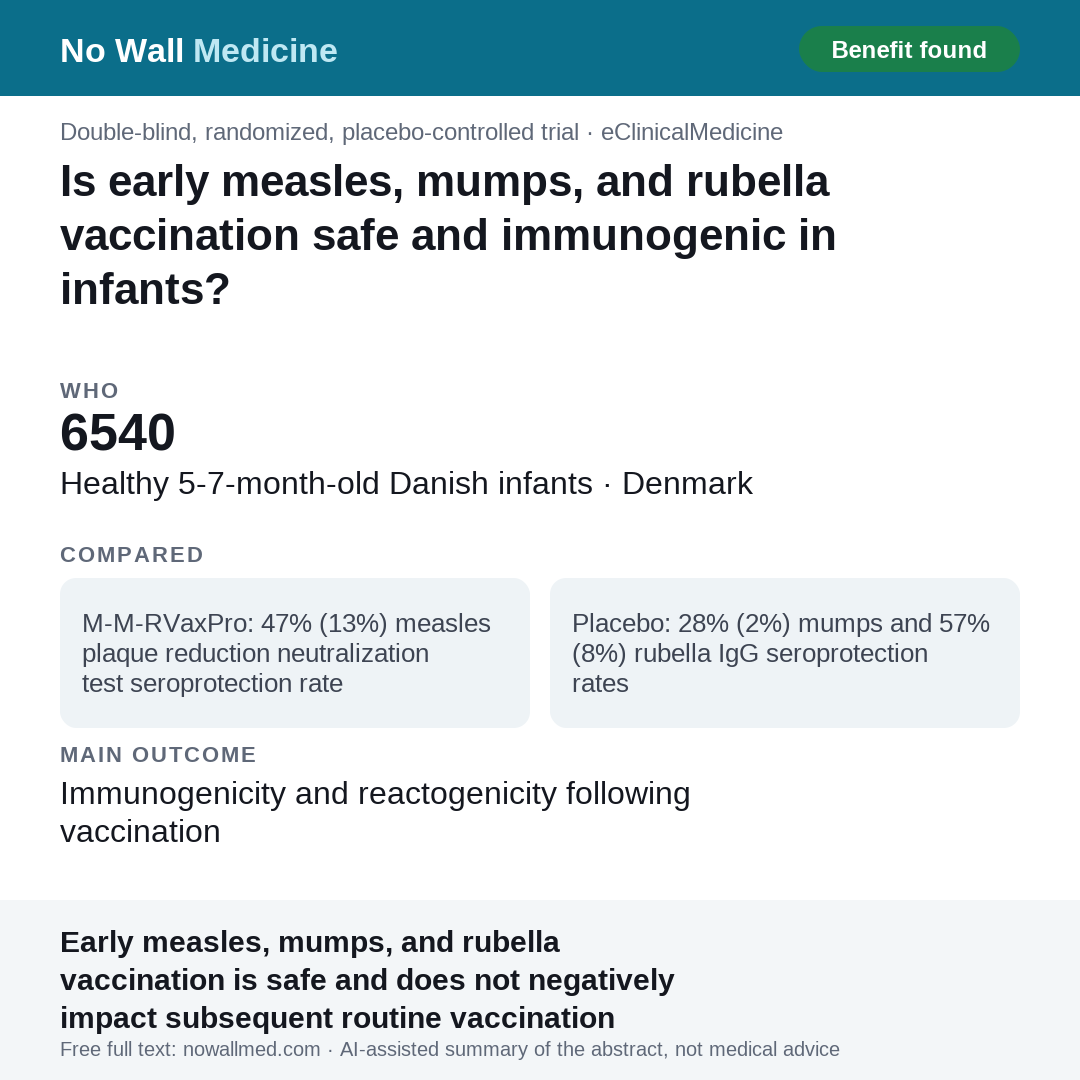
Clinical question: Is early measles, mumps, and rubella vaccination safe and immunogenic in infants?
Why it matters: Mothers with lower antibody levels transfer fewer antibodies to their babies, creating a gap in protection that earlier primary vaccination might address.
In absolute numbers
M-M-RVaxPro: 47% · Placebo: 28% → a difference of 19 percentage points, so about 6 people would need the treatment for 1 more to benefit (number needed to treat) over the trial’s follow-up.
Worked out by us from the two group results above, not reported by the authors. Check the paper for the exact outcome and timing.
Key points
- The study compared 647 infants receiving the M-M-RVaxPro vaccine to a placebo group to measure immune response and side effects.
- After the early dose, seroprotection rates—the level of antibodies needed for protection—were 47% (13%) for measles, 28% (2%) for mumps, and 57% (8%) for rubella.
- Reactogenicity, or the physical response to the vaccine, was not different between the vaccine and placebo groups (HR, 1.0; 95% CI: 0.9-1.1).
Headline and key points written with AI from the paper’s abstract, with every number checked against it. Read the paper before relying on them.
Cite this article
Vittrup DM, Jensen A, Sørensen JK, Zimakoff AC, Malon M, Charabi S. Immunogenicity and reactogenicity following MMR vaccination in 5-7-month-old infants: a double-blind placebo-controlled randomized clinical trial in 6540 Danish infants. eClinicalMedicine. 2024. doi:10.1016/j.eclinm.2023.102421
Spotted a mistake? Suggest a correction
Top studies every Monday
The week’s key trials and guidelines in your specialties, plus any topics you follow. By email, free.
Get the weekly digest