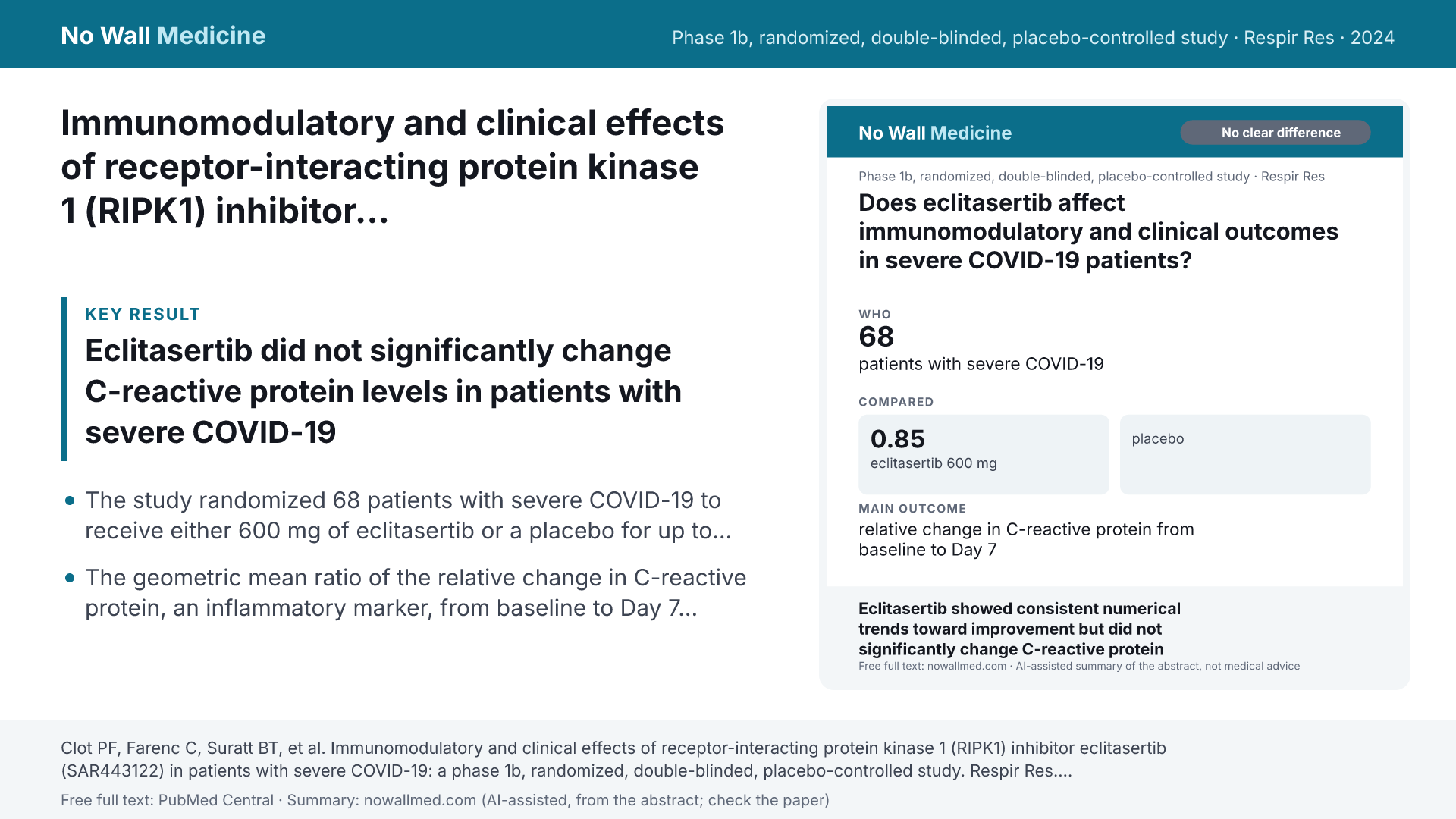
Eclitasertib did not significantly change C-reactive protein levels in patients with severe COVID-19
Immunomodulatory and clinical effects of receptor-interacting protein kinase 1 (RIPK1) inhibitor eclitasertib (SAR443122) in patients with severe COVID-19: a phase 1b, randomized, double-blinded, placebo-controlled study
Phase 1b, randomized, double-blinded, placebo-controlled studyNo clear difference
Does eclitasertib affect immunomodulatory and clinical outcomes in severe COVID-19 patients?
Who
68
patients with severe COVID-19
Compared
0.85eclitasertib 600 mg (90% CI 0.49-1.45)
placebo
Main outcome
relative change in C-reactive protein from baseline to Day 7
Result: geometric mean ratio 0.85 (90% CI 0.49-1.45)
Bottom line: Eclitasertib showed consistent numerical trends toward improvement but did not significantly change C-reactive protein levels.
Respir Res · 2024-02-28 · Save PNG
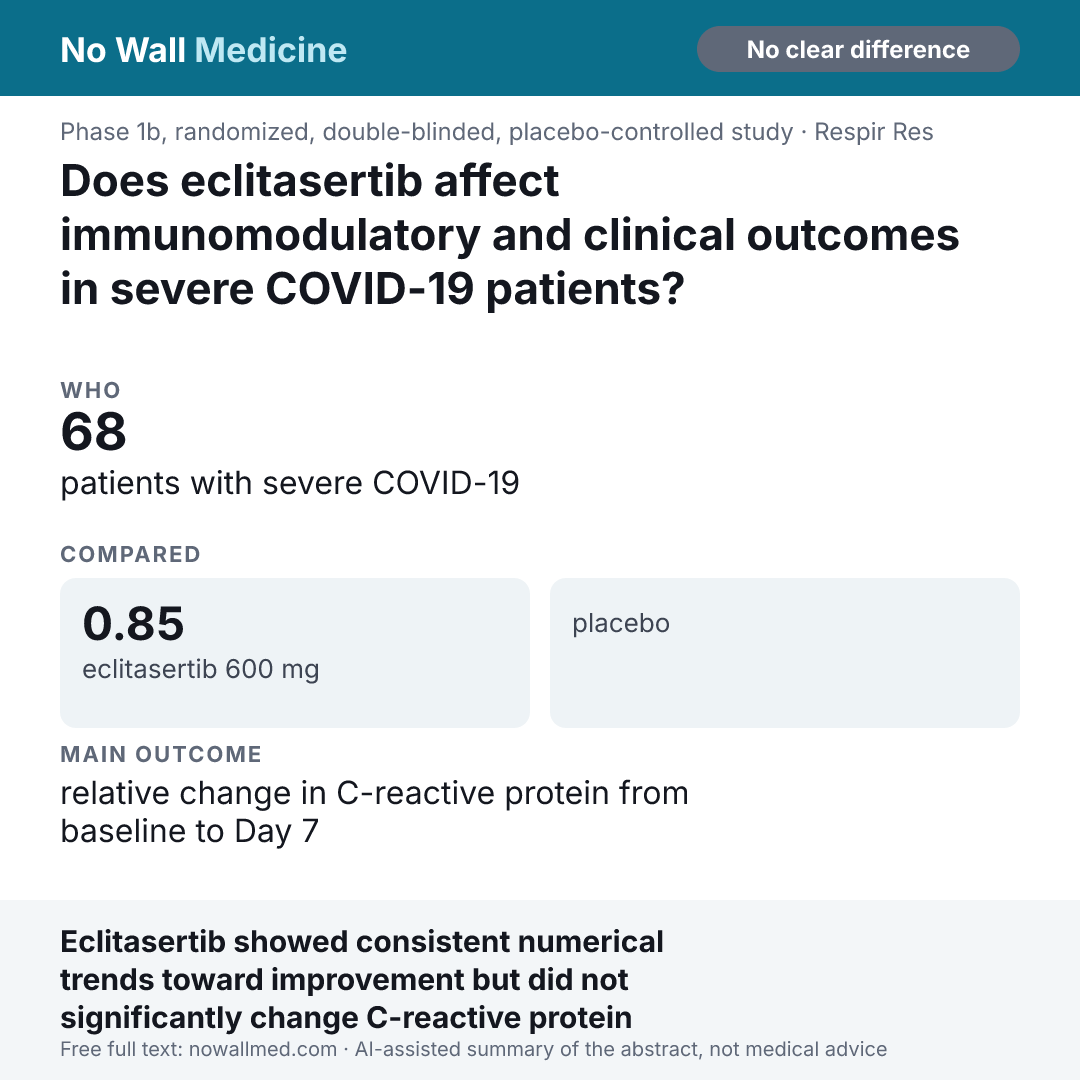
Clinical question: Does eclitasertib affect immunomodulatory and clinical outcomes in severe COVID-19 patients?
Key points
- The study randomized 68 patients with severe COVID-19 to receive either 600 mg of eclitasertib or a placebo for up to 14 days.
- The geometric mean ratio of the relative change in C-reactive protein, an inflammatory marker, from baseline to Day 7 was 0.85 (0.49-1.45; p = 0.30).
- The most frequent adverse events reported were gastrointestinal disorders and COVID-19 pneumonia that was aggravated or worsened.
Headline and key points written with AI from the paper’s abstract, with every number checked against it. Read the paper before relying on them.
Was this summary helpful?
Subject terms
Headline, design, result, key points, caveat and citation as plain text.
Cite this article
Clot PF, Farenc C, Suratt BT, et al. Immunomodulatory and clinical effects of receptor-interacting protein kinase 1 (RIPK1) inhibitor eclitasertib (SAR443122) in patients with severe COVID-19: a phase 1b, randomized, double-blinded, placebo-controlled study. Respir Res. 2024;25(1):107. doi:10.1186/s12931-024-02670-z
Spotted a mistake? Suggest a correction