Higher procalcitonin, CRP, D-dimer, and LDH levels were associated with severe COVID-19
Inflammatory and hematologic markers as predictors of severe outcomes in COVID-19 infection: A systematic review and meta-analysis
Systematic review and meta-analysisBenefit found
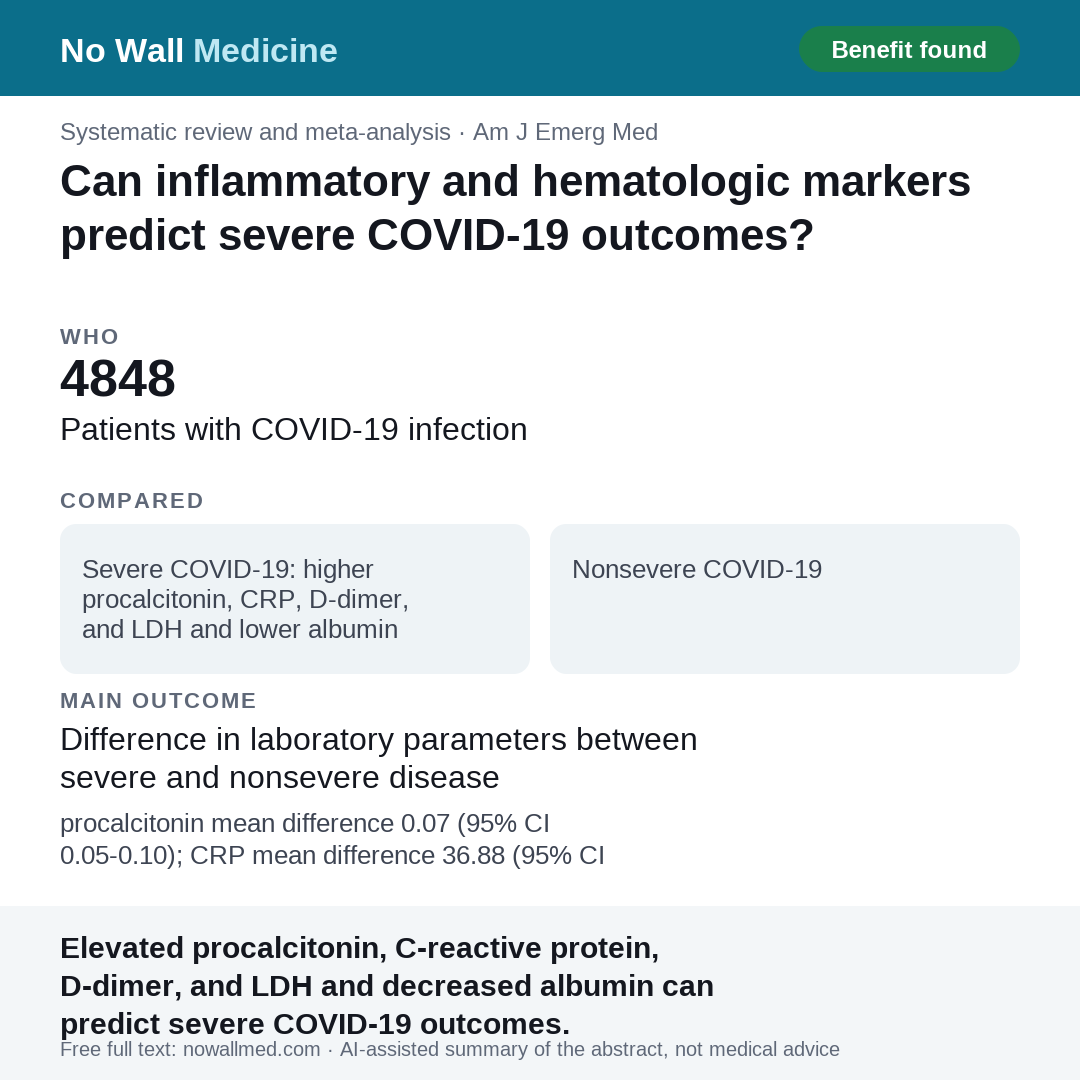
Can inflammatory and hematologic markers predict severe COVID-19 outcomes?
Who
4848
Patients with COVID-19 infection
Compared
Severe COVID-19: higher procalcitonin, CRP, D-dimer, and LDH and lower albumin
Nonsevere COVID-19
Main outcome
Difference in laboratory parameters between severe and nonsevere disease
Result: procalcitonin mean difference 0.07 (95% CI 0.05-0.10); CRP mean difference 36.88 (95% CI 29.10-44.65); D-Dimer mean difference 0.43 (95% CI 0.31-0.56); LDH mean difference 102.79 (95% CI 79.10-126.49); albumin mean difference -4.58 (95% CI -5.76 to -3.39)
Bottom line: Elevated procalcitonin, C-reactive protein, D-dimer, and LDH and decreased albumin can predict severe COVID-19 outcomes.
Am J Emerg Med · 2020-12-30Download image
Clinical question: Can inflammatory and hematologic markers predict severe COVID-19 outcomes?
Why it matters: It was unknown which specific laboratory parameters and cutoff values could best predict severe outcomes in patients with COVID-19.
Key points
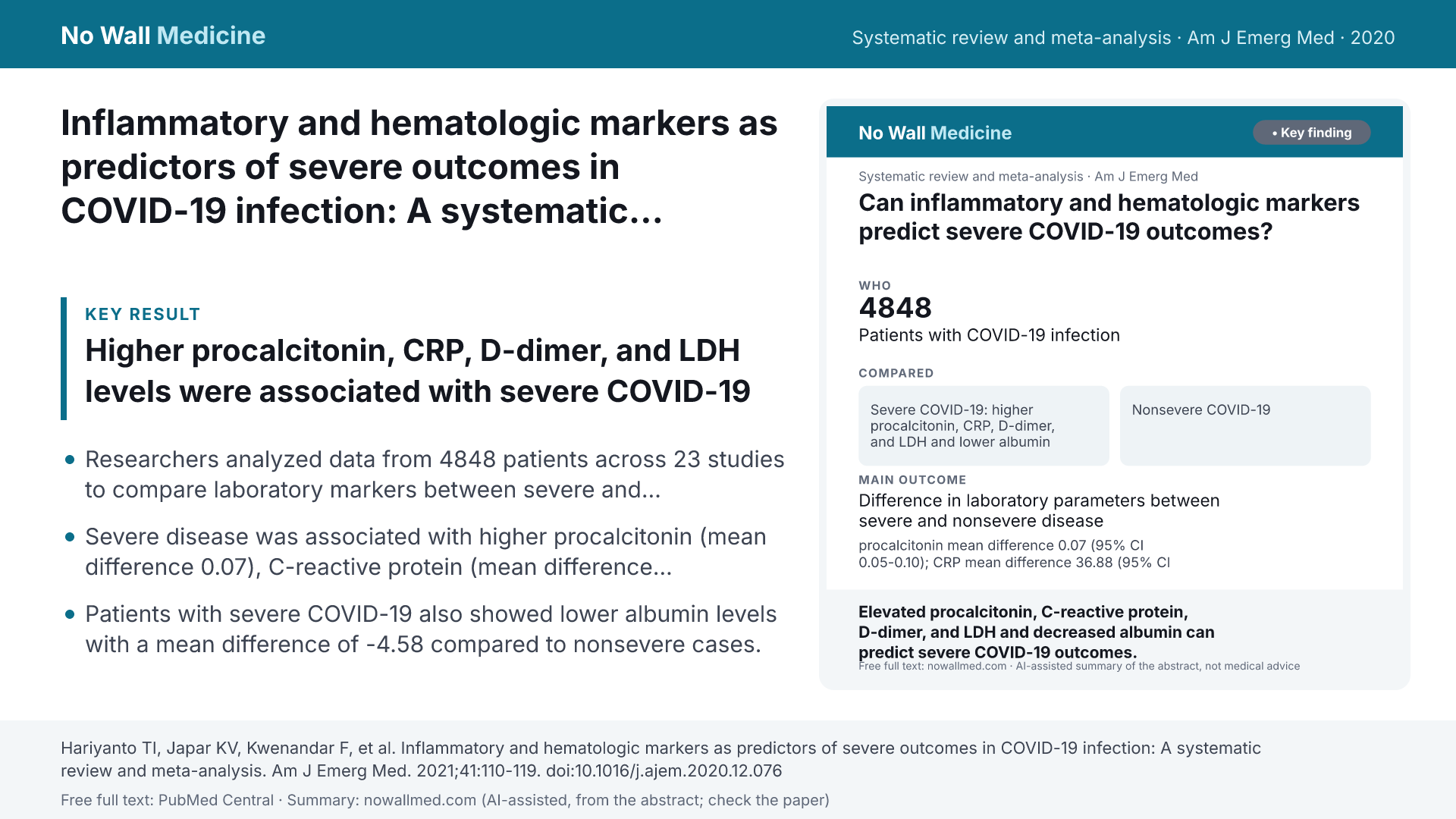
- Researchers analyzed data from 4848 patients across 23 studies to compare laboratory markers between severe and nonsevere COVID-19 cases.
- Severe disease was associated with higher procalcitonin (mean difference 0.07), C-reactive protein (mean difference 36.88), D-dimer (mean difference 0.43), and lactate dehydrogenase (mean difference 102.79).
- Patients with severe COVID-19 also showed lower albumin levels with a mean difference of -4.58 compared to nonsevere cases.
Headline and key points written with AI from the paper’s abstract, with every number checked against it. Read the paper before relying on them.
Was this summary helpful?
Subject terms
Cite this article
Hariyanto TI, Japar KV, Kwenandar F, et al. Inflammatory and hematologic markers as predictors of severe outcomes in COVID-19 infection: A systematic review and meta-analysis. Am J Emerg Med. 2020. doi:10.1016/j.ajem.2020.12.076
Spotted a mistake? Suggest a correction