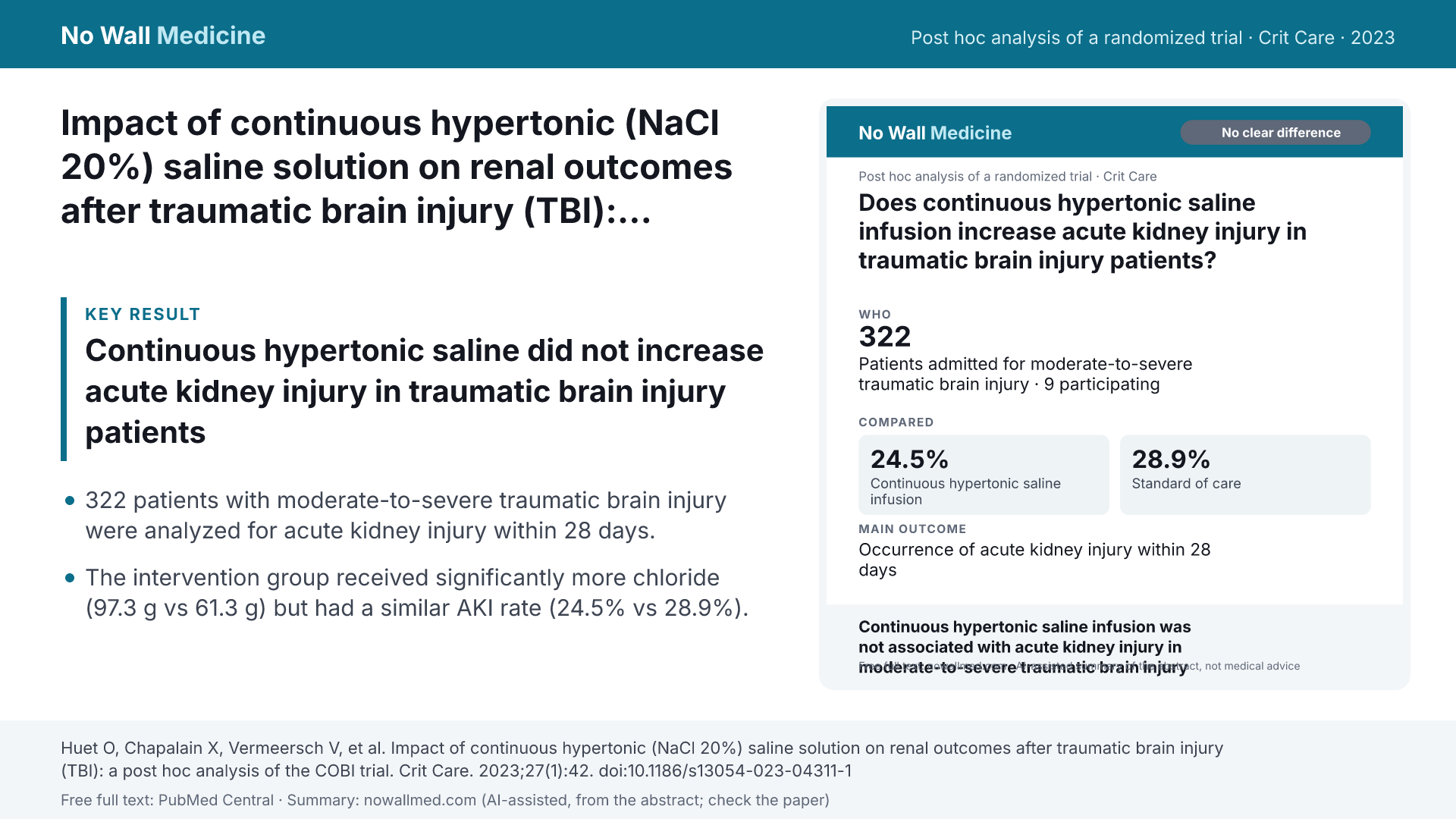
Impact of continuous hypertonic (NaCl 20%) saline solution on renal outcomes after traumatic brain injury (TBI): a post hoc analysis of the COBI trial
Key result: Continuous hypertonic saline did not increase acute kidney injury in traumatic brain injury patients
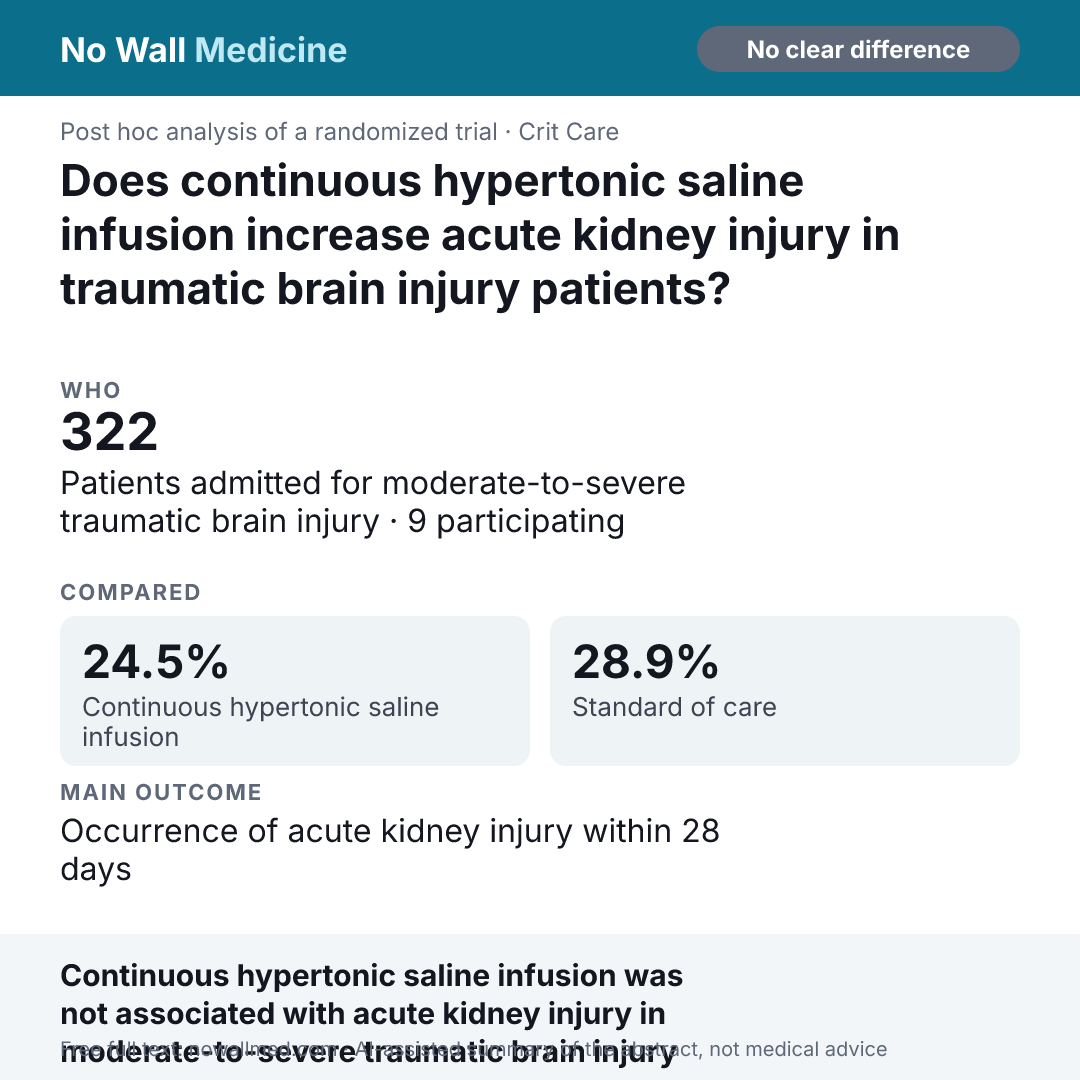
Post hoc analysis of a randomized trialNo clear difference
Does continuous hypertonic saline infusion increase acute kidney injury in traumatic brain injury patients?
Who
322
Patients admitted for moderate-to-severe traumatic brain injury · 9 participating intensive care units
Compared
24.5%Continuous hypertonic saline infusion
28.9%Standard of care
Main outcome
Occurrence of acute kidney injury within 28 days
Bottom line: Continuous hypertonic saline infusion was not associated with acute kidney injury in moderate-to-severe traumatic brain injury patients.
Crit Care · 2023-01-27 · Save PNG
Key points
- 322 patients with moderate-to-severe traumatic brain injury were analyzed for acute kidney injury within 28 days.
- The intervention group received significantly more chloride (97.3 g vs 61.3 g) but had a similar AKI rate (24.5% vs 28.9%).
- The difference in acute kidney injury incidence between the hypertonic saline and control groups was not statistically significant.
Discussion prompts
- Would these patients look like yours? Who was left out?
- Is the main outcome one that matters to patients?
- Is the difference large enough to change what you do?
Cite: Huet O, Chapalain X, Vermeersch V, et al. Impact of continuous hypertonic (NaCl 20%) saline solution on renal outcomes after traumatic brain injury (TBI): a post hoc analysis of the COBI trial. Crit Care. 2023;27(1):42. doi:10.1186/s13054-023-04311-1
Free full text: PubMed Central · Summary and visual abstract: nowallmed.com/a/impact-of-continuous-hypertonic-nacl-20-saline-solution-on-renal-1u95q1z/ (AI-assisted from the abstract; check the paper before relying on it).