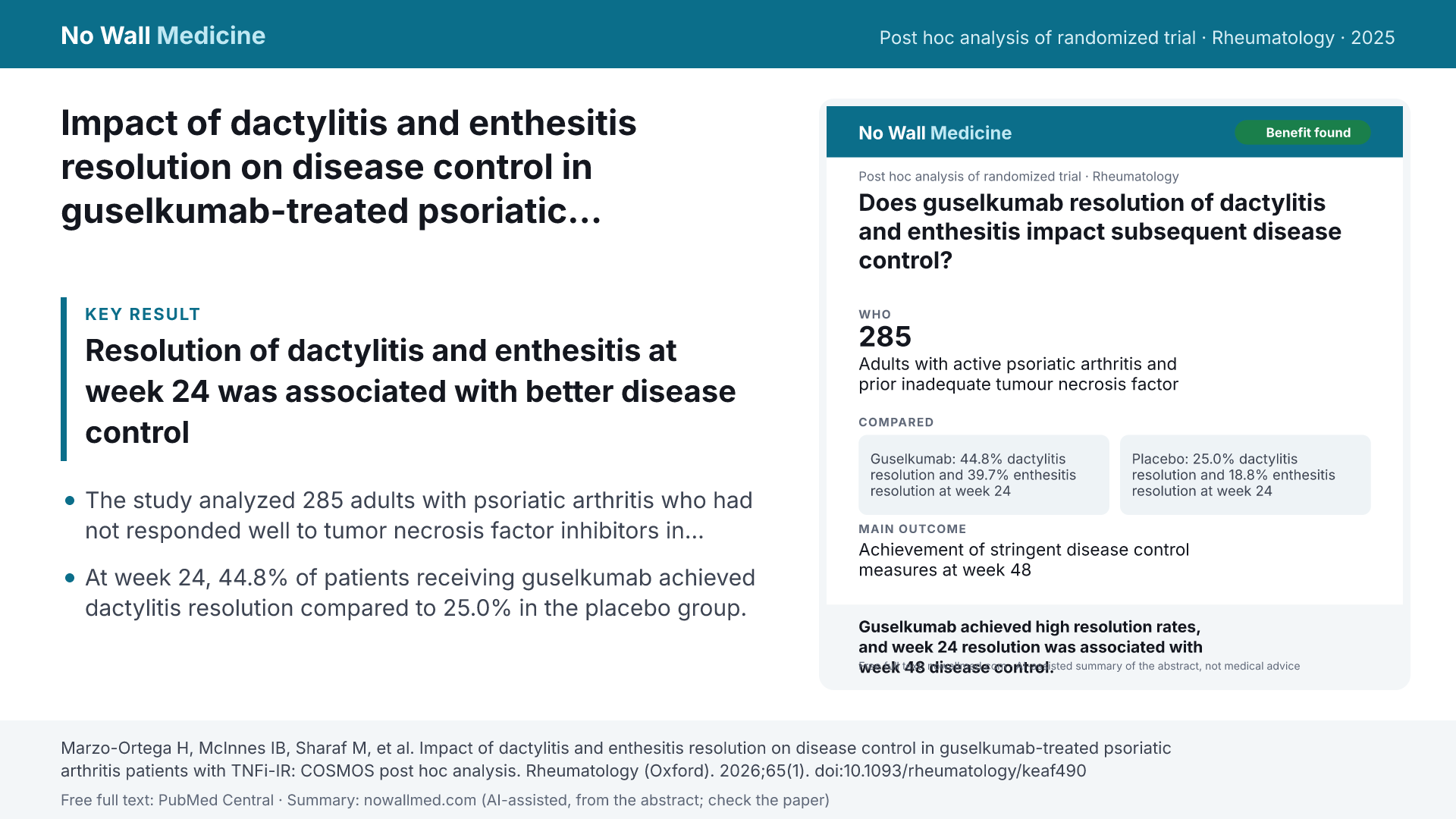
Resolution of dactylitis and enthesitis at week 24 was associated with better disease control
Impact of dactylitis and enthesitis resolution on disease control in guselkumab-treated psoriatic arthritis patients with TNFi-IR: COSMOS post hoc analysis
Post hoc analysis of randomized trialBenefit found
Does guselkumab resolution of dactylitis and enthesitis impact subsequent disease control?
Who
285
Adults with active psoriatic arthritis and prior inadequate tumour necrosis factor inhibitor response
Compared
Guselkumab: 44.8% dactylitis resolution and 39.7% enthesitis resolution at week 24
Placebo: 25.0% dactylitis resolution and 18.8% enthesitis resolution at week 24
Main outcome
Achievement of stringent disease control measures at week 48
Result: odds ratios: dactylitis resolution 3.28-13.38; enthesitis resolution 2.88-6.09
Bottom line: Guselkumab achieved high resolution rates, and week 24 resolution was associated with week 48 disease control.
Rheumatology · 2025-09-19 · Save PNG
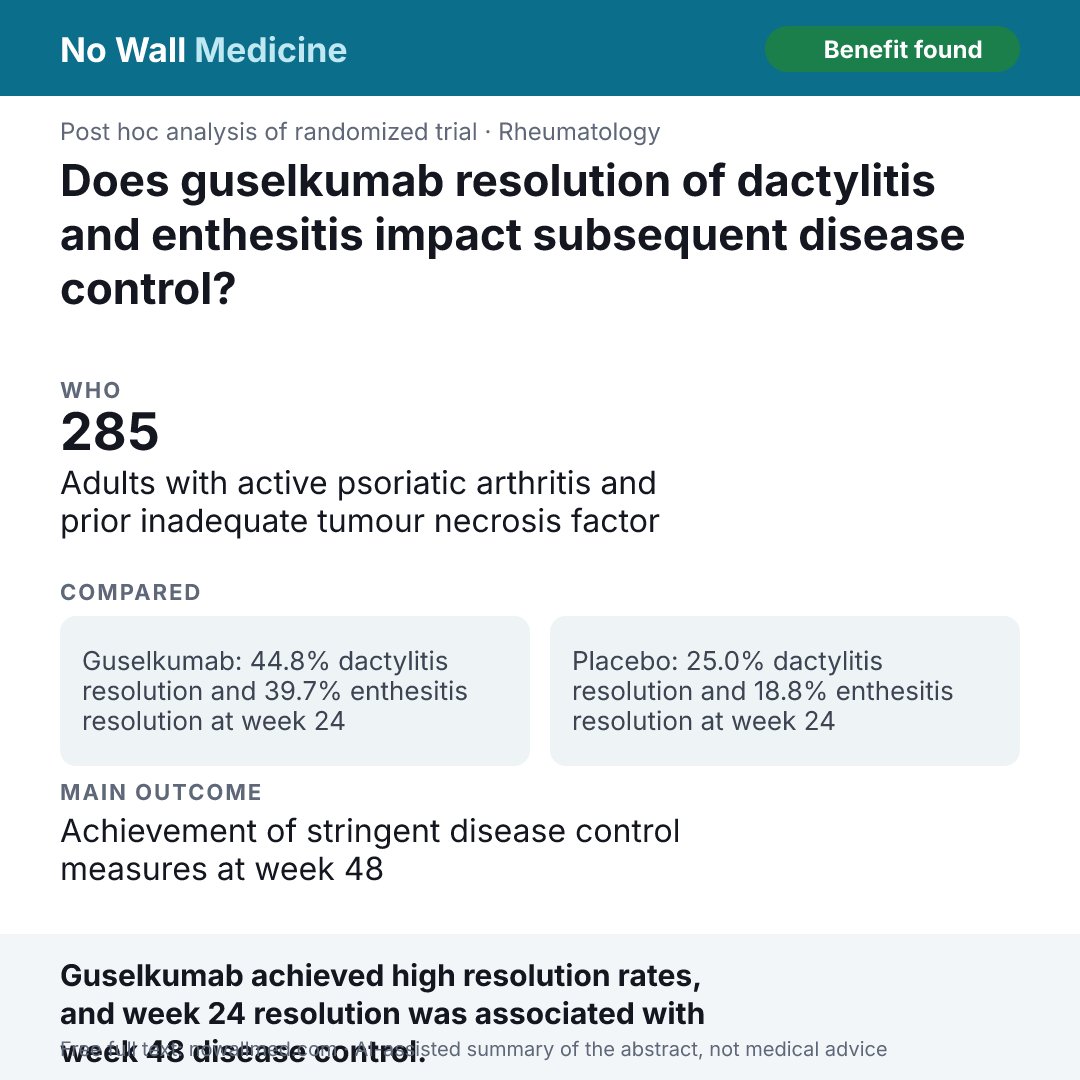
Clinical question: Does guselkumab resolution of dactylitis and enthesitis impact subsequent disease control?
In absolute numbers
Guselkumab: 44.8% · Placebo: 25% → a difference of 19.8 percentage points, so about 6 people would need the treatment for 1 more to benefit (number needed to treat) over the trial’s follow-up.
Worked out by us from the two group results above, not reported by the authors. Check the paper for the exact outcome and timing.
Key points
- The study analyzed 285 adults with psoriatic arthritis who had not responded well to tumor necrosis factor inhibitors in the COSMOS trial.
- At week 24, 44.8% of patients receiving guselkumab achieved dactylitis resolution compared to 25.0% in the placebo group.
- Resolution of dactylitis or enthesitis at week 24 was associated with achieving stringent disease control measures at week 48.
Headline and key points written with AI from the paper’s abstract, with every number checked against it. Read the paper before relying on them.
Was this summary helpful?
Subject terms
Headline, design, result, key points, caveat and citation as plain text.
Cite this article
Marzo-Ortega H, McInnes IB, Sharaf M, et al. Impact of dactylitis and enthesitis resolution on disease control in guselkumab-treated psoriatic arthritis patients with TNFi-IR: COSMOS post hoc analysis. Rheumatology (Oxford). 2026;65(1). doi:10.1093/rheumatology/keaf490
Spotted a mistake? Suggest a correction