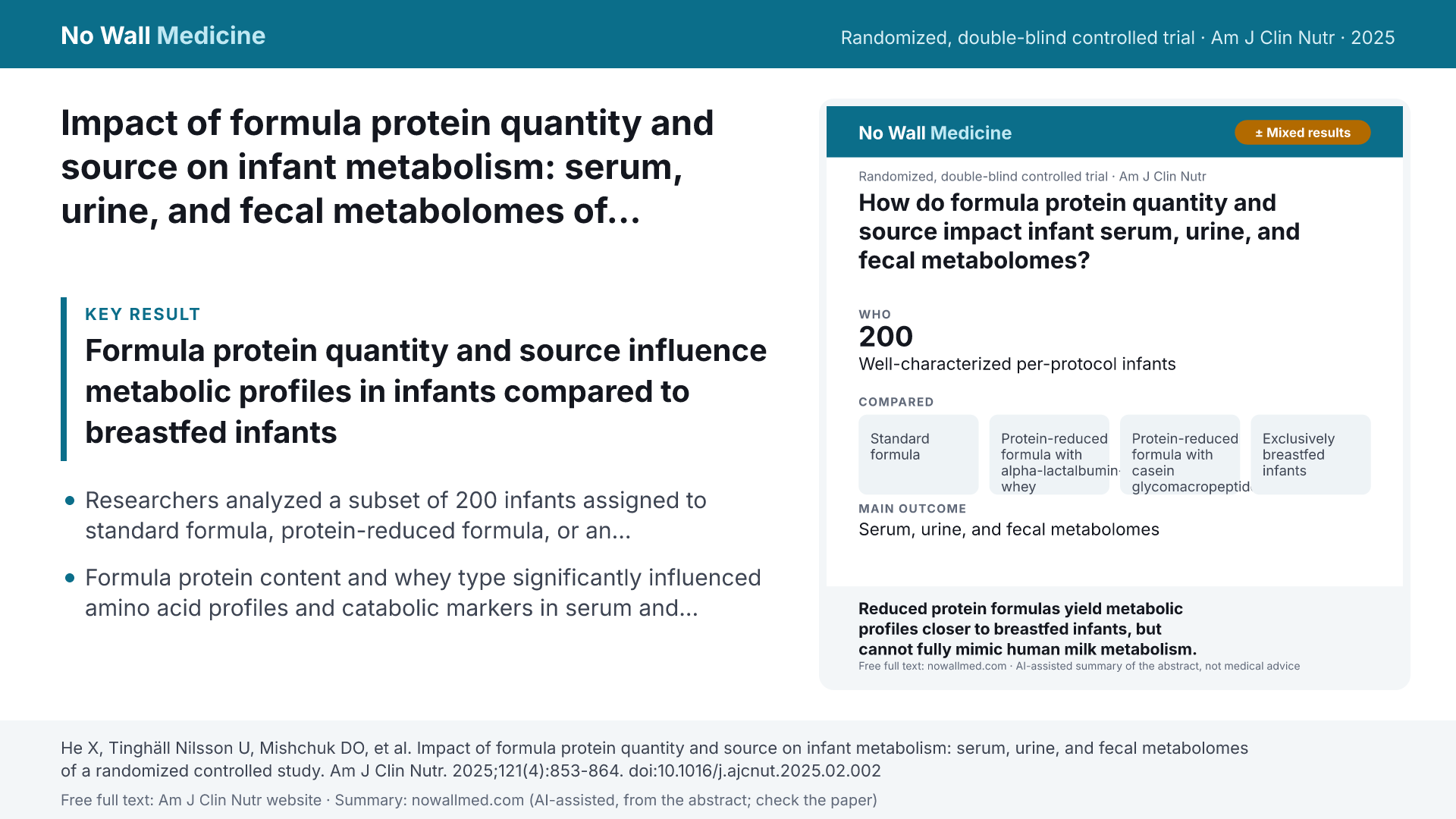
Formula protein quantity and source influence metabolic profiles in infants compared to breastfed infants
Impact of formula protein quantity and source on infant metabolism: serum, urine, and fecal metabolomes of a randomized controlled study
Randomized, double-blind controlled trialMixed results
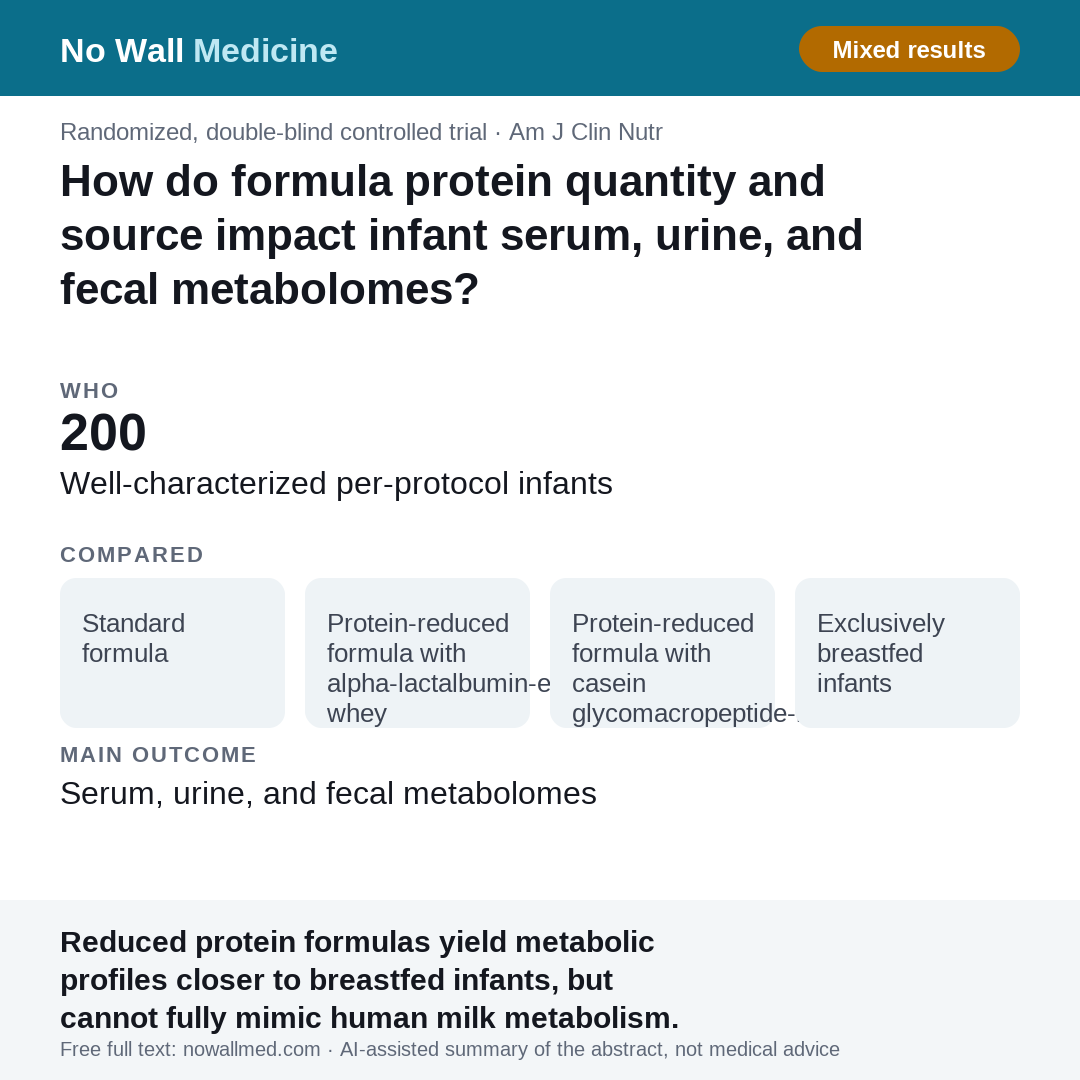
How do formula protein quantity and source impact infant serum, urine, and fecal metabolomes?
Who
200
Well-characterized per-protocol infants
Compared
Standard formula
Protein-reduced formula with alpha-lactalbumin-enriched whey
Protein-reduced formula with casein glycomacropeptide-reduced whey
Exclusively breastfed infants
Main outcome
Serum, urine, and fecal metabolomes
Bottom line: Reduced protein formulas yield metabolic profiles closer to breastfed infants, but cannot fully mimic human milk metabolism.
Limitation: This was a secondary analysis performed on a random subset of infants.
Am J Clin Nutr · 2025-02-05Download image
Clinical question: How do formula protein quantity and source impact infant serum, urine, and fecal metabolomes?
Why it matters: It is unknown how the amount and specific type of whey protein in infant formula affect the serum, urine, and fecal metabolomes of infants.
Key points
- Researchers analyzed a subset of 200 infants assigned to standard formula, protein-reduced formula, or an observational group of exclusively breastfed infants.
- Formula protein content and whey type significantly influenced amino acid profiles and catabolic markers in serum and urine, but had minimal impact on fecal metabolites.
- Reduced protein formulas showed metabolic profiles closer to breastfed infants, though breastfed infants still showed greater branched-chain amino acid oxidation and waste elimination.
Headline and key points written with AI from the paper’s abstract, with every number checked against it. Read the paper before relying on them.
Was this summary helpful?
Subject terms
Cite this article
He X, Tinghäll Nilsson U, Mishchuk DO, et al. Impact of formula protein quantity and source on infant metabolism: serum, urine, and fecal metabolomes of a randomized controlled study. Am J Clin Nutr. 2025. doi:10.1016/j.ajcnut.2025.02.002
Spotted a mistake? Suggest a correction