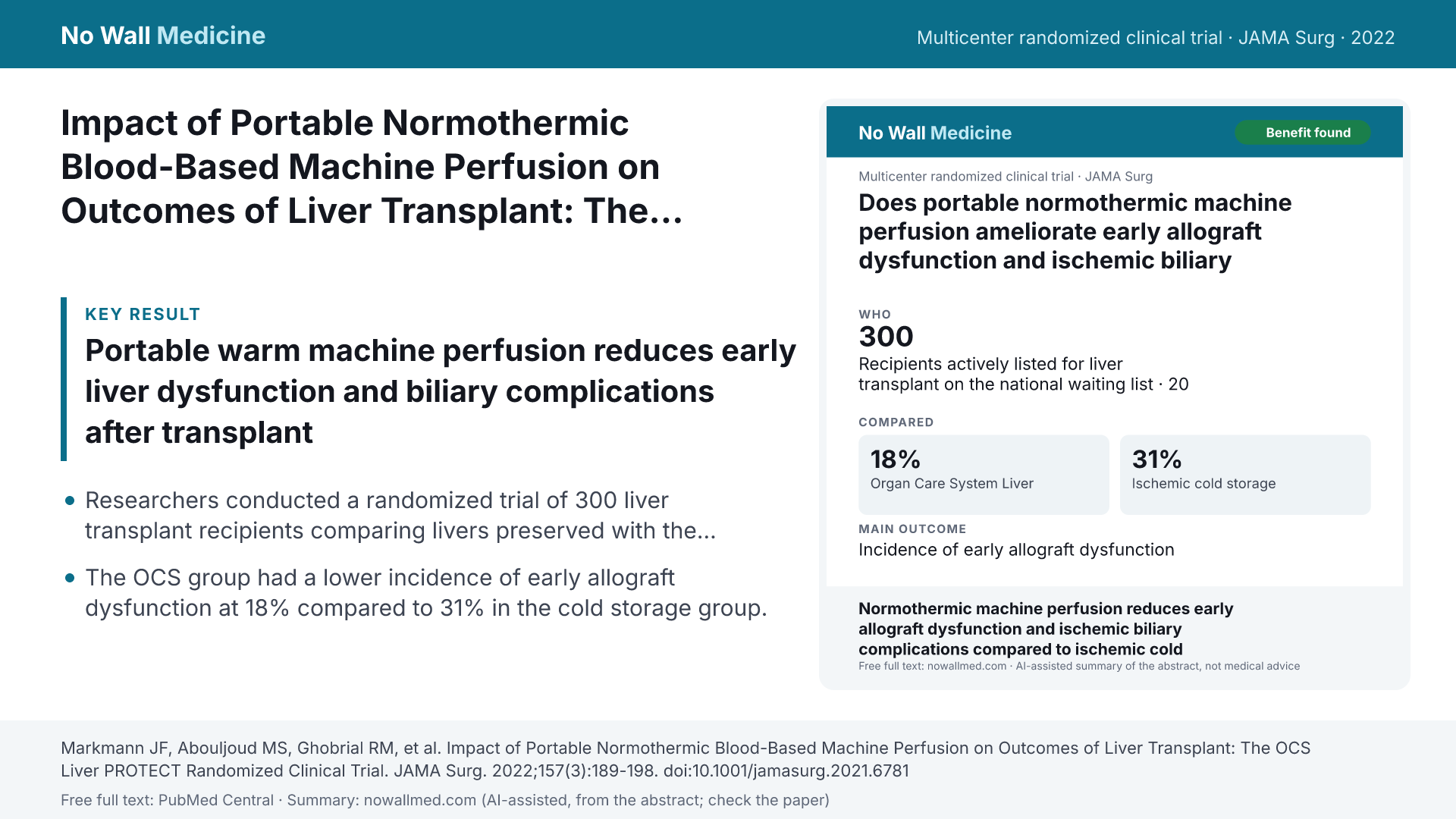
Impact of Portable Normothermic Blood-Based Machine Perfusion on Outcomes of Liver Transplant: The OCS Liver PROTECT Randomized Clinical Trial
Key result: Portable warm machine perfusion reduces early liver dysfunction and biliary complications after transplant
Key points
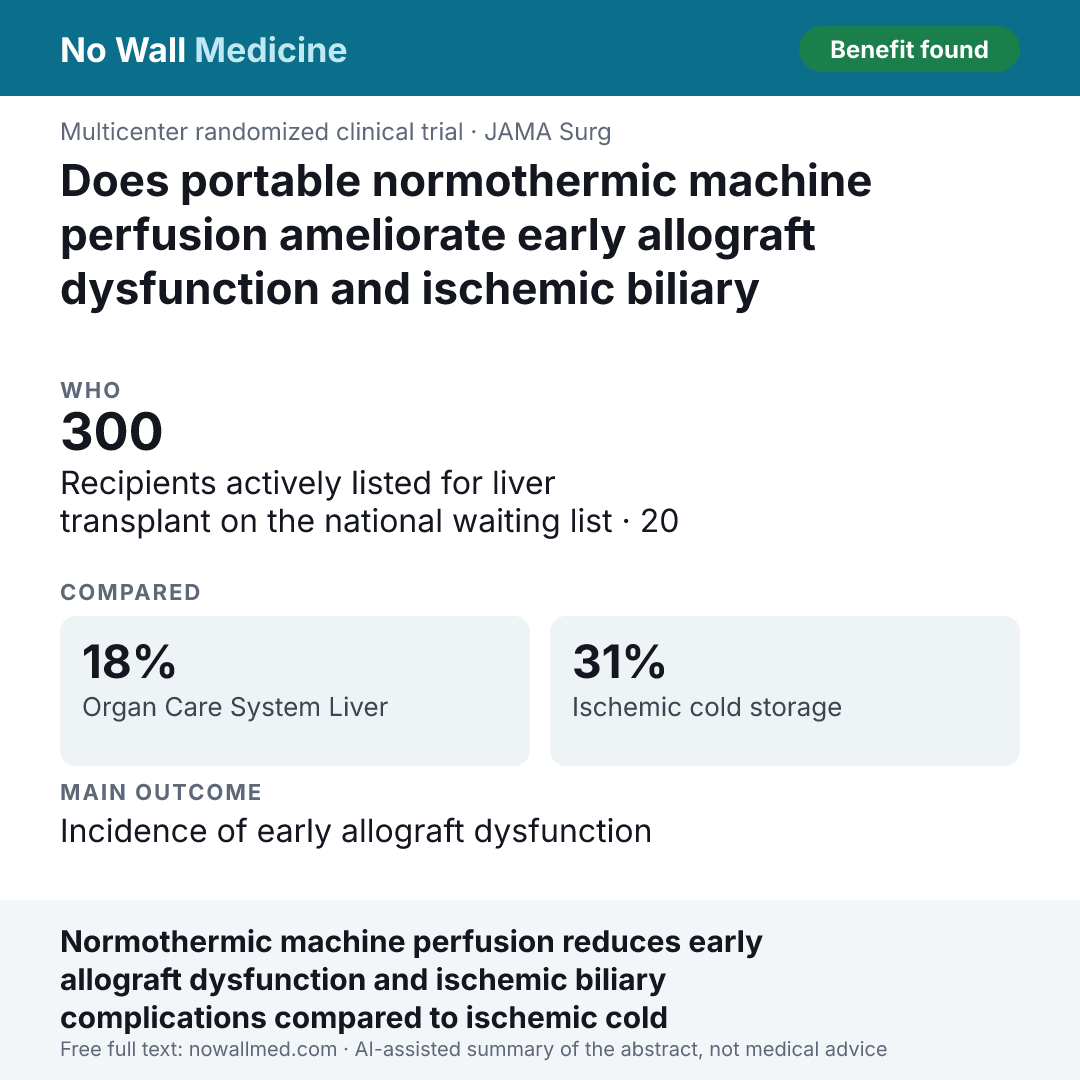
- Researchers conducted a randomized trial of 300 liver transplant recipients comparing livers preserved with the Organ Care System (OCS) to those using conventional ischemic cold storage.
- The OCS group had a lower incidence of early allograft dysfunction at 18% compared to 31% in the cold storage group.
- Livers preserved with OCS were associated with lower rates of ischemic biliary complications at 6 months (1.3% vs 8.5%) and 12 months (2.6% vs 9.9%).
Why it matters: Ischemic cold storage of livers for transplant is associated with serious posttransplant complications and the underuse of available donor livers.
Discussion prompts
- Would these patients look like yours? Who was left out?
- Is the main outcome one that matters to patients?
- Is the difference large enough to change what you do?
Cite: Markmann JF, Abouljoud MS, Ghobrial RM, et al. Impact of Portable Normothermic Blood-Based Machine Perfusion on Outcomes of Liver Transplant: The OCS Liver PROTECT Randomized Clinical Trial. JAMA Surg. 2022;157(3):189-198. doi:10.1001/jamasurg.2021.6781
Free full text: PubMed Central · Summary and visual abstract: nowallmed.com/a/impact-of-portable-normothermic-blood-based-machine-perfusion-on-dry6us/ (AI-assisted from the abstract; check the paper before relying on it).