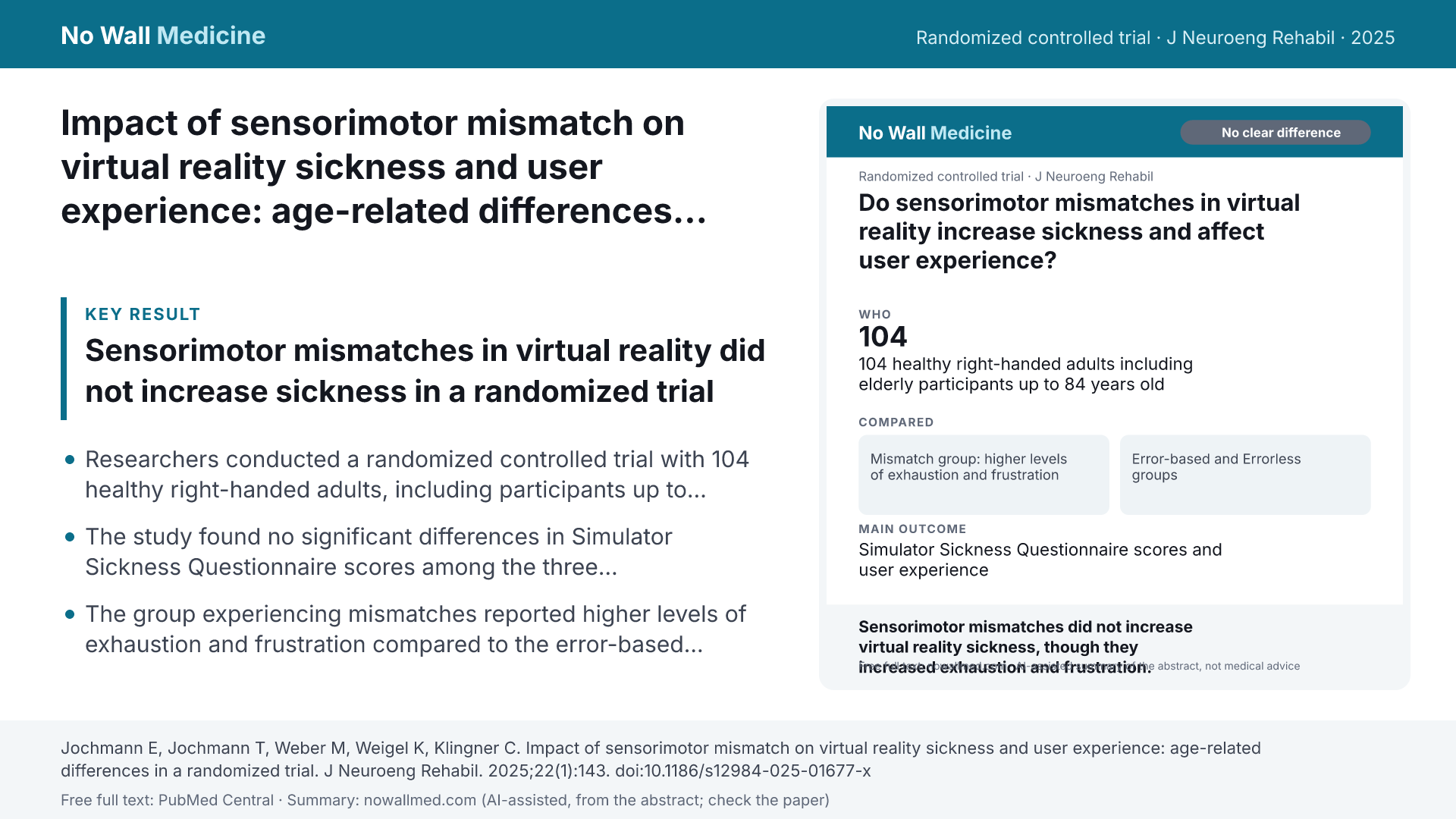
Sensorimotor mismatches in virtual reality did not increase sickness in a randomized trial
Impact of sensorimotor mismatch on virtual reality sickness and user experience: age-related differences in a randomized trial
Randomized controlled trialNo clear difference
Do sensorimotor mismatches in virtual reality increase sickness and affect user experience?
Who
104
104 healthy right-handed adults including elderly participants up to 84 years old
Compared
Mismatch group: higher levels of exhaustion and frustration
Error-based and Errorless groups
Main outcome
Simulator Sickness Questionnaire scores and user experience
Bottom line: Sensorimotor mismatches did not increase virtual reality sickness, though they increased exhaustion and frustration.
J Neuroeng Rehabil · 2025-07-03Download image
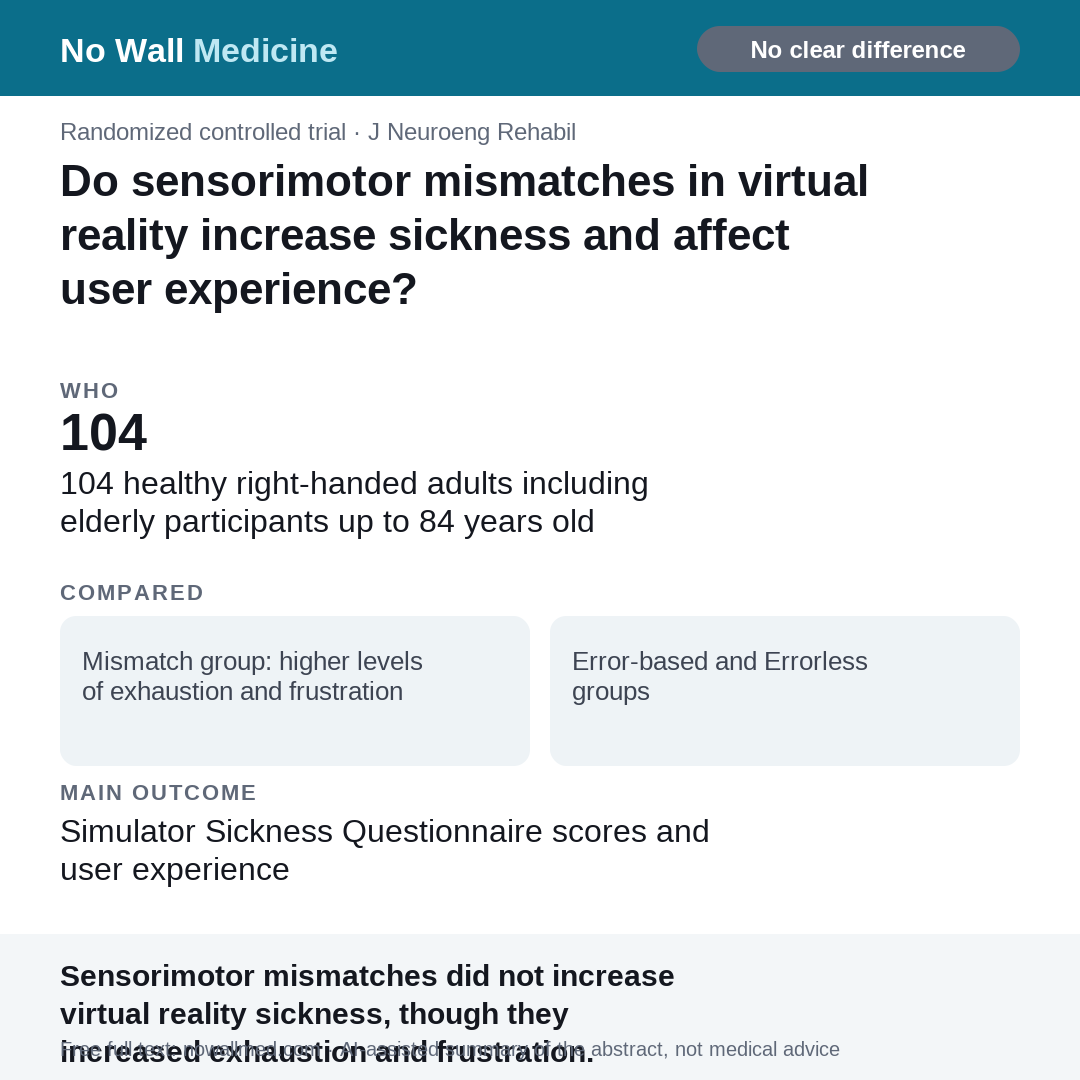
Clinical question: Do sensorimotor mismatches in virtual reality increase sickness and affect user experience?
Why it matters: It is unclear if sensorimotor mismatches, which may help motor learning, increase virtual reality sickness or if older adults are more susceptible to these effects.
Key points
- Researchers conducted a randomized controlled trial with 104 healthy right-handed adults, including participants up to 84 years old, performing a virtual reality ball-throwing task.
- The study found no significant differences in Simulator Sickness Questionnaire scores among the three intervention groups, suggesting sensorimotor mismatches do not increase virtual reality sickness.
- The group experiencing mismatches reported higher levels of exhaustion and frustration compared to the error-based and errorless groups.
Headline and key points written with AI from the paper’s abstract, with every number checked against it. Read the paper before relying on them.
Was this summary helpful?
Subject terms
Cite this article
Jochmann E, Jochmann T, Weber M, Weigel K, Klingner C. Impact of sensorimotor mismatch on virtual reality sickness and user experience: age-related differences in a randomized trial. J Neuroeng Rehabil. 2025. doi:10.1186/s12984-025-01677-x
Spotted a mistake? Suggest a correction
Top studies every Monday
The week’s key trials and guidelines in your specialties, plus any topics you follow. By email, free.
Get the weekly digest