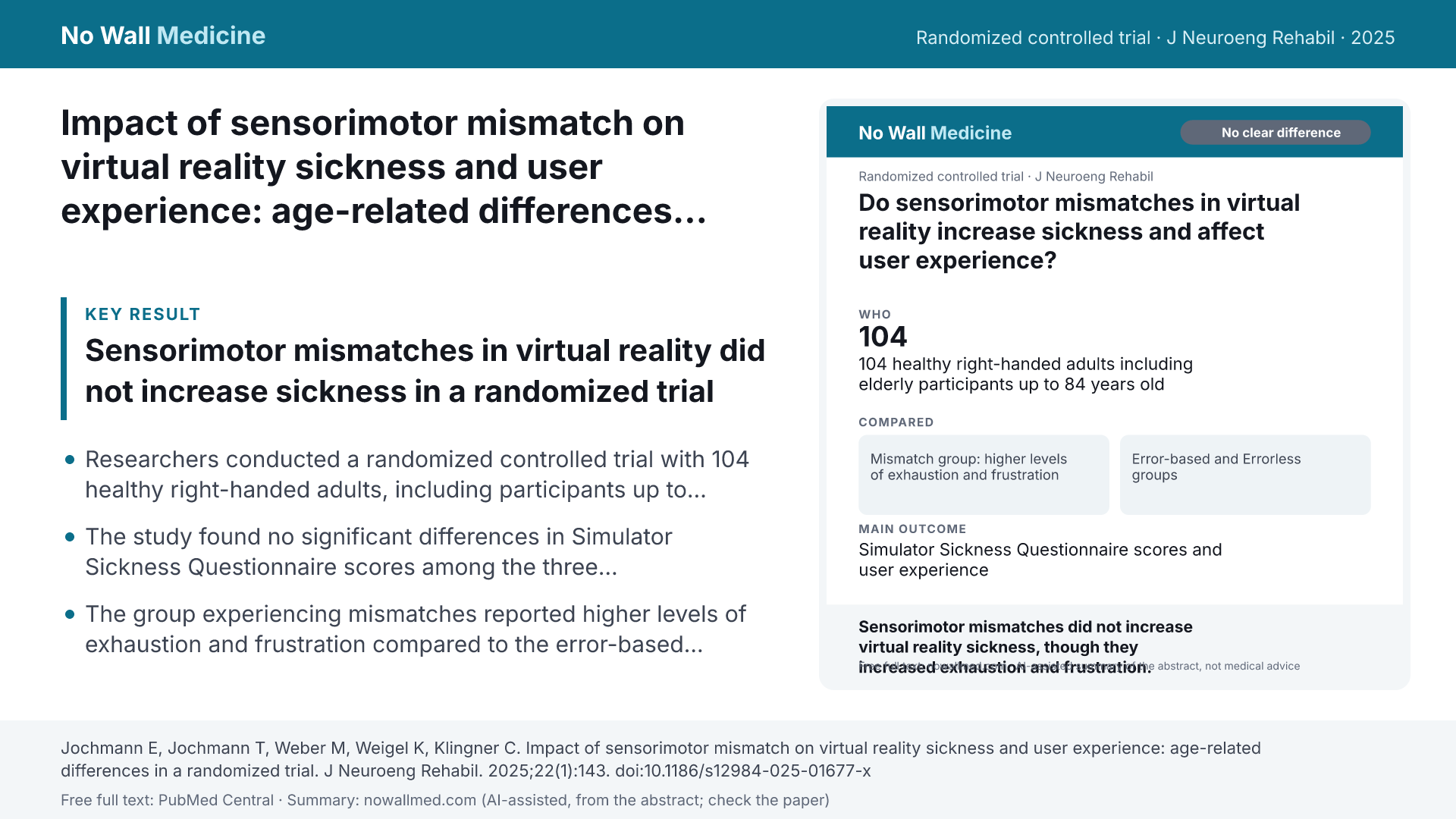
Impact of sensorimotor mismatch on virtual reality sickness and user experience: age-related differences in a randomized trial
Key result: Sensorimotor mismatches in virtual reality did not increase sickness in a randomized trial
Randomized controlled trialNo clear difference
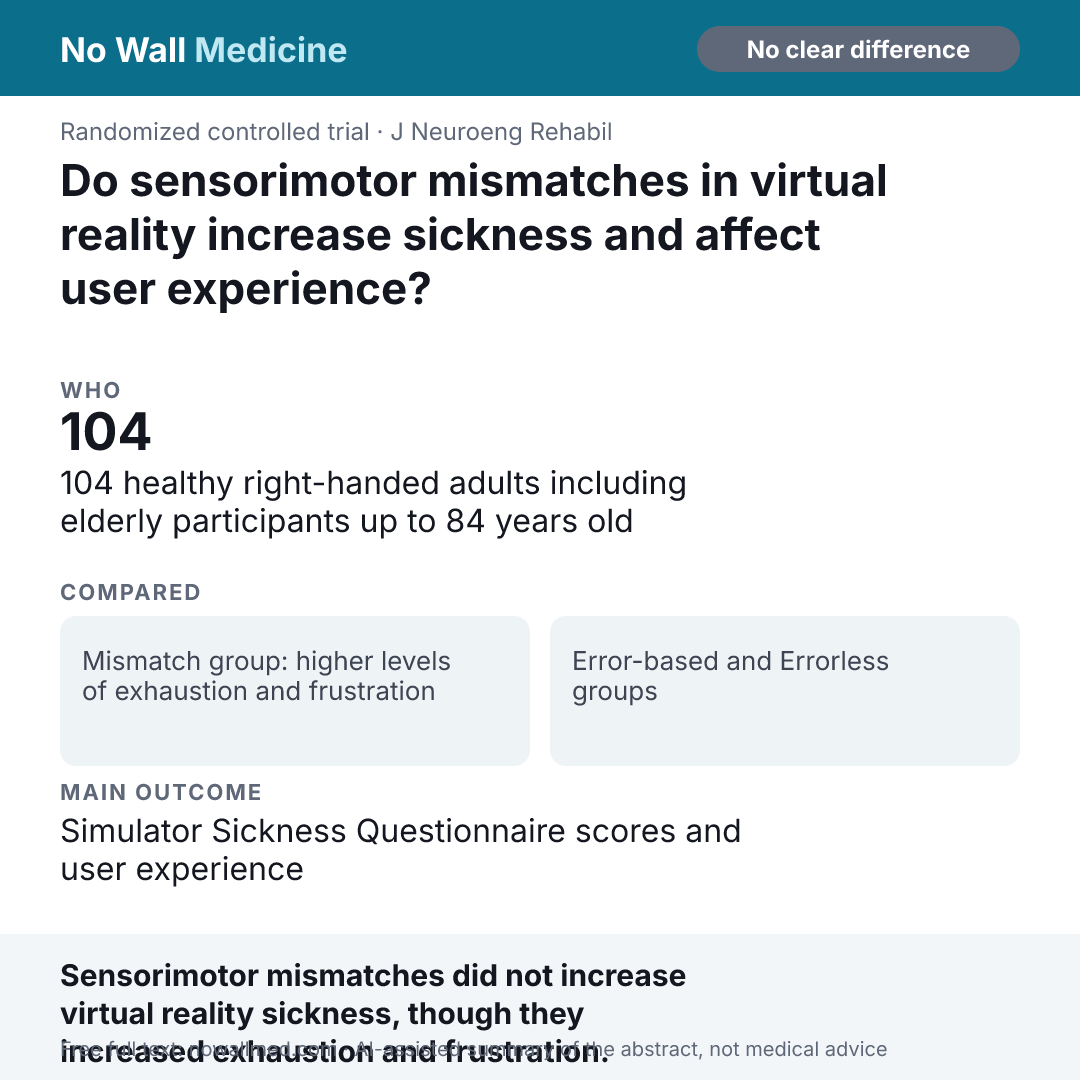
Do sensorimotor mismatches in virtual reality increase sickness and affect user experience?
Who
104
104 healthy right-handed adults including elderly participants up to 84 years old
Compared
Mismatch group: higher levels of exhaustion and frustration
Error-based and Errorless groups
Main outcome
Simulator Sickness Questionnaire scores and user experience
Bottom line: Sensorimotor mismatches did not increase virtual reality sickness, though they increased exhaustion and frustration.
J Neuroeng Rehabil · 2025-07-03 · Save PNG
Key points
- Researchers conducted a randomized controlled trial with 104 healthy right-handed adults, including participants up to 84 years old, performing a virtual reality ball-throwing task.
- The study found no significant differences in Simulator Sickness Questionnaire scores among the three intervention groups, suggesting sensorimotor mismatches do not increase virtual reality sickness.
- The group experiencing mismatches reported higher levels of exhaustion and frustration compared to the error-based and errorless groups.
Discussion prompts
- Would these patients look like yours? Who was left out?
- Is the main outcome one that matters to patients?
- Is the difference large enough to change what you do?
Cite: Jochmann E, Jochmann T, Weber M, Weigel K, Klingner C. Impact of sensorimotor mismatch on virtual reality sickness and user experience: age-related differences in a randomized trial. J Neuroeng Rehabil. 2025;22(1):143. doi:10.1186/s12984-025-01677-x
Free full text: PubMed Central · Summary and visual abstract: nowallmed.com/a/impact-of-sensorimotor-mismatch-on-virtual-reality-sickness-and-user-1dh7cvv/ (AI-assisted from the abstract; check the paper before relying on it).