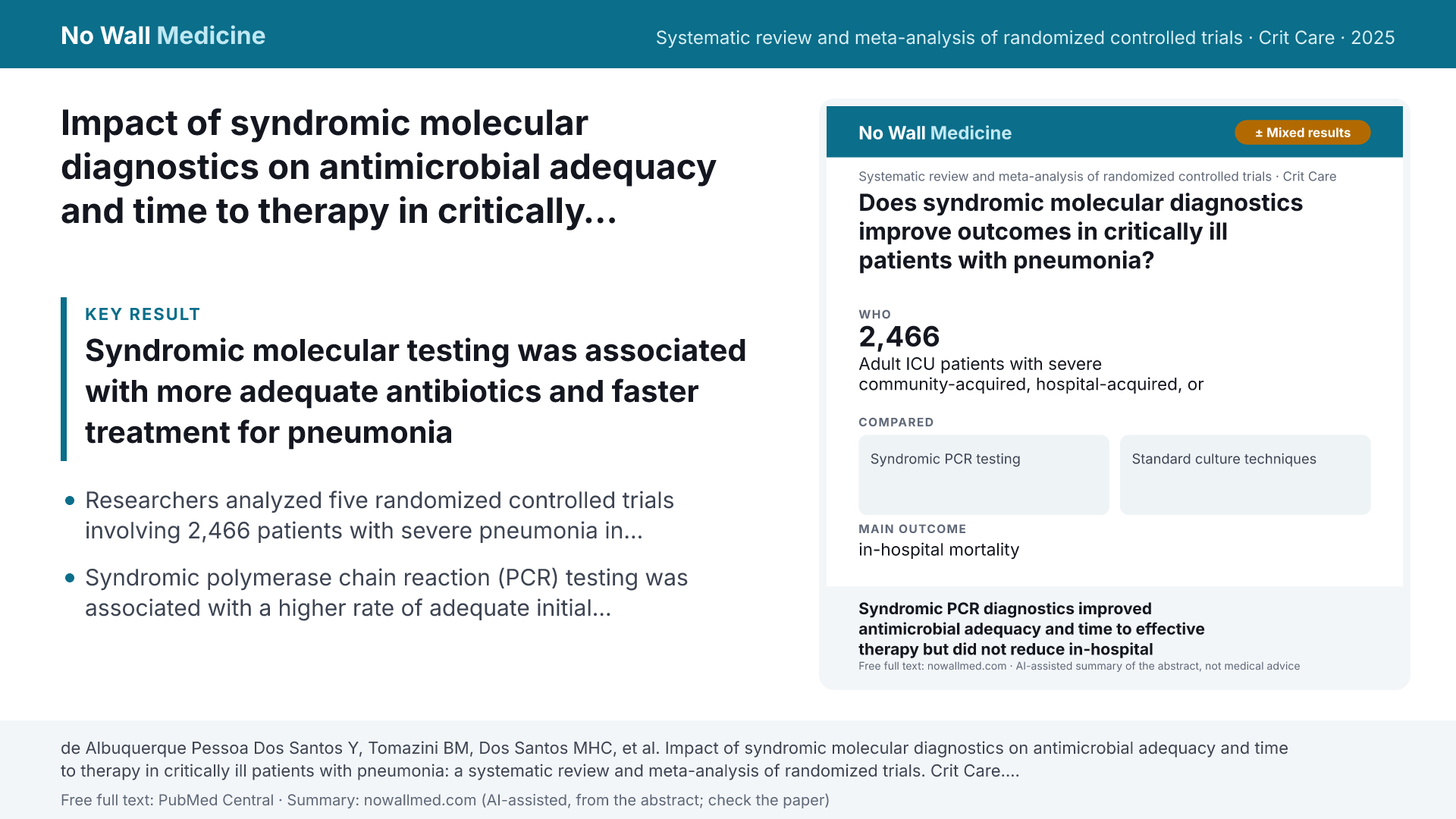
Syndromic molecular testing was associated with more adequate antibiotics and faster treatment for pneumonia
Impact of syndromic molecular diagnostics on antimicrobial adequacy and time to therapy in critically ill patients with pneumonia: a systematic review and meta-analysis of randomized trials
Systematic review and meta-analysis of randomized controlled trialsMixed results
Does syndromic molecular diagnostics improve outcomes in critically ill patients with pneumonia?
Who
2,466
Adult ICU patients with severe community-acquired, hospital-acquired, or ventilator-associated pneumonia
Compared
Syndromic PCR testing
Standard culture techniques
Main outcome
in-hospital mortality
Result: relative risk 1.04 (95% CI 0.90–1.21)
Bottom line: Syndromic PCR diagnostics improved antimicrobial adequacy and time to effective therapy but did not reduce in-hospital mortality.
Crit Care · 2025-08-22Download image
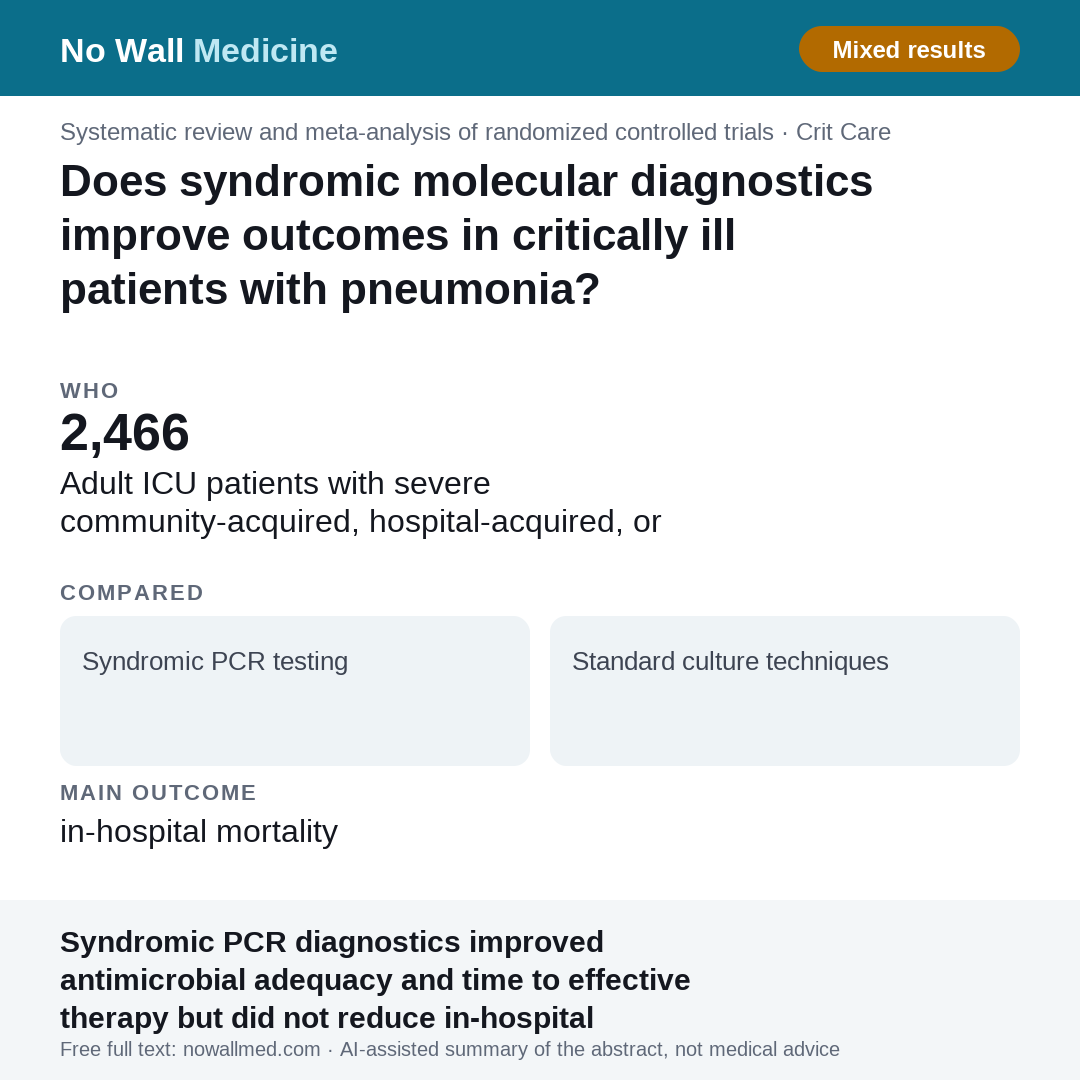
Clinical question: Does syndromic molecular diagnostics improve outcomes in critically ill patients with pneumonia?
Why it matters: The clinical benefit of using rapid molecular diagnostic panels compared to standard culture techniques in critically ill pneumonia patients remains uncertain.
Key points
- Researchers analyzed five randomized controlled trials involving 2,466 patients with severe pneumonia in intensive care units.
- Syndromic polymerase chain reaction (PCR) testing was associated with a higher rate of adequate initial antimicrobial therapy (RR 1.82; 95% CI: 1.10–3.00; p = 0.02).
- The use of PCR testing was associated with a mean difference of -27.98 h in time to effective antibiotic administration (95% CI: -46.07 to -9.89; p = 0.002).
Headline and key points written with AI from the paper’s abstract, with every number checked against it. Read the paper before relying on them.
Was this summary helpful?
Subject terms
Cite this article
de Albuquerque Pessoa Dos Santos Y, Tomazini BM, Dos Santos MHC, et al. Impact of syndromic molecular diagnostics on antimicrobial adequacy and time to therapy in critically ill patients with pneumonia: a systematic review and meta-analysis of randomized trials. Crit Care. 2025. doi:10.1186/s13054-025-05623-0
Spotted a mistake? Suggest a correction