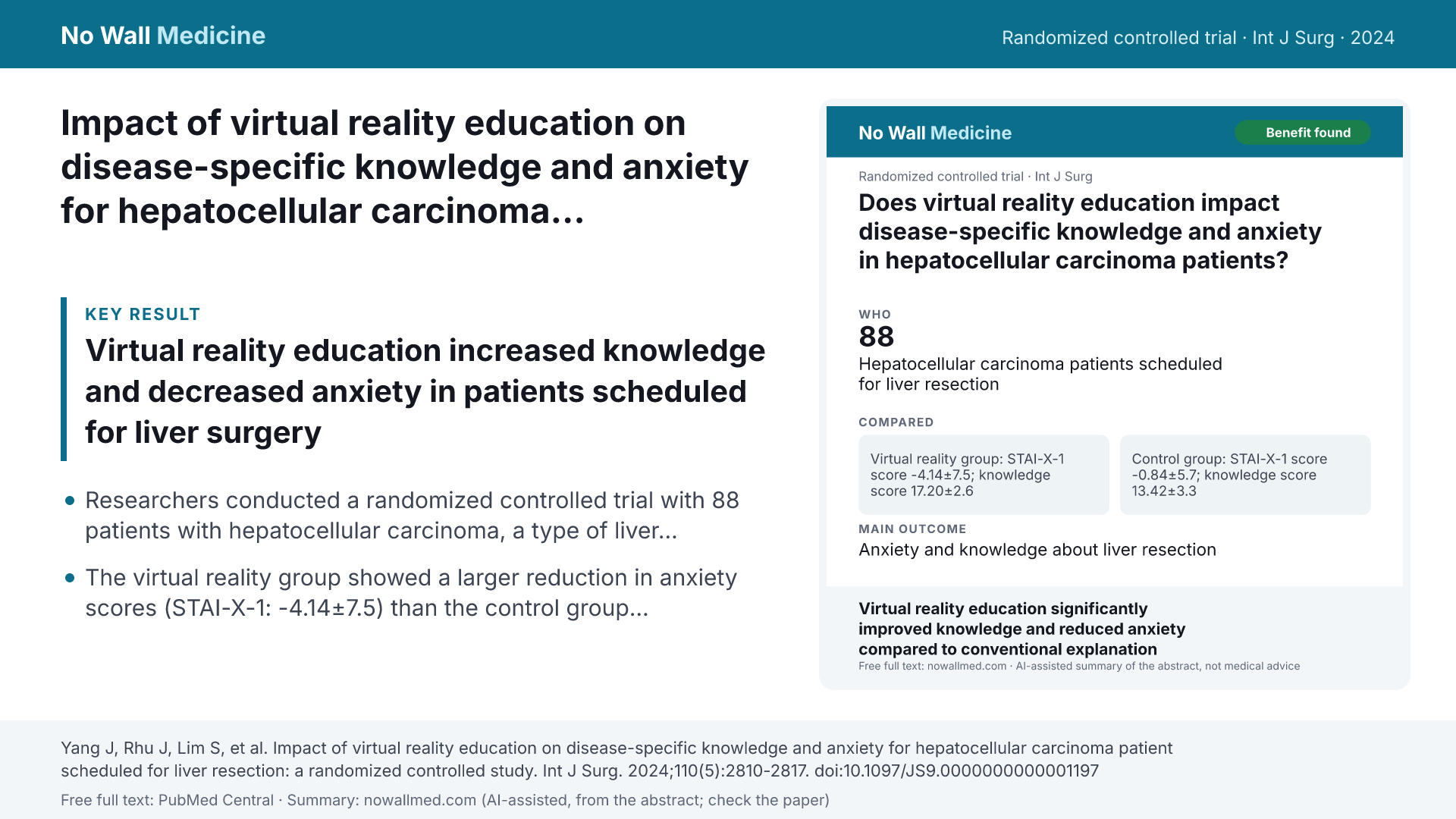
Impact of virtual reality education on disease-specific knowledge and anxiety for hepatocellular carcinoma patient scheduled for liver resection: a randomized controlled study
Key result: Virtual reality education increased knowledge and decreased anxiety in patients scheduled for liver surgery
Key points
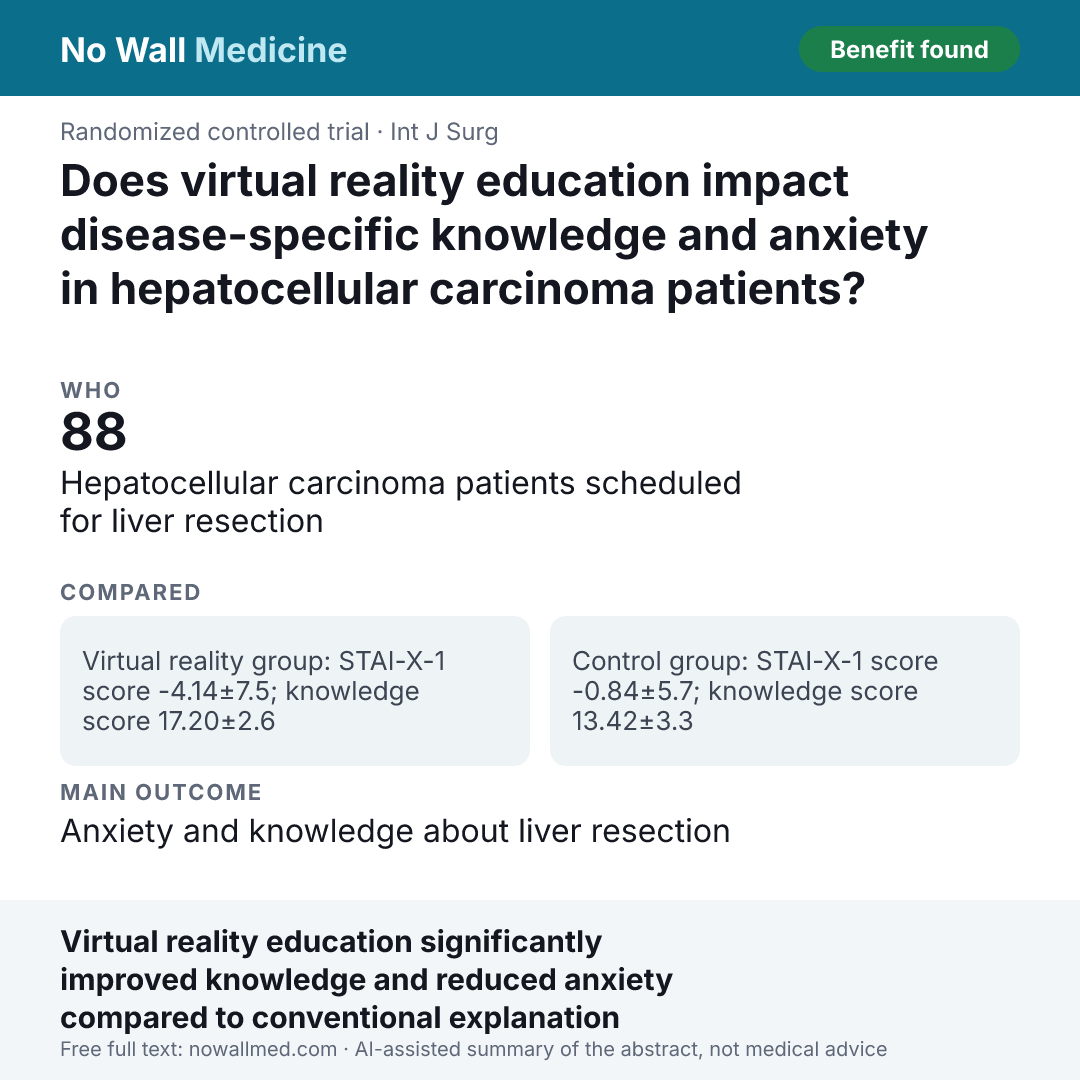
- Researchers conducted a randomized controlled trial with 88 patients with hepatocellular carcinoma, a type of liver cancer, comparing virtual reality education to conventional explanation methods.
- The virtual reality group showed a larger reduction in anxiety scores (STAI-X-1: -4.14±7.5) than the control group (-0.84±5.7, P =0.023).
- Knowledge scores were higher in the virtual reality group (17.20±2.6) compared to the control group (13.42±3.3, P <0.001).
Why it matters: The complex anatomy of the liver makes it difficult to explain radiologic findings and surgical plans to patients undergoing liver resection.
Discussion prompts
- Would these patients look like yours? Who was left out?
- Is the main outcome one that matters to patients?
- Is the difference large enough to change what you do?
Cite: Yang J, Rhu J, Lim S, et al. Impact of virtual reality education on disease-specific knowledge and anxiety for hepatocellular carcinoma patient scheduled for liver resection: a randomized controlled study. Int J Surg. 2024;110(5):2810-2817. doi:10.1097/JS9.0000000000001197
Free full text: PubMed Central · Summary and visual abstract: nowallmed.com/a/impact-of-virtual-reality-education-on-disease-specific-knowledge-and-1j7500q/ (AI-assisted from the abstract; check the paper before relying on it).