Performing autonomic neural blockade at the start of surgery reduces anesthetic agent consumption
Impact on Anesthetic Agent Consumption After Autonomic Neural Blockade as Part of a Combined Anesthesia Protocol: A Randomized Clinical Trial
Prospective, double-blinded, randomized trialBenefit found
Does autonomic neural blockade at the onset of laparoscopic sleeve gastrectomy reduce anesthetic consumption?
Who
80
Patients undergoing laparoscopic sleeve gastrectomy · 2 high-volume institutions
Compared
autonomic neural blockade at the onset: mean difference -0.04 mcg/kg/min
control group
Main outcome
consumption of remifentanil and sevoflurane
Result: mean difference -0.04 mcg/kg/min (95% CI -0.06 to -0.02)
Bottom line: Performing autonomic neural blockade at the onset of surgery reduces remifentanil consumption and promotes hemodynamic stability.
Anesth Analg · 2023-12-13Download image
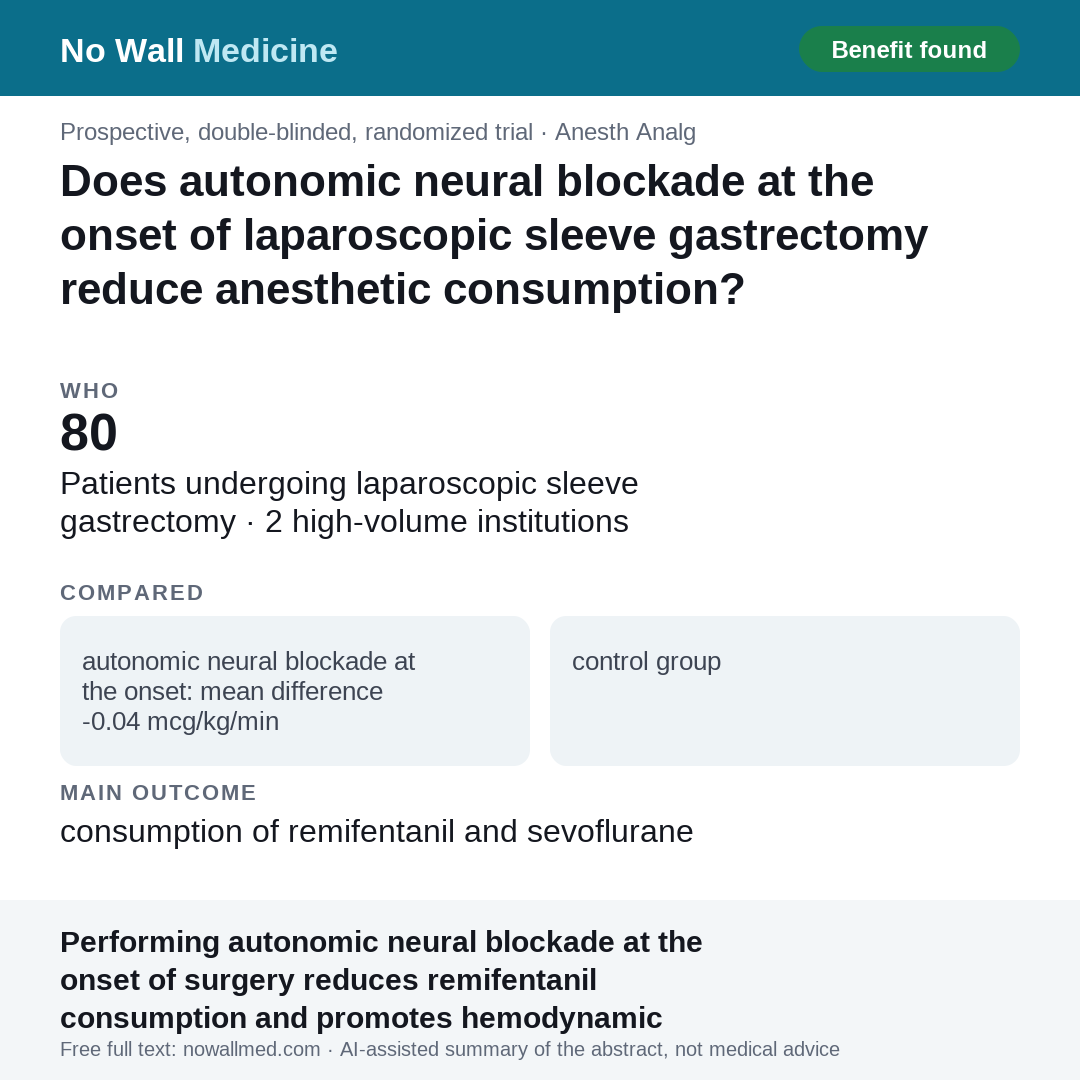
Clinical question: Does autonomic neural blockade at the onset of laparoscopic sleeve gastrectomy reduce anesthetic consumption?
Why it matters: It was unknown whether performing autonomic neural blockade at the beginning of laparoscopic sleeve gastrectomy reduces the amount of anesthetic drugs needed and improves stability of heart rate and blood pressure.
Key points
- Researchers conducted a randomized trial with 80 patients undergoing laparoscopic sleeve gastrectomy, comparing autonomic neural blockade at the start of surgery to blockade at the end.
- The group receiving blockade at the onset had a mean difference of -0.04 mcg/kg/min in remifentanil consumption compared to the control group.
- Patients receiving blockade at the onset also had significantly lower mean heart rate and mean arterial pressure during the procedure.
Headline and key points written with AI from the paper’s abstract, with every number checked against it. Read the paper before relying on them.
Was this summary helpful?
Subject terms
Cite this article
Daes J, Pantoja R, Luquetta J, Luque E, Hanssen A, Rocha J. Impact on Anesthetic Agent Consumption After Autonomic Neural Blockade as Part of a Combined Anesthesia Protocol: A Randomized Clinical Trial. Anesth Analg. 2023. doi:10.1213/ANE.0000000000006769
Spotted a mistake? Suggest a correction
Top studies every Monday
The week’s key trials and guidelines in your specialties, plus any topics you follow. By email, free.
Get the weekly digest