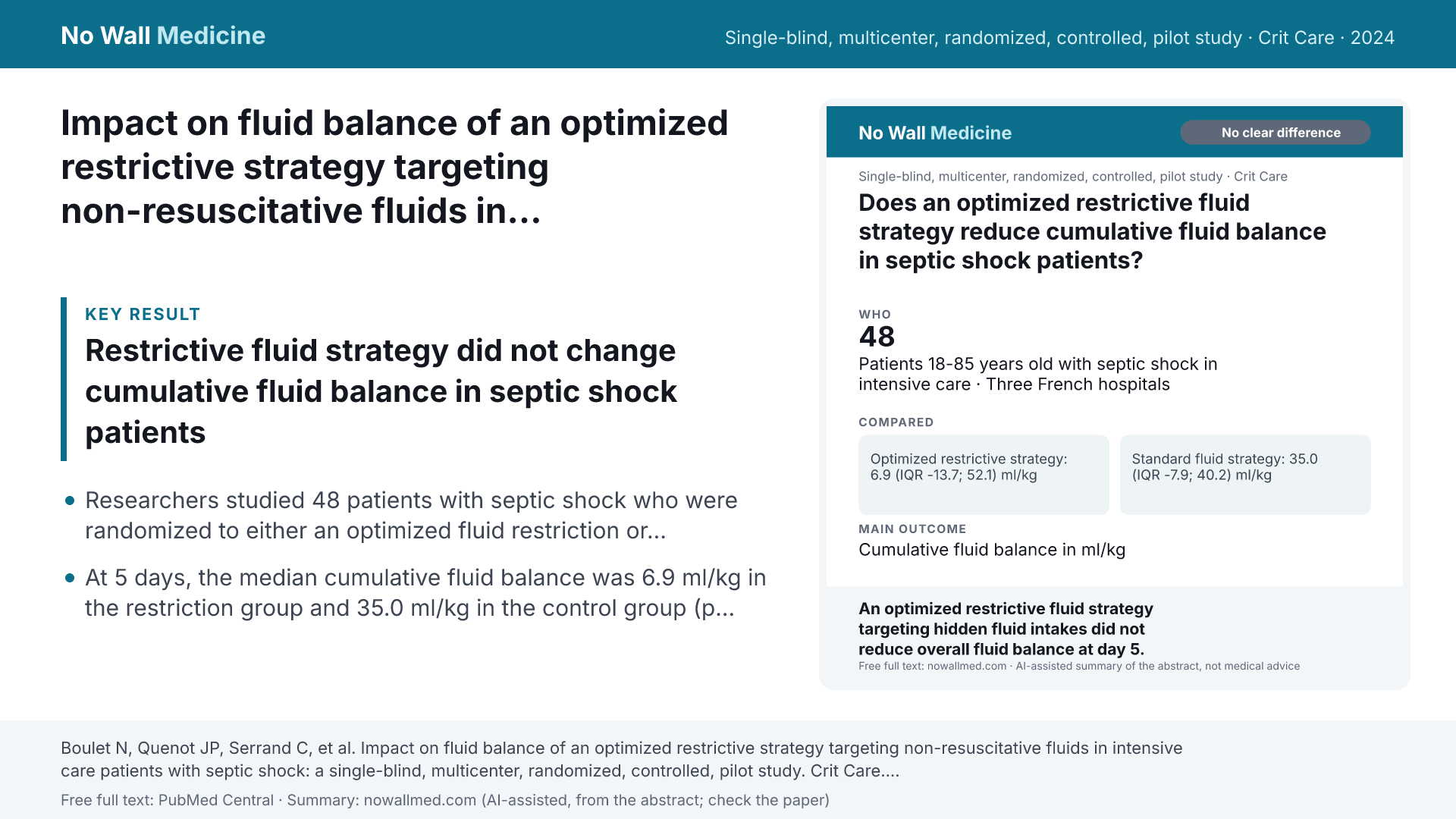
Restrictive fluid strategy did not change cumulative fluid balance in septic shock patients
Impact on fluid balance of an optimized restrictive strategy targeting non-resuscitative fluids in intensive care patients with septic shock: a single-blind, multicenter, randomized, controlled, pilot study
Single-blind, multicenter, randomized, controlled, pilot studyNo clear difference
Does an optimized restrictive fluid strategy reduce cumulative fluid balance in septic shock patients?
Who
48
Patients 18-85 years old with septic shock in intensive care · Three French hospitals
Compared
Optimized restrictive strategy: 6.9 (IQR -13.7; 52.1) ml/kg
Standard fluid strategy: 35.0 (IQR -7.9; 40.2) ml/kg
Main outcome
Cumulative fluid balance in ml/kg
Result: absolute difference 13.2 [95%CI -15.2; 41.6]
Bottom line: An optimized restrictive fluid strategy targeting hidden fluid intakes did not reduce overall fluid balance at day 5.
Crit Care · 2024-12-21Download image
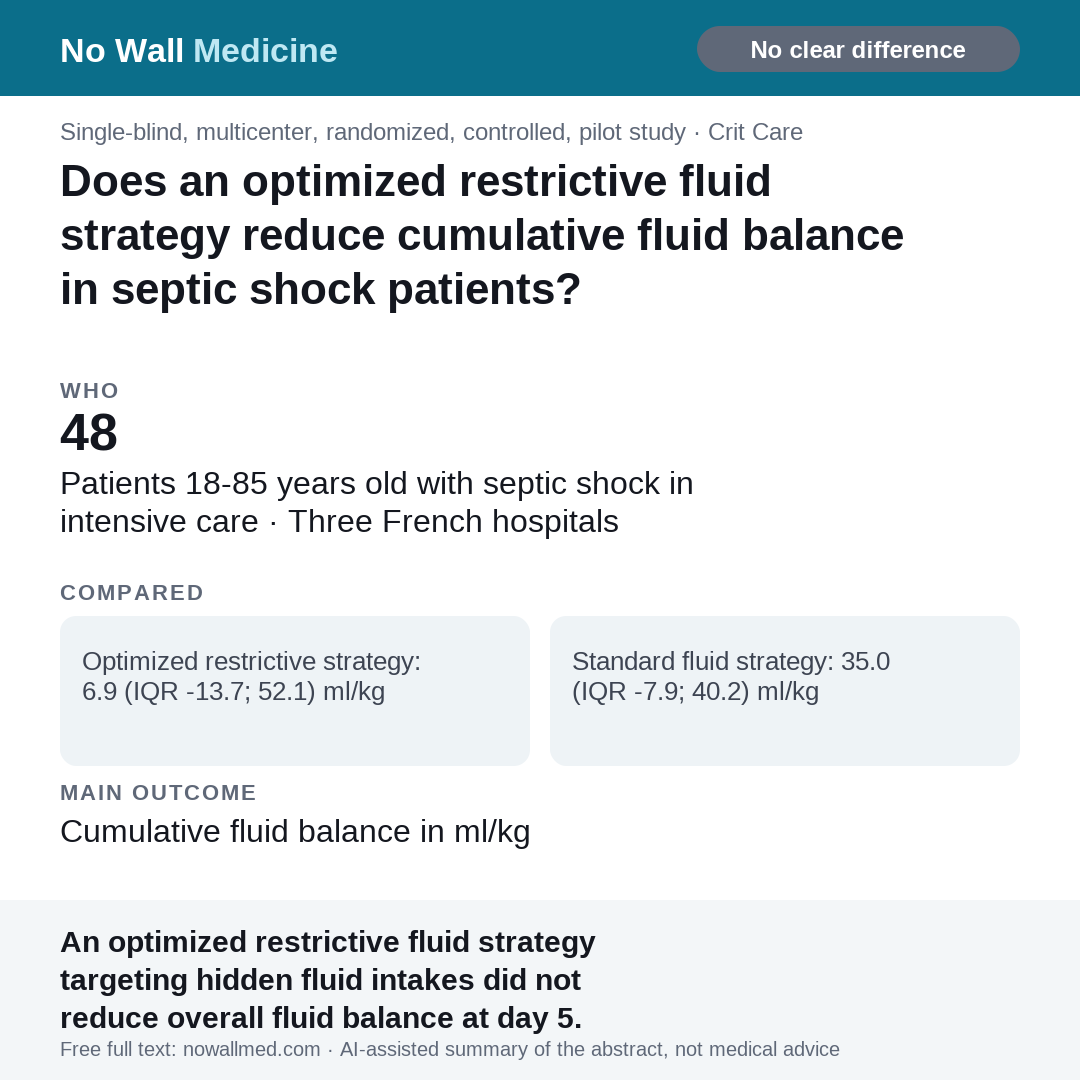
Clinical question: Does an optimized restrictive fluid strategy reduce cumulative fluid balance in septic shock patients?
Why it matters: It is unknown if limiting maintenance fluids and drug dilution fluids can reduce the positive fluid balance often seen in septic shock.
Key points
- Researchers studied 48 patients with septic shock who were randomized to either an optimized fluid restriction or a standard fluid strategy.
- At 5 days, the median cumulative fluid balance was 6.9 ml/kg in the restriction group and 35.0 ml/kg in the control group (p = 0.42).
- Mortality and days alive without life support were similar between the two groups after 28 days.
Headline and key points written with AI from the paper’s abstract, with every number checked against it. Read the paper before relying on them.
Was this summary helpful?
Subject terms
Cite this article
Boulet N, Quenot JP, Serrand C, Antier N, Garnier S, Buzancais A. Impact on fluid balance of an optimized restrictive strategy targeting non-resuscitative fluids in intensive care patients with septic shock: a single-blind, multicenter, randomized, controlled, pilot study. Crit Care. 2024. doi:10.1186/s13054-024-05155-z
Spotted a mistake? Suggest a correction
Top studies every Monday
The week’s key trials and guidelines in your specialties, plus any topics you follow. By email, free.
Get the weekly digest