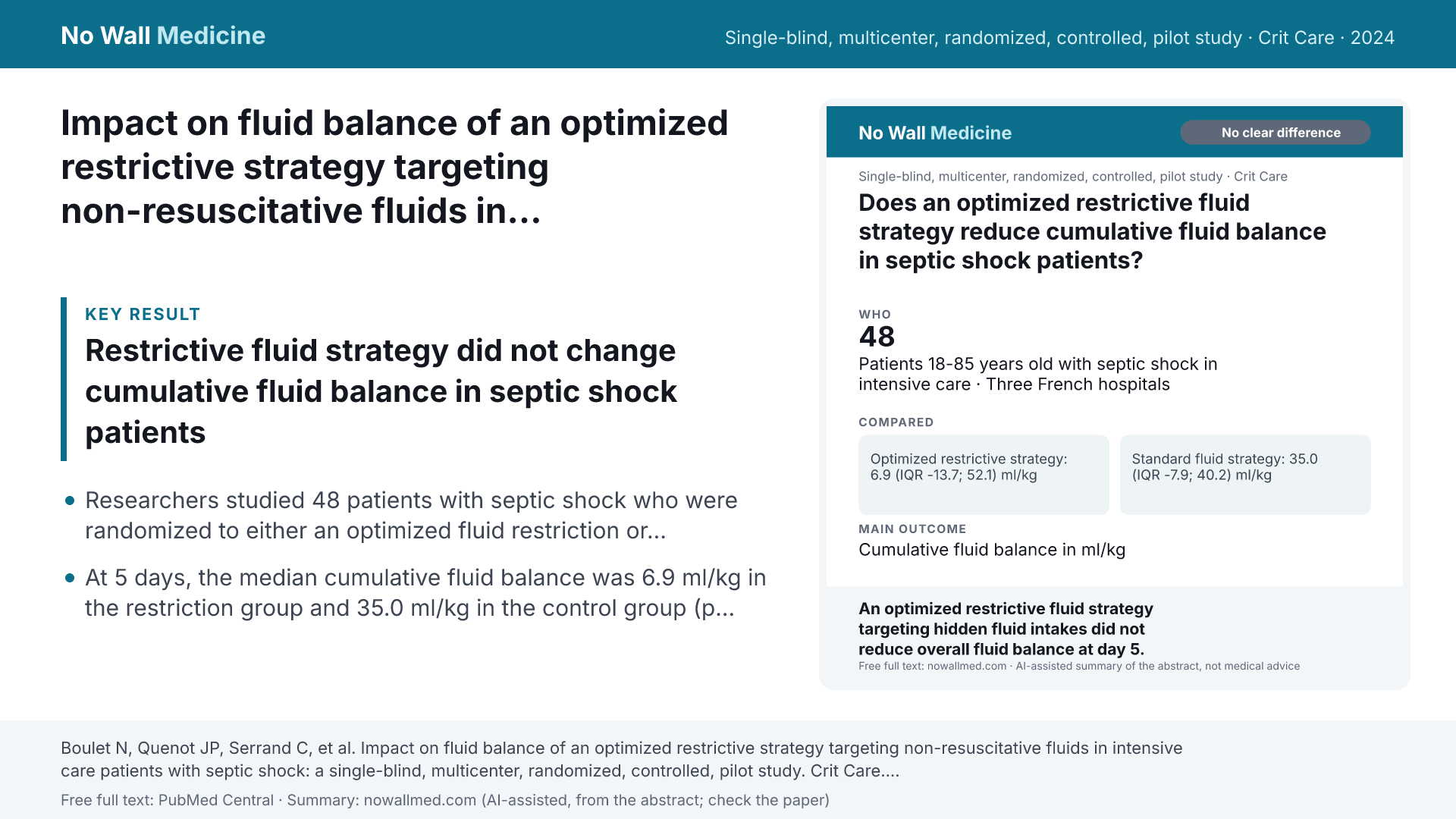
Impact on fluid balance of an optimized restrictive strategy targeting non-resuscitative fluids in intensive care patients with septic shock: a single-blind, multicenter, randomized, controlled, pilot study
Key result: Restrictive fluid strategy did not change cumulative fluid balance in septic shock patients
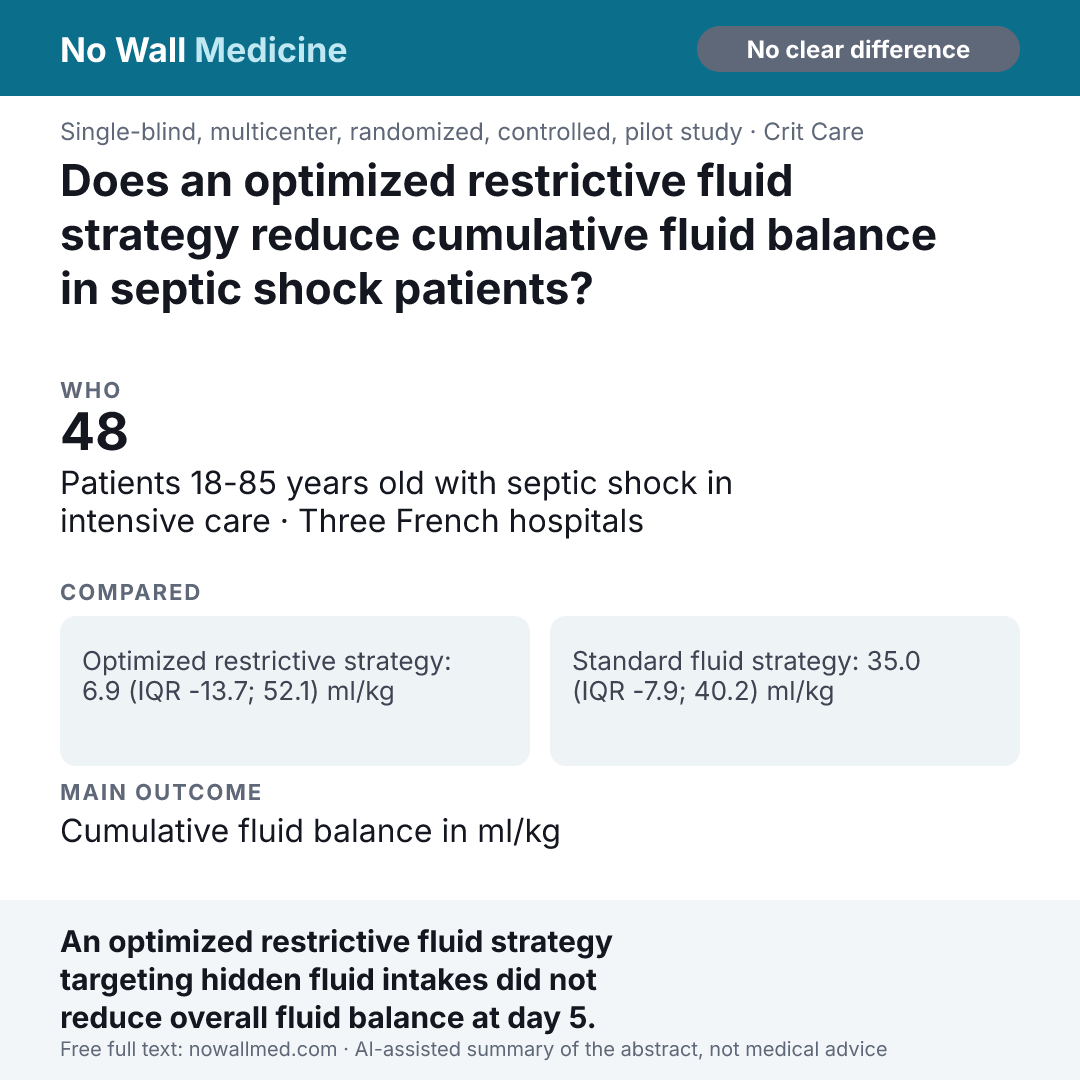
Single-blind, multicenter, randomized, controlled, pilot studyNo clear difference
Does an optimized restrictive fluid strategy reduce cumulative fluid balance in septic shock patients?
Who
48
Patients 18-85 years old with septic shock in intensive care · Three French hospitals
Compared
Optimized restrictive strategy: 6.9 (IQR -13.7; 52.1) ml/kg
Standard fluid strategy: 35.0 (IQR -7.9; 40.2) ml/kg
Main outcome
Cumulative fluid balance in ml/kg
Result: absolute difference 13.2 [95%CI -15.2; 41.6]
Bottom line: An optimized restrictive fluid strategy targeting hidden fluid intakes did not reduce overall fluid balance at day 5.
Crit Care · 2024-12-21 · Save PNG
Key points
- Researchers studied 48 patients with septic shock who were randomized to either an optimized fluid restriction or a standard fluid strategy.
- At 5 days, the median cumulative fluid balance was 6.9 ml/kg in the restriction group and 35.0 ml/kg in the control group (p = 0.42).
- Mortality and days alive without life support were similar between the two groups after 28 days.
Discussion prompts
- Would these patients look like yours? Who was left out?
- Is the main outcome one that matters to patients?
- Is the difference large enough to change what you do?
Cite: Boulet N, Quenot JP, Serrand C, et al. Impact on fluid balance of an optimized restrictive strategy targeting non-resuscitative fluids in intensive care patients with septic shock: a single-blind, multicenter, randomized, controlled, pilot study. Crit Care. 2024;28(1):429. doi:10.1186/s13054-024-05155-z
Free full text: PubMed Central · Summary and visual abstract: nowallmed.com/a/impact-on-fluid-balance-of-an-optimized-restrictive-strategy-13crpzo/ (AI-assisted from the abstract; check the paper before relying on it).